


Dukovany Expansion Prepares for Massive Output
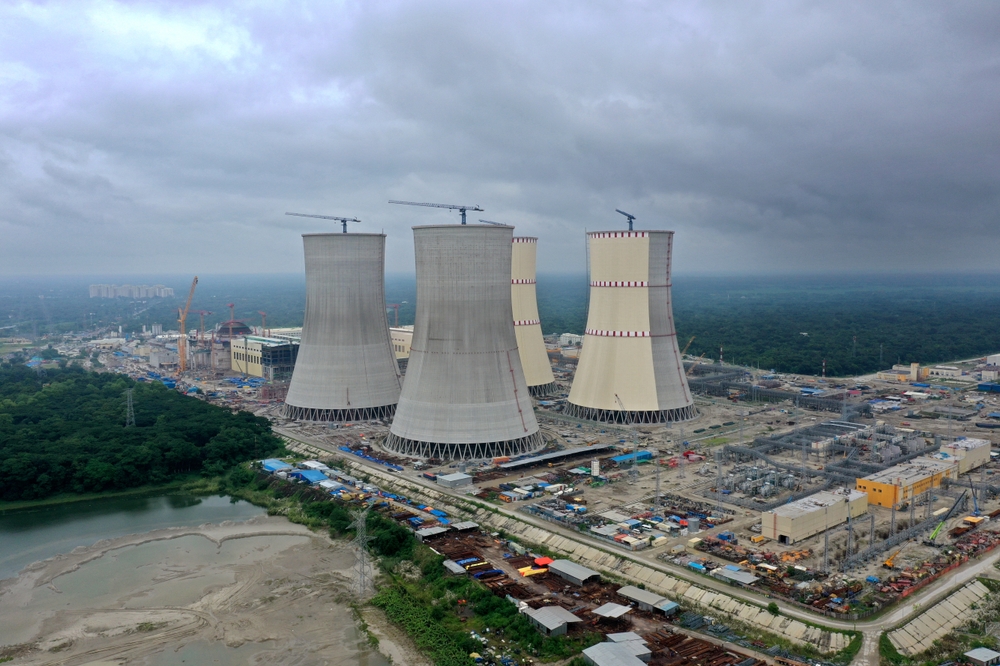
Czechia plans to generate up to 60 percent of its electricity from nuclear power by 2050. The Dukovany plant’s eight cooling towers now overlook a construction site for two new reactors. Engineers drill 140 meters underground to test geological conditions for the $19 billion (€16.4 billion) expansion. Officials expect the project to at least double the country’s nuclear output and strengthen its position as one of Europe’s most nuclear-reliant nations.
South Korea’s KHNP won the contract over France’s EDF to build two reactors, each producing more than 1,000 megawatts. The units will start operating in the second half of the 2030s and supplement Dukovany’s four 512-MW reactors from the 1980s. The KHNP agreement gives Czechia an option to construct two more units at the Temelín plant, which already has two 1,000-MW reactors. Officials also plan to deploy small modular reactors in the future.
Petr Závodský, chief executive of Dukovany, said the expansion will help the country phase out fossil fuels, secure reliable energy, meet low-emission standards, and power future data centers and electric vehicles.
Europe Turns Back to Nuclear Energy
Rising energy demand and urgent carbon reduction targets revive interest in nuclear power across Europe. Nuclear plants produce radioactive waste but no greenhouse gases like carbon dioxide, which drives climate change.
The EU classified nuclear energy as an environmentally sustainable activity, allowing countries to access financing. Czechia, Slovakia, Hungary, and France benefit from this policy, continuing their reliance on atomic energy.
Belgium and Sweden canceled nuclear phase-outs. Denmark and Italy are reconsidering exits, and Poland plans to join 12 nuclear-supportive EU nations after signing a deal with Westinghouse for three reactors. Nuclear power generated 24 percent of EU electricity in 2024.
Britain signed a US cooperation deal to create a “golden age of nuclear,” according to Energy Secretary Ed Miliband. The UK will invest £14.2 billion (€16.1 billion) to construct Sizewell C, its first nuclear plant since 1995.
CEZ, 70 percent government-owned, partnered with Rolls-Royce SMR to develop and deploy small modular reactors, targeting new, scalable nuclear technology.
Costs, Challenges, and Opposition
The Dukovany expansion will cost over €16 billion, with the government acquiring an 80 percent stake. Czech authorities will secure a 30-year loan while guaranteeing CEZ steady revenue for 40 years. EU approval is expected under its climate-neutral 2050 strategy.
Závodský emphasized the need to replace coal, which currently produces 40 percent of Czech electricity alongside nuclear. Czechia aims to phase out coal by 2033. Financing uncertainty delayed expansion in the past. CEZ canceled a 2014 Temelín tender after authorities refused to provide guarantees.
Officials excluded Russia’s Rosatom and China’s CNG from the tender for security reasons after the Ukraine invasion. CEZ signed contracts with Westinghouse and Framatome to supply fuel for both plants for 10 years, removing Russian dependence.
Opponents criticize nuclear energy for high costs and lack of permanent waste storage. Austria, which abandoned nuclear power after Chernobyl, remains strongly opposed. Austrian lawmakers already rejected Czech plans for small modular reactors. Friends of the Earth argue that investment in nuclear could instead improve other energy industries.
Despite opposition, Czechia continues to expand nuclear power to ensure stable, low-carbon electricity and meet future energy demand.

