


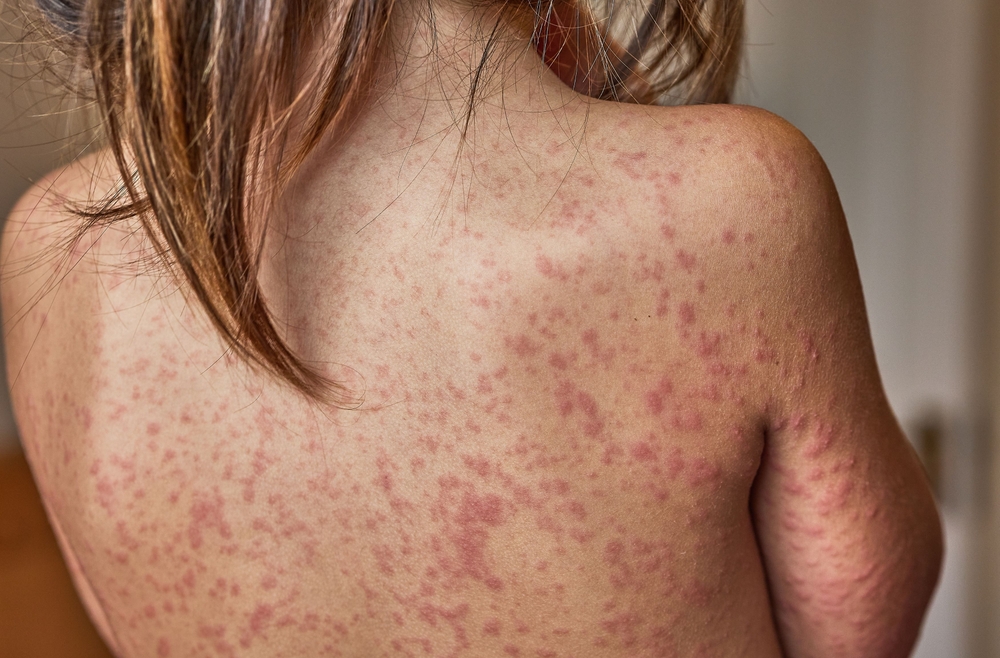
Health officials report troubling signs as measles cases climb despite long-term global progress.
The World Health Organization (WHO) found measles cases surged 47 per cent in Europe and Central Asia last year, driven mainly by declining vaccination rates. Officials warn that 21st-century gains in reducing infections and deaths are slipping.
In 2024, measles killed roughly 95,000 people worldwide, mostly children under five. That number fell from 780,000 deaths in 2000. WHO stated, “Every death from a disease that could be prevented with a highly effective and low-cost vaccine is unacceptable.” Vaccination campaigns have saved nearly 59 million lives globally since 2000.
Outbreaks Spread Rapidly
Measles infections continue increasing worldwide, with an estimated 11 million cases last year—about 800,000 higher than pre-pandemic levels.
WHO reported over 120,000 cases in Europe and Central Asia in 2024, the highest level in more than 25 years. Officials documented major outbreaks in 59 countries, nearly triple the number in 2021.
WHO chief Dr Tedros Adhanom Ghebreyesus said, “Measles is the world’s most contagious virus. It exploits every gap in our collective defences.” Officials blame rising vaccine refusal for much of the spread. Measles requires at least 95 per cent immunisation to prevent outbreaks.
Globally, 84 per cent of children received their first measles dose last year, while 76 per cent received the second, WHO data show. Two million more children received vaccines than the previous year. Yet more than 30 million children remained under-protected, mainly in Africa and the Eastern Mediterranean. Even countries with high overall vaccination can see outbreaks if unvaccinated pockets exist.
Urgent Calls for Action
WHO warns measles often reappears first when vaccination rates decline, highlighting weaknesses in health systems and immunisation programmes.
Children who survive measles face higher risks of pneumonia, blindness, and encephalitis, which can cause brain swelling and permanent damage.
The WHO urges governments to increase funding and strengthen elimination efforts. Dr Tedros said, “Measles does not respect borders, but vaccinating every child can prevent costly outbreaks, save lives, and eliminate the disease nationally” (World Health Organization, 2025).
Reference:
World Health Organization. (2025). Measles fact sheet and global update. WHO.

