


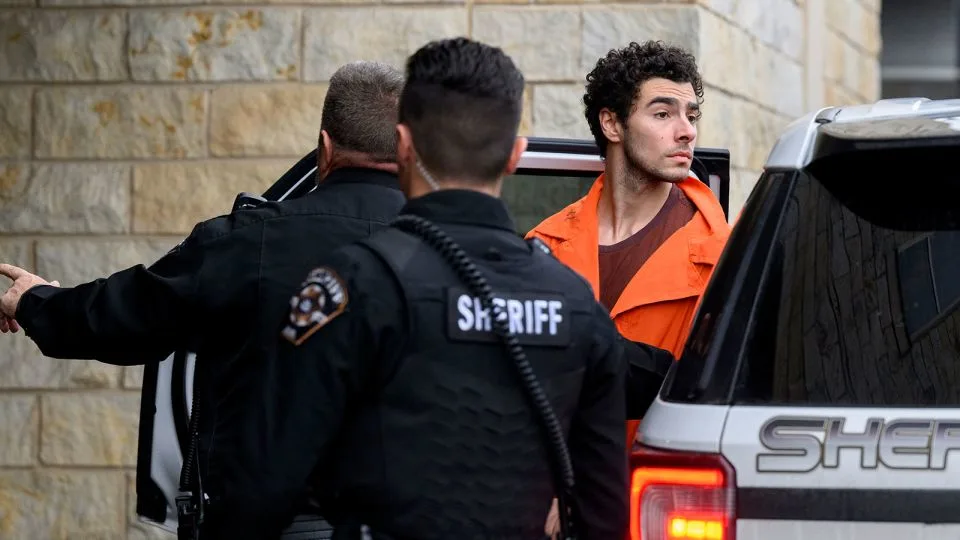
Luigi Mangione is expected to return to court as a New York judge prepares to rule on whether prosecutors can use major pieces of evidence in his state murder trial.
Mangione, 28, is accused of killing Brian Thompson in December 2024 on a busy sidewalk in Manhattan.
The case has drawn national attention because of both the shocking nature of the killing and the wider public debate surrounding the American healthcare system.
Prosecutors claim Mangione fatally shot Thompson outside a Manhattan location before fleeing the area. Authorities later arrested him at a McDonald’s restaurant in Altoona, Pennsylvania.
Police said officers recovered several important items from Mangione’s backpack during the arrest. Investigators claim the bag contained a 3D-printed firearm, a loaded magazine, a silencer, and handwritten notes discussing anger toward the healthcare industry.
Defense lawyers argue the search of the backpack was illegal because officers allegedly opened and searched it without a warrant.
They are asking the court to suppress the evidence, meaning prosecutors would not be allowed to present the items to a jury during the state trial.
If the judge sides with the defense, some of the most important evidence in the case could be removed from the prosecution’s argument, including the alleged murder weapon and writings described by prosecutors as a manifesto.
The decision will be made by New York State Judge Gregory Carro following months of legal arguments and a lengthy suppression hearing.
During the hearing, prosecutors presented police body camera footage showing the arrest and testimony from officers involved in the search.
Authorities said police approached Mangione after a McDonald’s manager reported that a customer looked like the suspect connected to the CEO shooting in New York City.
According to investigators, Mangione first gave officers a false name and showed a fake New Jersey identification card. Police later said he admitted his real identity after questioning.
Defense attorneys also want the court to block statements Mangione allegedly made to police and corrections officers after his arrest.
Lawyers argue officers failed to properly advise him of his Miranda rights before questioning him. Under U.S. law, suspects must be informed of their rights, including the right to remain silent and the right to speak with an attorney.
Prosecutors strongly rejected those claims. The Manhattan District Attorney’s Office said officers acted legally and followed proper police procedures during the arrest and investigation.
Federal Judge Margaret Garnett previously ruled in a related federal case that the backpack evidence could be used in court.
In that ruling, the judge wrote that the search fell under exceptions to normal warrant requirements.
Even if some evidence is removed from the New York state case, prosecutors say they still have additional proof linking Mangione to the crime scene.
Court documents state that investigators recovered DNA and fingerprints from items discarded near the shooting location.
Mangione faces second-degree murder charges and several additional counts in New York. He also faces separate federal charges and other state charges in Pennsylvania connected to his arrest.
He has pleaded not guilty to all accusations.
The case has become widely discussed across social media and public forums. Some supporters have gathered outside court hearings, while public officials strongly condemned the killing.
Former U.S. Attorney General Pam Bondi previously described the shooting as a “cold-blooded assassination.”
Mangione’s legal team has already achieved some courtroom victories. Earlier rulings removed the most serious charges in both the state and federal cases, which also eliminated the possibility of the death penalty in the federal prosecution.
Legal experts say the upcoming ruling could play a major role in shaping the trial scheduled for September.
If the judge suppresses the disputed evidence, prosecutors may face greater challenges in presenting their case before jurors.
The court’s decision is expected to become one of the most closely watched moments in the high-profile murder trial.

