


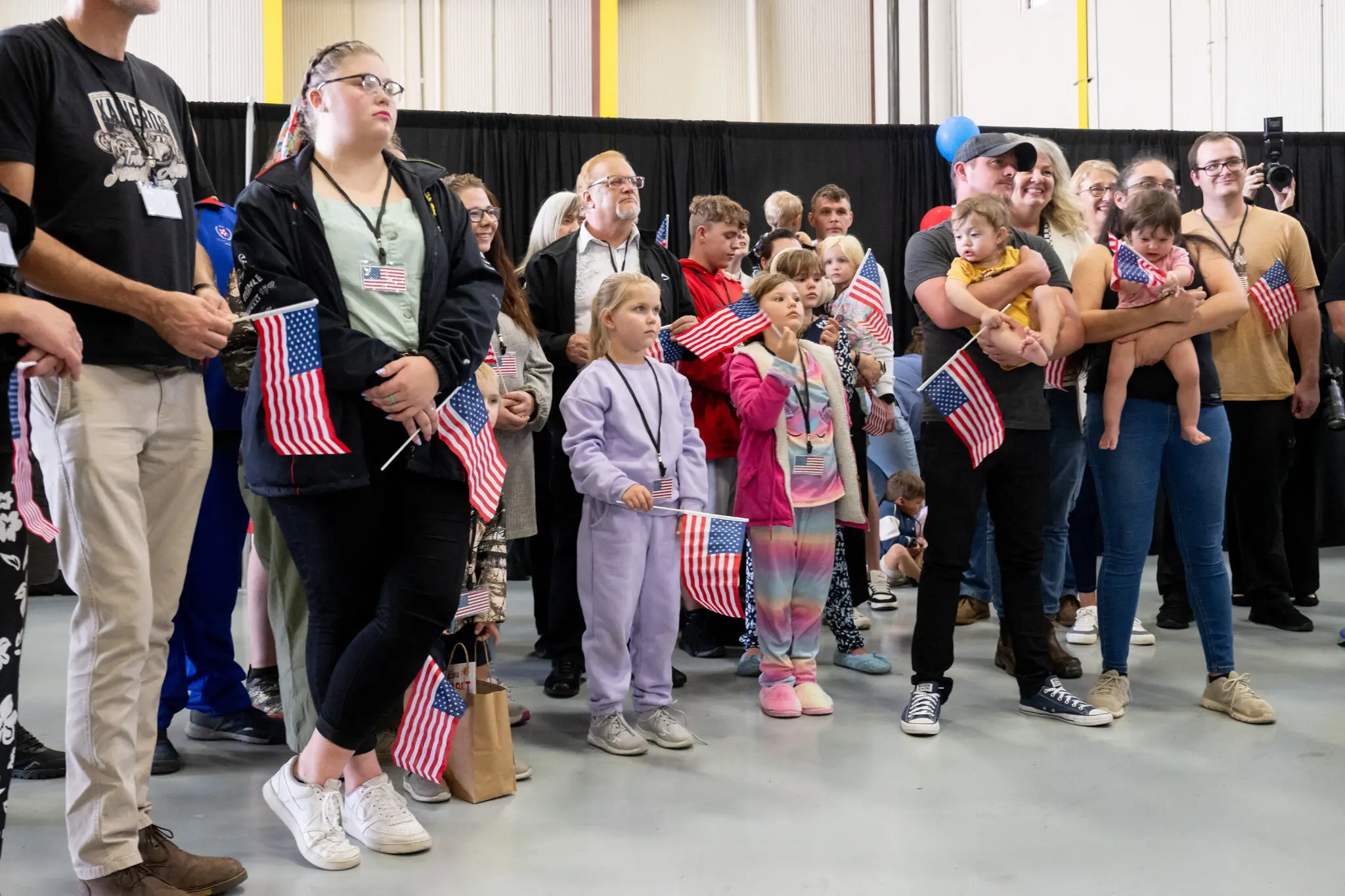
The United States has announced a major increase in the number of white South Africans admitted as refugees this year. The total will rise from about 7,500 to 17,500. Officials said the decision is linked to what they called an “emergency refugee situation” in South Africa.
The announcement was sent to Congress in an emergency notice by the U.S. State Department. It stated that “unforeseen developments in South Africa” required a higher refugee intake. The government also said it would expand its resettlement capacity in response to the situation.
This policy change comes after the U.S. began admitting white South Africans as refugees in May 2025. At the same time, it paused parts of its broader refugee program for people fleeing war and conflict in countries such as Afghanistan, Sudan, and the Democratic Republic of the Congo.
The decision has triggered strong political debate. Critics say the policy shift raises questions about fairness in the global refugee system. Supporters argue it responds to specific risks faced by certain groups in South Africa.
According to the State Department, resettling an additional 10,000 refugees will cost about $100 million. The figures were included in the official notice reviewed by the Associated Press.
The U.S. government also said South African officials have used language that undermines the refugee program. It accused multiple ministries and political parties in South Africa of criticizing the U.S. resettlement process.
Another issue mentioned was a December raid on a U.S.-linked refugee processing center in South Africa. U.S. officials called the operation unacceptable. South African authorities responded that the action involved the deportation of seven Kenyan nationals who were allegedly working without proper permits.
Tensions between the two countries have increased in recent months. The U.S. has reduced aid to South Africa and taken a more critical diplomatic stance. It also boycotted the G20 summit held in Johannesburg last year and excluded South Africa from a future G20 meeting planned in Miami.
White Afrikaners, the group at the center of the policy, are descendants of Dutch and French settlers who played a leading role during South Africa’s apartheid era. During that period, the white minority ruled the country while the Black majority faced widespread discrimination and economic exclusion.
Since the end of apartheid in 1994, South Africa has introduced policies aimed at reducing inequality. These include affirmative action and “black economic empowerment” programs designed to improve opportunities for historically disadvantaged groups.
Despite progress, inequality remains a major issue in the country. Official figures show that unemployment among white South Africans is significantly lower than among Black South Africans. However, overall economic gaps and high crime rates continue to affect all communities.
Some white South Africans have argued that they now face discrimination under modern policies. This perception has been amplified in certain political and media circles, both inside and outside South Africa.
The idea of a “white genocide” in South Africa has been widely rejected by experts and the South African government. Officials say violent crime affects all racial groups and is not part of a targeted campaign against white farmers or Afrikaners.
However, the claim has continued to circulate in far-right online spaces. It has also been promoted by some high-profile public figures, adding to global political debate around the issue.
The U.S. decision is likely to remain controversial as immigration policy, racial politics, and international relations continue to intersect. Analysts say future discussions between Washington and Pretoria may focus on diplomatic tensions and the long-term direction of refugee admissions.
For now, the expanded refugee intake marks one of the most politically sensitive changes in U.S. immigration policy in recent years.

