


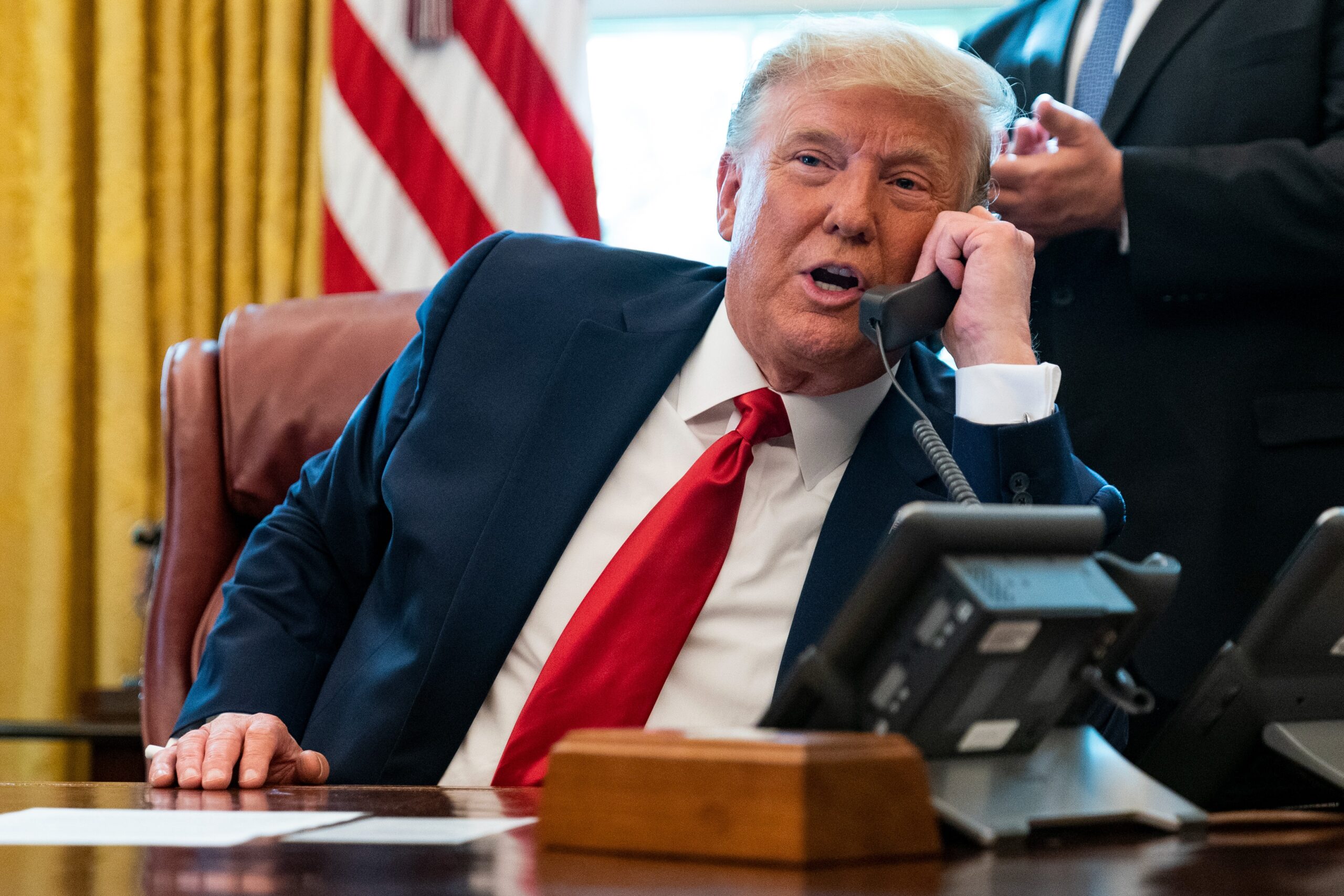
President Donald Trump returned to Texas this week as Republicans and Democrats intensified their efforts in several closely watched races ahead of the midterm elections.
The visit marked Trump’s second trip to Texas in less than a week. His appearance highlighted growing concern among both parties as competition increases in areas that have traditionally favored Republicans.
Trump attended a rally in San Antonio to support Attorney General Ken Paxton and congressional candidate Carlos De La Cruz. Both candidates are facing stronger challenges than many political observers expected earlier in the election cycle.
Paxton remains locked in a competitive race against Democratic challenger James Talarico. The contest has become one of the most expensive political battles in Texas this year.
De La Cruz is also facing a difficult race in Texas’ 35th Congressional District. The district was redrawn during the state’s redistricting process to give Republicans an advantage. Even so, the race remains competitive.
Political analysts note that Trump would have won the district comfortably under the current map during the last presidential election. However, recent campaign developments have made the contest much closer than expected.
Trump’s visit is aimed at energizing Republican voters during a critical period of the campaign season. Party leaders hope his presence will increase enthusiasm among supporters and boost voter turnout before early voting begins.
One notable absence at the rally was Texas Governor Greg Abbott.
Abbott cited scheduling conflicts and said he had previous commitments that prevented him from attending the event. While praising Trump’s ability to motivate Republican voters, the governor said he could not adjust his schedule to join the rally.
Abbott is facing a more competitive re-election campaign than many Republicans predicted at the start of the year.
The governor won his previous statewide races by large margins. This time, however, Democrats believe changing political conditions could create new opportunities.
As a result, Democratic leaders are increasing pressure on national organizations to invest more money in Texas.
A group of Latino political leaders and elected officials recently met with representatives from a major Democratic campaign organization to discuss support for Democratic gubernatorial candidate Gina Hinojosa.
The group called for a larger financial commitment to help strengthen the campaign before early voting begins.
Democrats argue that additional resources could help narrow the financial gap between Hinojosa and Abbott. Recent contributions from national Democratic figures have provided a boost, but supporters continue to seek more assistance.
The growing attention on Texas reflects broader concerns about the political environment nationwide.
Republican candidates in several states are facing difficult races as voters focus on economic issues, international conflicts and government policies.
Some Republican candidates have also attempted to create distance from Trump on specific policy matters.
In Michigan, Senate candidate Mike Rogers recently called for an end to ongoing tariff disputes. Other Republican candidates in the state have also expressed different views from Trump on trade and foreign policy issues.
These differences show how candidates are trying to appeal to local voters while still maintaining support from their party’s base.
Debates across the country have highlighted similar themes.
In Maine, candidates for the U.S. Senate exchanged criticism over economic concerns, abortion policy and Trump’s political influence.
In Georgia, candidates for governor debated the economy and national political issues. Iowa’s gubernatorial race also drew attention as candidates discussed qualifications and personal records.
At the same time, attention has returned to events in the Middle East as the third anniversary of the October 7 attack approaches.
The attack shocked Israel and led to a conflict that continues to affect the region. The violence changed security policies, reshaped political discussions and influenced international relations.
Questions remain about intelligence failures that allowed the attack to occur. The conflict has also created lasting humanitarian concerns and political divisions.
Efforts to secure long-term peace have faced significant challenges. Plans involving ceasefires, hostage releases and reconstruction projects have struggled to achieve lasting results.
The ongoing conflict remains a major issue in Israeli politics and continues to influence debates in the United States.
With the midterm elections drawing closer, both domestic and international issues are shaping campaign strategies across the country.
Texas has become one of the clearest examples of that trend. As candidates increase spending and voter outreach efforts, the state is emerging as a key battleground that could help define the political landscape after Election Day.
The final weeks of the campaign are expected to bring even more attention to competitive races as both parties fight for every possible advantage before voters head to the polls.

