


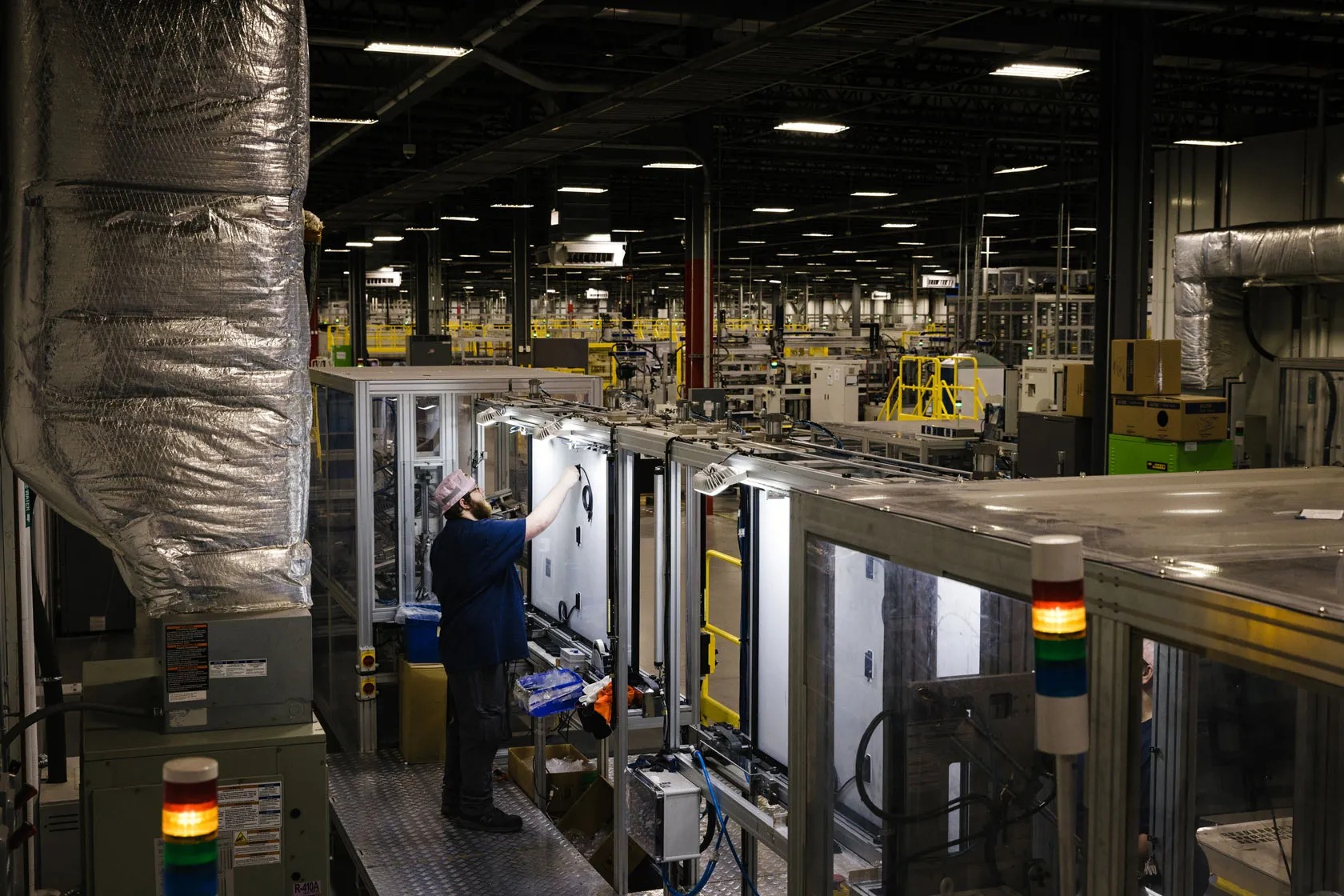
The Inflation Reduction Act is driving significant job creation and new investments across the United States. Analysts say the landmark climate and economic law has encouraged tens of thousands of public and private projects, providing major economic benefits. The legislation supports clean energy, infrastructure, and other industries, contributing to stronger economic growth and workforce opportunities.
Experts note that the act’s incentives are motivating businesses to invest in renewable energy, electric vehicles, and energy-efficient technologies. These investments are creating jobs in manufacturing, construction, and research, while also promoting innovation and sustainability. The combined effect is a growing economy that benefits workers and communities alike.
The law’s focus on clean energy and climate initiatives has attracted both private companies and local governments to expand projects. Analysts highlight that these initiatives not only create immediate employment but also generate long-term economic advantages by modernizing infrastructure and supporting technological advancement. Communities nationwide are seeing positive effects on local economies as a result of new investment projects.
By stimulating private and public investment, the Inflation Reduction Act is strengthening the labor market. New hiring in construction, manufacturing, and green energy sectors is helping reduce unemployment and expand opportunities for skilled workers. Observers say the act demonstrates how targeted legislation can directly link environmental goals with economic growth.
Companies are increasingly responding to incentives that encourage renewable energy production, electric vehicle manufacturing, and other climate-focused initiatives. Analysts predict that the act’s impact will continue to grow over the next several years, resulting in more jobs, increased investment, and stronger economic resilience across multiple regions.
In addition to direct job creation, the law is expected to stimulate indirect employment in supporting sectors such as logistics, supply chains, and technology services. Experts emphasize that the Inflation Reduction Act sets an example of how government policies can effectively align environmental priorities with workforce development and economic prosperity.
Overall, the Inflation Reduction Act is not only helping address climate challenges but also delivering tangible benefits for workers and communities. Analysts say that by linking investment incentives with economic opportunity, the legislation is fostering a more sustainable and prosperous future for the nation.

