


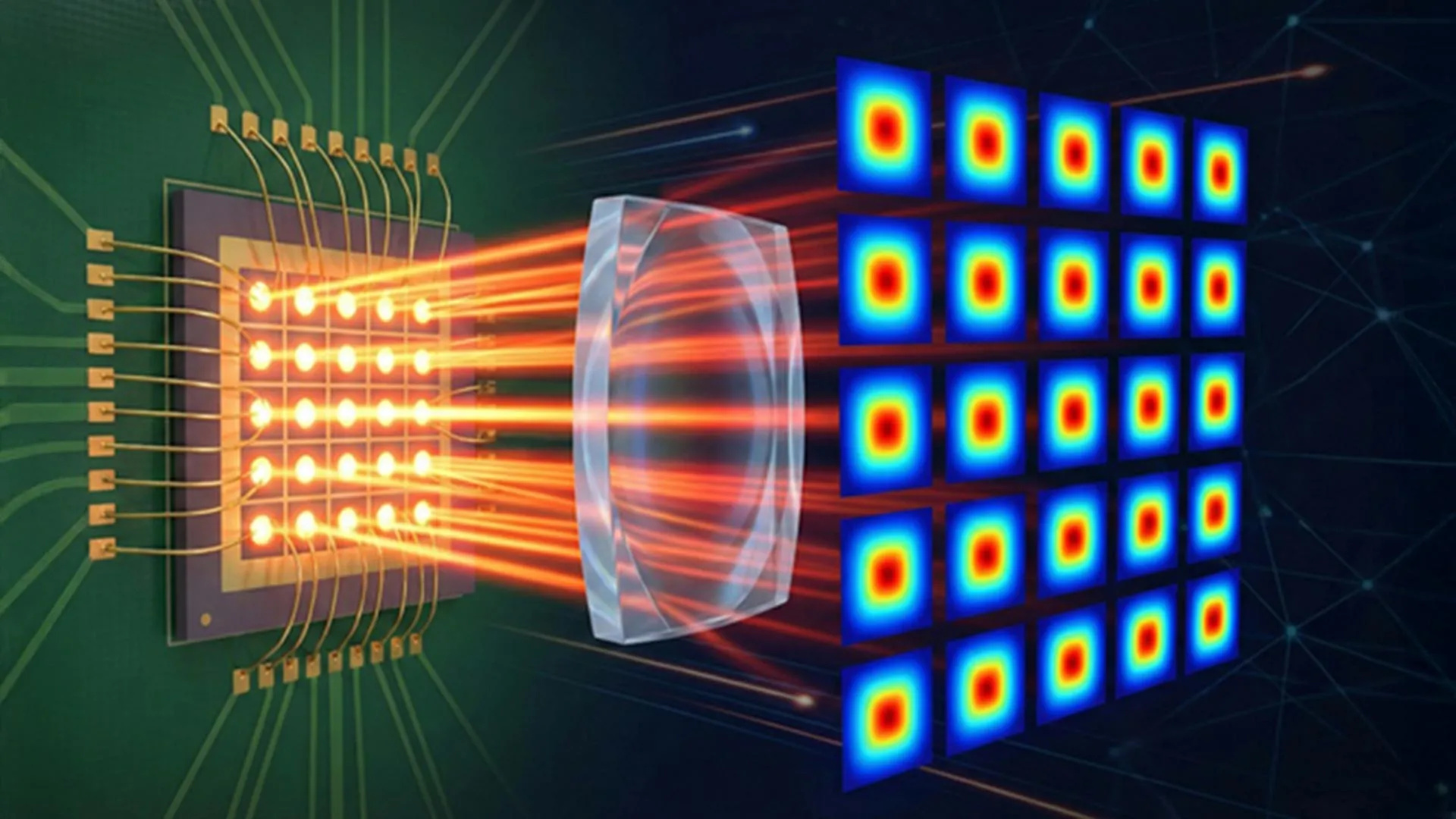
Researchers have unveiled a new wireless technology that uses tiny lasers to transmit data at incredible speeds of 360 Gbps. The innovation could dramatically improve internet and mobile communications while cutting energy consumption.
Unlike traditional wireless systems, this method relies on lasers instead of radio waves. The technology sends data through focused light beams, allowing faster transmission over short and medium distances. Early tests show it uses significantly less power than conventional systems.
“This laser-based approach could redefine wireless communication,” said a lead researcher. “It delivers extreme speed while being energy-efficient, which is crucial for the future of mobile networks.”
Current wireless networks face limits in speed and energy efficiency. As demand for high-definition streaming, virtual reality, and real-time applications grows, faster and greener solutions are essential. Laser wireless technology could meet these needs without the high electricity costs of current systems.
The research team demonstrated the system in lab conditions, achieving 360 Gbps data transfer. That is roughly 100 times faster than standard 4G networks and several times faster than current 5G speeds. Energy measurements indicated up to 50 percent savings compared to conventional wireless setups.
Experts say this breakthrough could impact multiple industries. Internet providers, mobile carriers, and data centers may adopt laser wireless systems to improve performance and reduce operating costs. Faster communication speeds also open opportunities for new applications, from real-time holograms to advanced IoT networks.
The technology may also help bridge connectivity gaps in urban and rural areas. Since it uses compact laser units, deployment could be flexible and scalable. Combined with energy efficiency, this makes it an attractive option for sustainable communications infrastructure.
Industry analysts highlight the environmental benefits of such systems. Reducing energy consumption in wireless networks could lower carbon emissions and support global sustainability goals. This aligns with the growing trend toward green technology in telecommunications.
The research team plans to expand trials to outdoor environments and test longer distances. Integrating this technology with existing networks will be a critical next step for commercial use.
“This is more than a speed upgrade,” said a tech analyst. “It’s a new way to think about wireless communication. Faster, greener, and more efficient systems are the future.”
As wireless demand grows worldwide, laser-based systems may become a standard for next-generation communication. They offer a rare combination of high speed, energy efficiency, and adaptability, making them a promising solution for the challenges of modern connectivity.
If adopted widely, laser wireless technology could transform how people connect, stream, and share data. It represents a significant step toward ultra-fast, energy-conscious communication systems that may soon power homes, offices, and mobile networks globally.

