


The Trump Gas Price Surge is putting pressure on American drivers as fuel costs rise sharply. Prices across the United States are now close to $4.50 per gallon. This marks the highest level in about four years and is raising concerns about living costs.
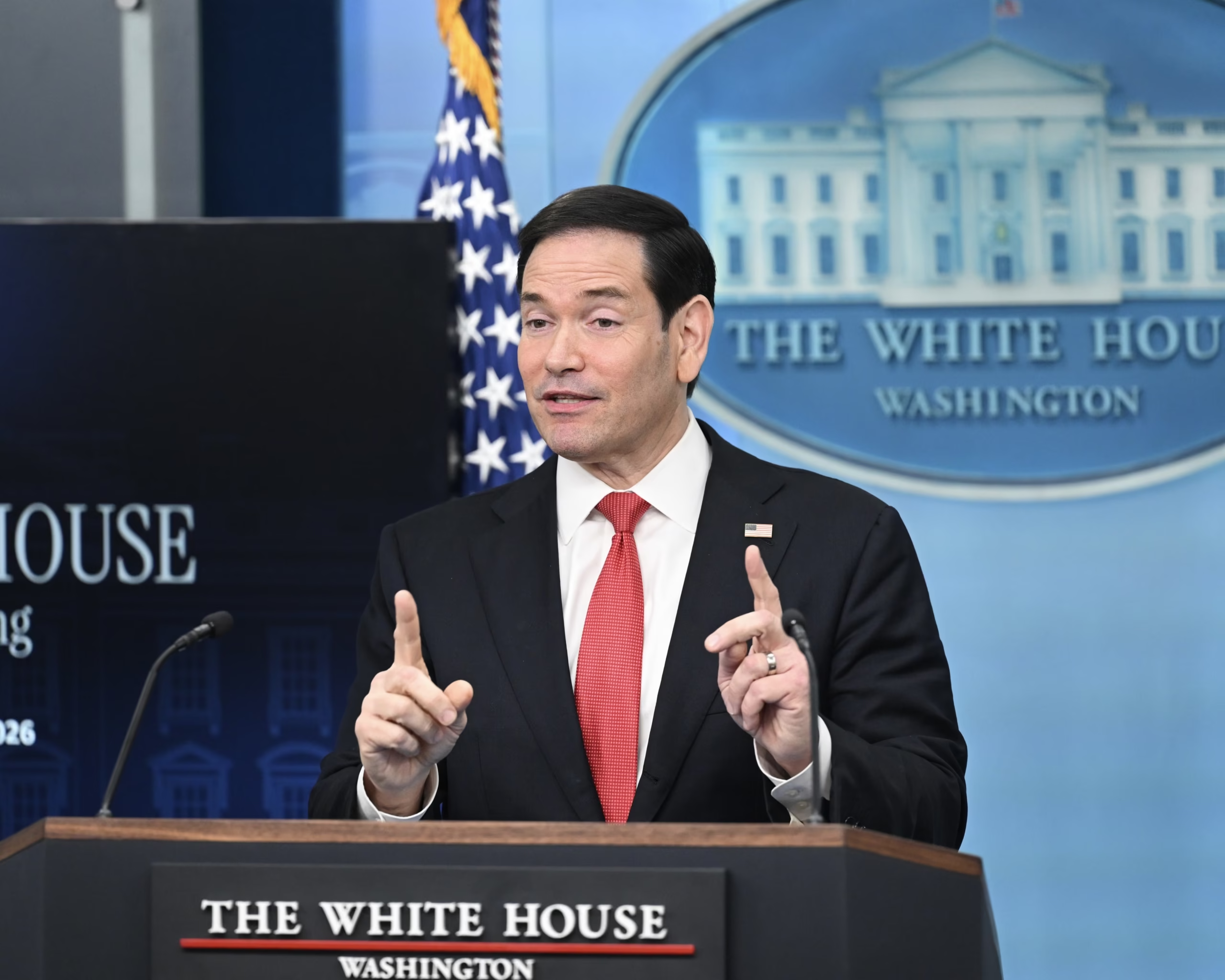
During a press briefing, Marco Rubio addressed the issue. Speaking at the White House, he said the situation could be worse. He noted that the United States is still in a strong position compared to other countries.
Rubio explained that the US benefits from being a net exporter of oil. This means it produces more oil than it imports. Because of this, the country is less dependent on supplies from the Middle East. He said this gives the US some protection from global shocks.
The Trump Gas Price Surge comes as global oil markets face major disruption. Prices have risen since tensions increased following military actions involving Donald Trump and Iran. These events have affected key supply routes.
One of the biggest concerns is the Strait of Hormuz. This narrow passage carries a large share of the world’s oil and gas. Recent tensions have reduced traffic through the route, creating supply fears.
As a result, global oil prices have increased. This has led to higher fuel costs in many countries. In the United States, average gas prices now stand at about $4.48 per gallon, based on recent data. A year ago, prices were much lower, near $3.17.
The Trump Gas Price Surge is affecting daily life for many Americans. Higher fuel costs make transport more expensive. This also increases prices for goods and services, as businesses face higher costs.
Rubio said officials are aware of these concerns. He added that the government is monitoring the situation closely. He stressed that the US should not take its position for granted, even if it is better off than some nations.
Other countries are facing even higher price increases. Many rely heavily on oil imports from the Middle East. When supply routes are disrupted, these nations feel the impact more strongly.
Experts say the current situation shows how connected global energy markets are. A conflict in one region can affect prices worldwide. This makes energy security a key issue for governments.
The Trump Gas Price Surge also comes at a time of broader economic concerns. Inflation remains a challenge in many sectors. Rising fuel prices can add to this pressure and slow economic growth.
Energy analysts note that the situation could change quickly. If tensions ease, supply routes may reopen, and prices could fall. However, if conflict continues, prices may stay high or rise further.
The US has taken steps in the past to manage energy supply. These include increasing domestic production and using strategic reserves. Such measures can help reduce the impact of global price swings.
Still, the current rise highlights the limits of these actions. Global events often play a larger role in setting prices. This means that even strong producers like the US are not fully immune.
The Trump Gas Price Surge is likely to remain a key issue in the coming weeks. Policymakers will need to balance economic concerns with global security challenges.
For now, Americans are adjusting to higher fuel costs. The situation remains uncertain, and much depends on how global tensions develop.

