


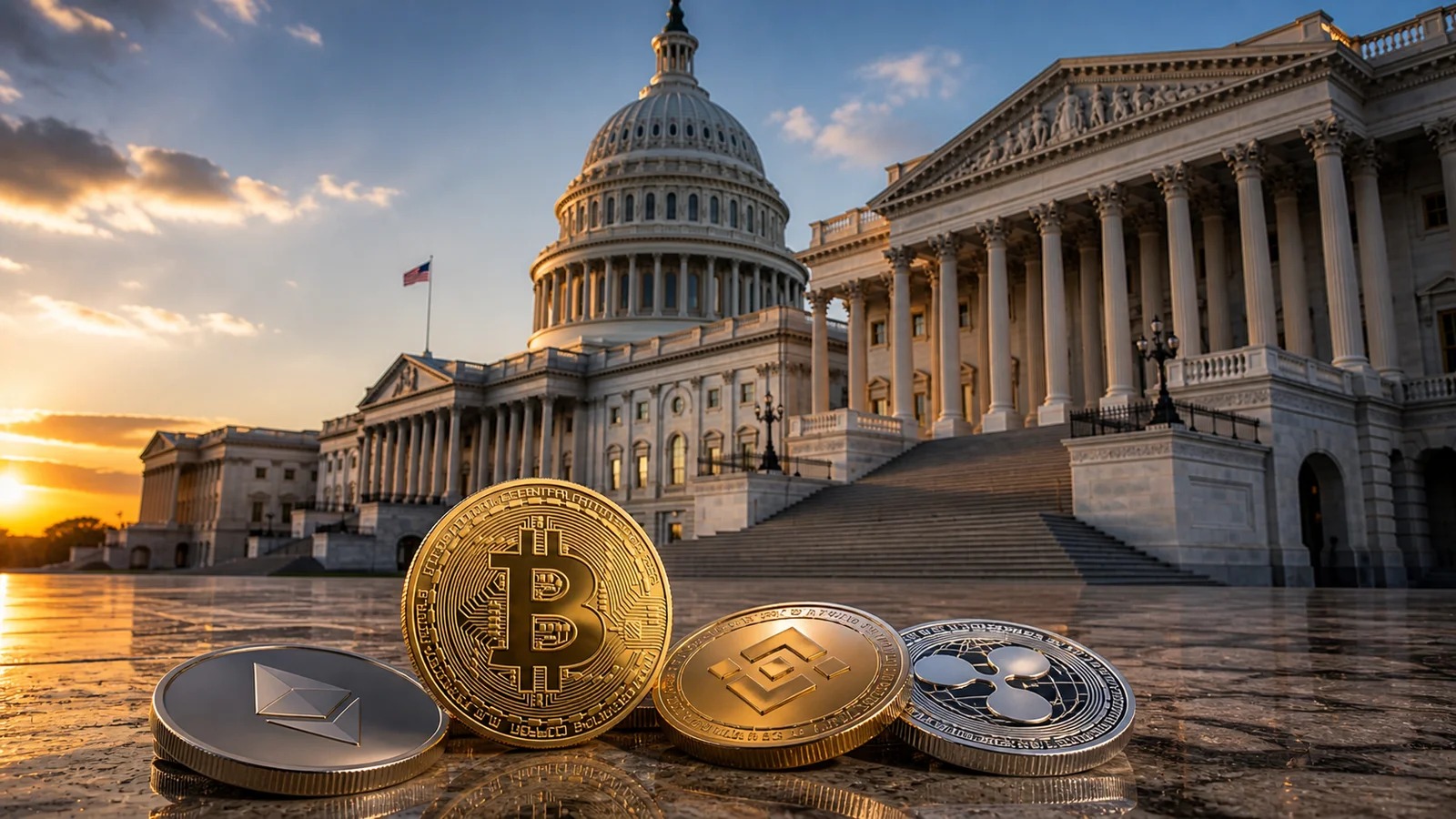
The United States Senate is preparing to review major cryptocurrency legislation next week that could create the country’s first broad regulatory framework for digital assets.
The proposed law, known as the Clarity Act, is expected to be discussed by the US Senate Banking Committee on 14 May in Washington, D.C.
Tim Scott, chairman of the committee, confirmed that senators will hold an executive session to examine the bill and debate its next steps.
The cryptocurrency industry has strongly supported the legislation, arguing that clear rules are necessary for the future growth of digital assets in the United States.
Industry leaders say the bill would reduce legal uncertainty by clearly defining when crypto tokens should be treated as securities, commodities, or other financial products.
The issue has created confusion for years because multiple US regulators have claimed authority over different parts of the cryptocurrency market.
If approved, the legislation could establish clearer responsibilities between financial agencies and encourage wider adoption of digital assets among businesses and investors.
The bill also includes rules connected to stablecoins, which are cryptocurrencies linked to traditional currencies such as the US dollar.
One of the most debated sections involves restrictions on rewards paid to customers holding stablecoins.
Under a compromise negotiated by Thom Tillis and Angela Alsobrooks, companies would be prohibited from paying rewards on idle stablecoin holdings because they resemble traditional bank deposits.
However, rewards linked to other stablecoin activities, including payment transactions, would still be allowed.
The compromise was designed to address concerns raised by the banking industry.
US banks argue that interest-like rewards on stablecoins could encourage people to move money out of traditional banks and into crypto platforms.
Banking groups warn that large deposit outflows could weaken the regulated banking system and create risks for financial stability.
Lobbyists representing banks have reportedly launched efforts to persuade some Republican lawmakers to oppose parts of the bill before the committee hearing.
Bank representatives are particularly focused on closing what they describe as a loophole connected to previous legislation that allows intermediaries to pay interest on stablecoins.
Crypto companies strongly disagree with the banking industry’s position.
Industry representatives argue that banning stablecoin rewards through exchanges or other third parties would reduce competition and slow innovation in the digital asset sector.
The cryptocurrency industry has increased political influence in Washington over the last several years through lobbying campaigns and election funding.
Many crypto firms hope Congress will pass the Clarity Act before the November midterm elections because future political changes could make approval more difficult.
The US House of Representatives already passed its own version of the bill in July last year.
However, the Senate must approve legislation before the proposal can reach Donald Trump for final approval.
The legislation would also require support from at least seven Democrats in the Senate to pass.
Some Democratic lawmakers continue opposing the bill, arguing that it does not include strong enough anti-money laundering protections.
Critics have also raised concerns about public officials and political figures potentially profiting from cryptocurrency businesses and investments.
Digital assets have become a major political issue in the United States as cryptocurrency companies push for broader legal acceptance and clearer regulation.
President Trump has publicly supported the crypto industry and previously described himself as a “crypto president.”
His administration has signalled greater openness toward cryptocurrency markets compared to earlier regulatory approaches in Washington.
At the same time, Trump family-linked crypto ventures have helped increase public attention on digital assets and blockchain technology.
Supporters of the Clarity Act believe the legislation could strengthen America’s position in the global cryptocurrency market by giving companies more certainty to operate and invest.
Opponents warn that weaker regulation could increase financial risks and create new challenges for consumer protection and financial oversight.
The upcoming Senate session is expected to become one of the most closely watched cryptocurrency policy debates in the United States this year as lawmakers decide how digital assets should be regulated in the future.

