


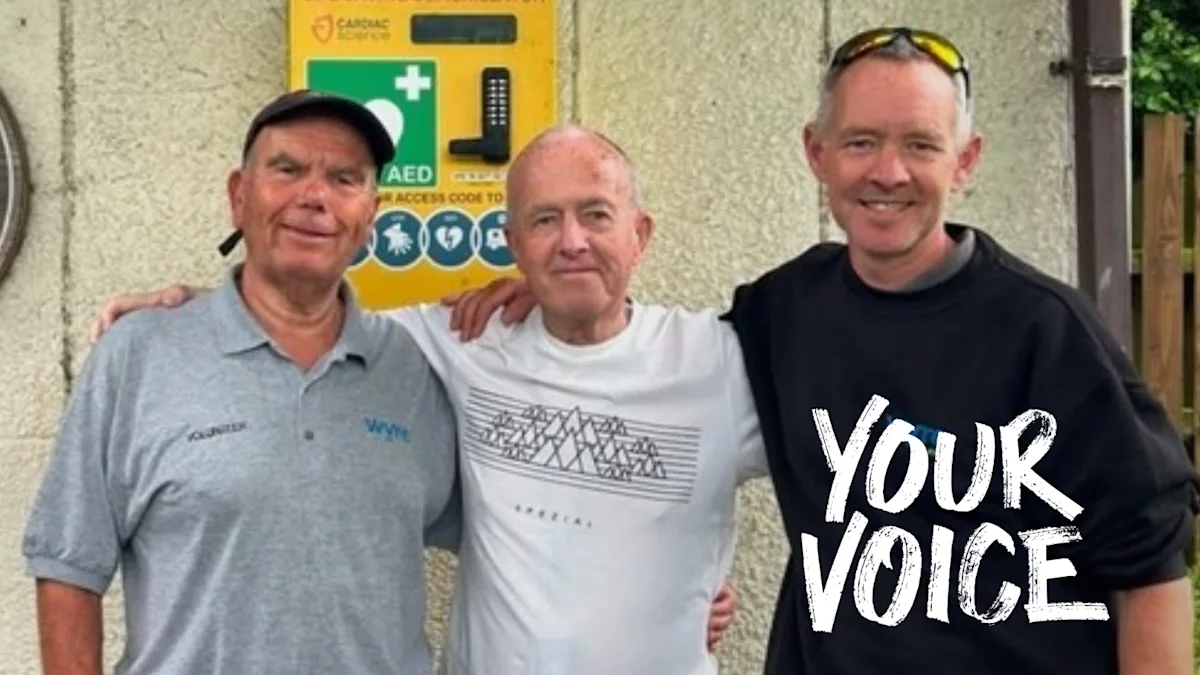
Defibrillator rescue story has highlighted how quick action and basic first aid skills saved a man’s life after he collapsed without warning at a public park in Lancashire. The incident happened at Wyre Estuary Country Park in Thornton-Cleveleys, where a volunteer suffered a sudden cardiac arrest.
Jim Berrigan, 74, had just finished a litter picking activity when he returned to a staff kitchen area. Moments later, he collapsed without warning. He later said he felt like his life had been “switched off and on again” after the emergency response that followed.
A nearby ranger, Graeme Nuttall, quickly stepped in to help. He is a trained first aider and was working nearby when he heard that Jim had fallen unconscious. He immediately began cardiopulmonary resuscitation, known as CPR, to keep blood and oxygen flowing.
Graeme then asked another volunteer, Steve, to bring a defibrillator located outside the building. The device delivered a shock after detecting a shockable heart rhythm. This action helped restore Jim’s heartbeat before emergency services arrived.
Jim later said he was deeply emotional when he met Graeme again in hospital. He said the ranger had given him a “second chance” at life. He added that he was grateful to be able to spend more time with his family after surviving the incident.
He spent six weeks in hospital recovering from the cardiac arrest. He is now waiting to begin cardiac rehabilitation, a structured program that helps patients regain strength and reduce the risk of future heart problems.
Graeme described the moment he found Jim on the ground as critical. He said Jim was unconscious, not breathing, and had no pulse when he started CPR. He added that the quick access to the defibrillator made a major difference in the outcome.
Jim’s son, Neil Berrigan, has since shared the story to raise awareness about the importance of public access defibrillators. He said he was shocked by what happened but extremely grateful for the fast response that saved his father’s life.
He also said more defibrillators should be placed in public areas so that help can be delivered quickly in emergencies. He believes wider access could increase survival chances in similar cases.
Medical experts say cardiac arrest can happen suddenly and without warning. Survival often depends on immediate CPR and defibrillation within minutes. Public access to defibrillators is considered a key factor in improving survival rates.
In this case, the device was located outside the building where Jim collapsed, allowing it to be used quickly. This fast response played a crucial role in restarting his heart before irreversible damage occurred.
Community members have praised the actions of the ranger and volunteers involved. Their quick thinking and training helped turn a life threatening situation into a survival story.
The incident has also encouraged renewed discussion about first aid training in public workplaces and parks. Many health professionals say more training and awareness could help save more lives in similar emergencies.
Jim’s recovery continues as he regains strength after the major health event. He says he now sees life differently and values every moment more deeply after surviving the cardiac arrest.
The defibrillator rescue story stands as a powerful example of how emergency preparedness, teamwork, and quick response can make the difference between life and death in public spaces.

