


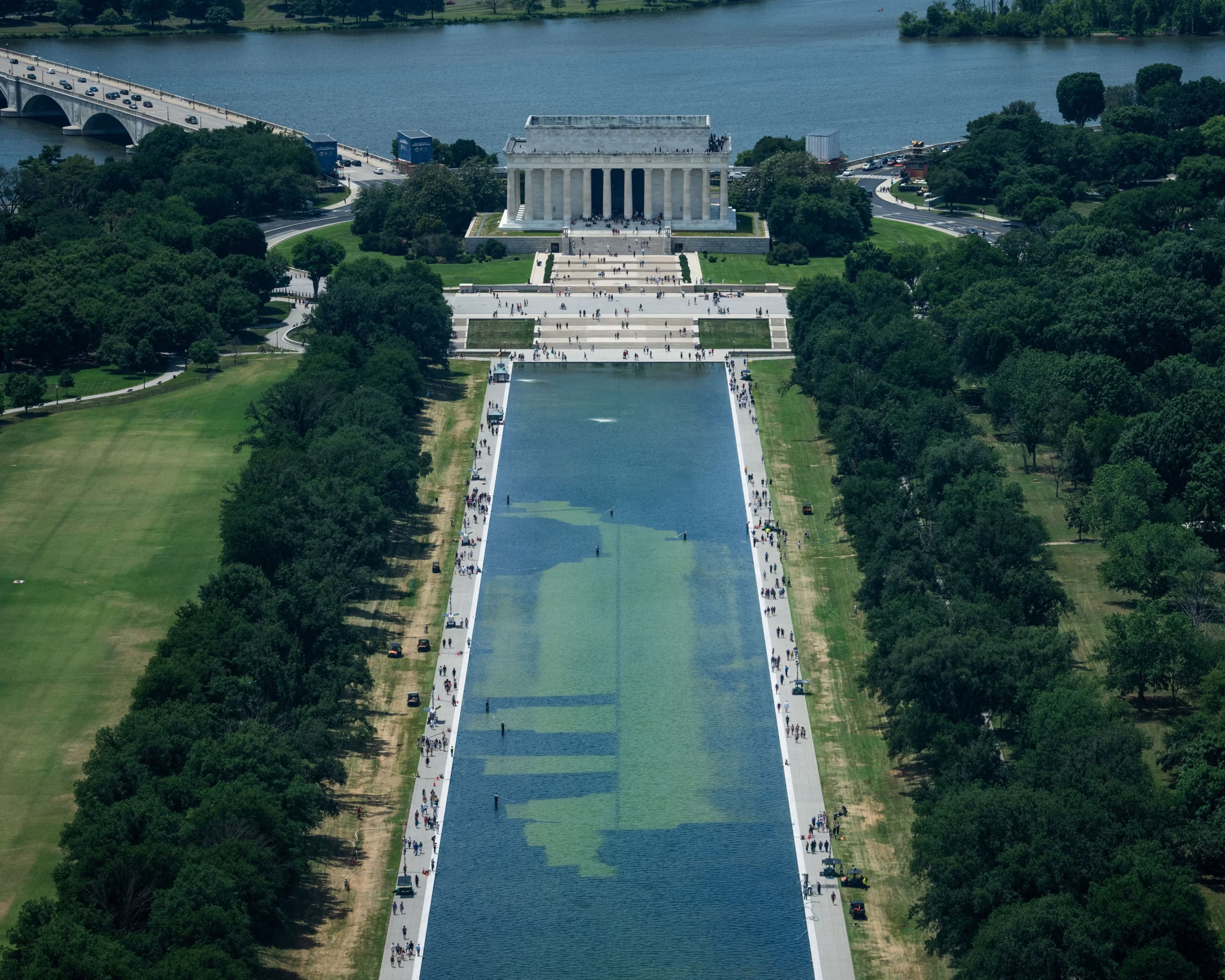
The Washington reflecting pool has become the center of a new political and public debate after issues appeared following a major renovation project. The site, located between the Washington Monument and the Lincoln Memorial, was recently upgraded in a $14.2 million makeover.
Former US President Donald Trump said the project was meant to restore and beautify major landmarks in the capital. He claimed the reflecting pool would be turned “American flag blue” as part of wider efforts to improve national monuments in Washington, D.C.
However, soon after the renovation work was completed, problems began to appear. An algae bloom turned the water green, and parts of the newly applied blue paint were seen peeling off into the pool. The condition drew attention from visitors, media, and local observers.
Trump responded by blaming “vandalism” for the issues. In public statements shared on his Truth Social account, he said there were “real problems” caused by deliberate damage to the site. He also claimed that individuals responsible for vandalism had been arrested by park police, though no official confirmation was provided.
According to Trump, the renovation work included upgrades to more than 45 monuments, 28 statues, and 22 fountains across Washington. He said these projects were part of a broader effort to restore national landmarks and improve their appearance ahead of future national celebrations.
He also referred to markings found near the area, including “86 47” written on grass, suggesting it was an intentional act of disruption. However, no verified evidence has been presented linking these markings to the condition of the reflecting pool.
Officials from federal agencies have not confirmed Trump’s claims regarding arrests or sabotage. The US Department of the Interior has not publicly responded to the allegations.
In contrast, maintenance teams and National Park Service workers have been seen actively working at the site. They have used cleaning equipment and water treatment methods, including hydrogen peroxide, in an effort to control the algae growth and improve water clarity.
Despite these efforts, the pool continued to show signs of discoloration in some areas, with algae still visible and paint flakes floating on the surface. The situation has raised questions about the effectiveness of the renovation and the materials used.
Experts later identified the algae as Scenedesmus, a common form of green algae that can grow in nutrient-rich water conditions. Environmental reports suggested that the bloom developed shortly after the renovation was completed.
The project has also faced scrutiny over its contracting process. Reports indicated that a no-bid contract was awarded to a company linked to a long-time supporter of Trump. Critics have raised concerns about transparency and procurement practices.
Political reactions have followed. Tim Walz, governor of Minnesota, criticized the situation in a public post, saying it reflected broader issues in how the project was planned and managed. He pointed to concerns about oversight, spending, and accountability.
The reflecting pool is one of Washington’s most symbolic public spaces and is often visited by tourists and residents. Its condition is now being closely monitored as restoration efforts continue.
Authorities say cleaning and repair work will continue in the coming weeks. Meanwhile, debate around the project highlights wider disagreements over public spending, urban renovation, and the management of historic national landmarks in the United States.

