


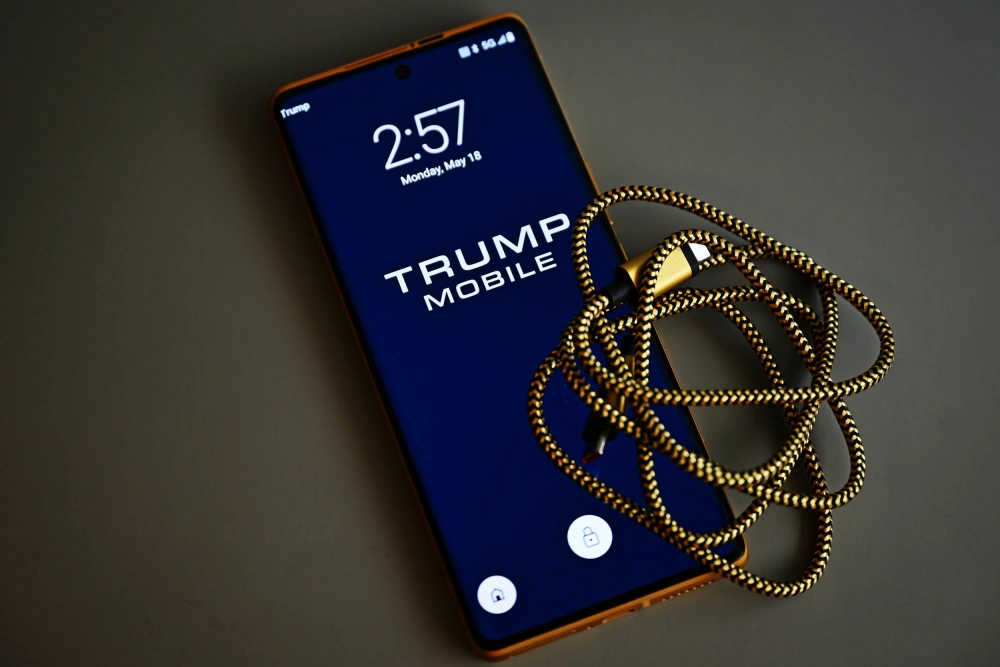
Nine months after its original delivery deadline, Trump Mobile has finally begun sending out its T1 smartphones to media reviewers and customers who placed pre-orders. The company confirmed this week that initial units are now being shipped, marking a long-delayed rollout of the device.
NBC News received one of the early review models and tested the phone. The device, which was first announced with strong marketing claims, is now no longer being promoted as “Made in the USA.” That claim was central to the phone’s early branding when it was first introduced to the public.
The delay highlights the challenges faced by the project from the start. When the T1 phone was first unveiled, it was promoted with ambitious messaging around domestic manufacturing and fast delivery timelines. However, production setbacks pushed the launch back by several months, raising questions about supply chain planning and manufacturing capacity.
In its current form, the phone has quietly dropped the “Made in the USA” label from its marketing materials. This change marks a significant shift in positioning compared to the original announcement. The updated messaging focuses more on availability and shipping rather than origin of production.
The review unit tested by NBC News shows that the device is now entering a standard consumer rollout phase. Early impressions suggest the phone is functional, but the long delay has already affected expectations among pre-order customers. Many had been waiting nearly a year for delivery after placing their orders.
The T1 phone launch has drawn attention not only because of its branding but also because of its unusual development timeline. Consumer electronics products typically follow strict production schedules, especially when pre-orders are involved. Delays of this length can impact customer trust and long-term adoption.
Industry observers note that launching a new smartphone in a highly competitive market is already difficult. Established companies dominate the space with large-scale manufacturing networks and mature supply chains. Smaller or newer entrants often face challenges in matching those production and distribution capabilities.
The removal of the “Made in the USA” claim is also significant in terms of consumer perception. Such labels are often used as a key selling point, especially for politically branded or nationally positioned products. Changes to those claims can affect how the product is marketed going forward.
Despite the delay, shipments beginning now indicate that the project has moved past its initial production hurdles. The company is now focusing on fulfilling pre-orders and getting the device into the hands of early users. However, no detailed timeline has been provided for full market availability or wider retail release.
The phone’s late arrival also raises broader questions about branding-driven consumer electronics. Products tied closely to political or public figures often receive high initial attention, but they also face increased scrutiny when delivery expectations are not met. In this case, the gap between announcement and shipment has become a key part of the story.
For now, the Trump Mobile T1 enters a crowded smartphone market with delayed timing and adjusted messaging. Its performance in the market will likely depend on how well it meets user expectations after such a long wait, and whether it can overcome the early setbacks tied to its rollout.

