


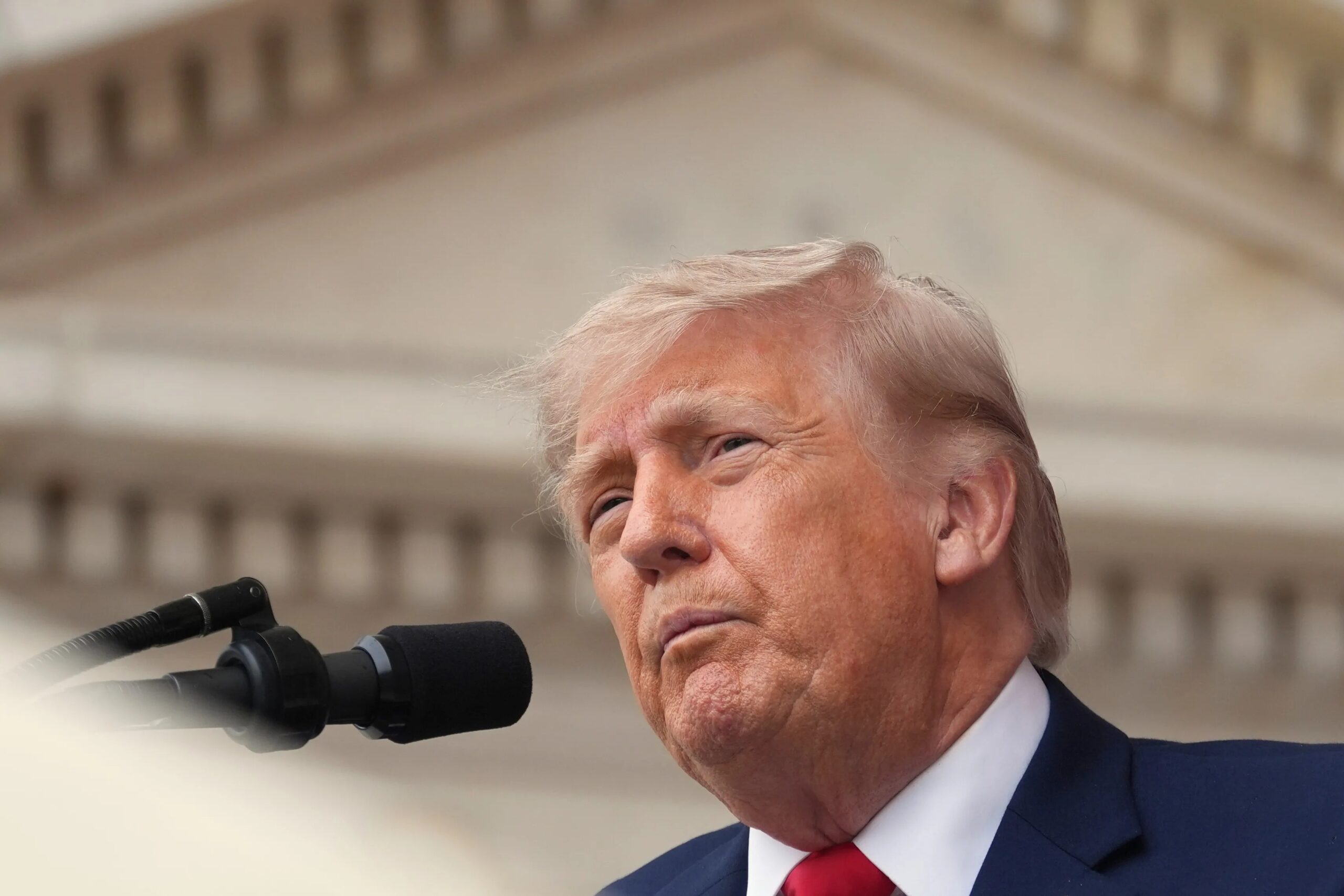
President Donald Trump’s approval rating has fallen to its lowest level yet, according to new opinion polls released ahead of the upcoming midterm elections.
A recent national survey found Trump’s approval rating at 32%, marking a new low point during his current term. The findings suggest the president has lost support among several key voter groups, including independent voters and Latino voters who helped boost his support during the 2024 election.
The decline comes at a critical moment for Republicans. Midterm elections are now only weeks away, and control of Congress will be decided by voters across the country. Political analysts say changes in public opinion could play an important role in determining the outcome.
Despite the poll results, Trump dismissed concerns about his standing with voters. Before departing for a campaign trip to Nebraska on Monday, he rejected suggestions that support for his administration is weakening.
When asked about recent polling data showing a drop in support among Latino voters, Trump responded that he was doing well and criticized media coverage of the issue.
The latest polling, however, points to growing challenges for the president and his party. Surveys show that many voters are becoming less satisfied with the direction of the country and the performance of the administration.
One poll released over the weekend found that a large majority of Latino voters now prefer a Congress controlled by Democrats. According to the survey, 59% of Latino voters support Democratic control of Congress, a significant increase compared with recent election cycles.
The same poll found that only 24% of Hispanic voters approve of Trump’s job performance. The figures suggest a notable shift among a voting bloc that gained increased attention from both major parties during recent national elections.
Latino voters have become one of the most important groups in American politics. Their growing share of the electorate has made them a key target for campaign efforts in many states. Changes in support among these voters can influence both local and national races.
Trump has spent recent days traveling across the country to campaign for Republican candidates. His appearances are part of a broader effort to strengthen support before voters head to the polls next month.
The president has focused on encouraging turnout among Republican voters and promoting candidates aligned with his agenda. However, signs of declining support have appeared in several areas, including states that have traditionally favored conservative candidates.
Some Republican leaders have also begun to create distance between themselves and the president on certain issues. Immigration has become one of the main areas where differences have emerged.
Several candidates have adjusted their messages to better match local concerns as they seek support from voters in competitive races. Political observers say some Republicans are trying to avoid being tied too closely to national controversies while still maintaining support from the party base.
Economic concerns remain a major factor shaping voter attitudes. Many Americans continue to express frustration about financial pressures and uncertainty about future economic conditions.
Public opinion has also been influenced by foreign policy issues, including the conflict involving Iran. Some voters have raised concerns about the administration’s handling of international affairs and national security challenges.
Polls indicate that dissatisfaction with these issues may be contributing to the president’s declining approval numbers. Voters who are unhappy with economic conditions or foreign policy decisions often use midterm elections as an opportunity to express their views.
Historically, midterm elections have often been difficult for the party that controls the White House. Political experts note that shifts in voter sentiment can lead to significant changes in congressional representation.
For Republicans, the coming weeks will be crucial. Party leaders are working to maintain support in key districts while responding to growing concerns reflected in recent polling.
Democrats, meanwhile, hope that voter frustration will help them gain seats and strengthen their position in Congress. Campaign efforts from both parties are expected to intensify as Election Day approaches.
The latest surveys suggest that public opinion remains fluid, and voter attitudes could continue to change. Still, the new data highlights the challenges facing the White House as the nation moves closer to the midterm vote.
With control of Congress at stake, both parties are watching polling trends closely. The coming election will provide a clear test of how voters view the president’s performance and the direction of the country.

