


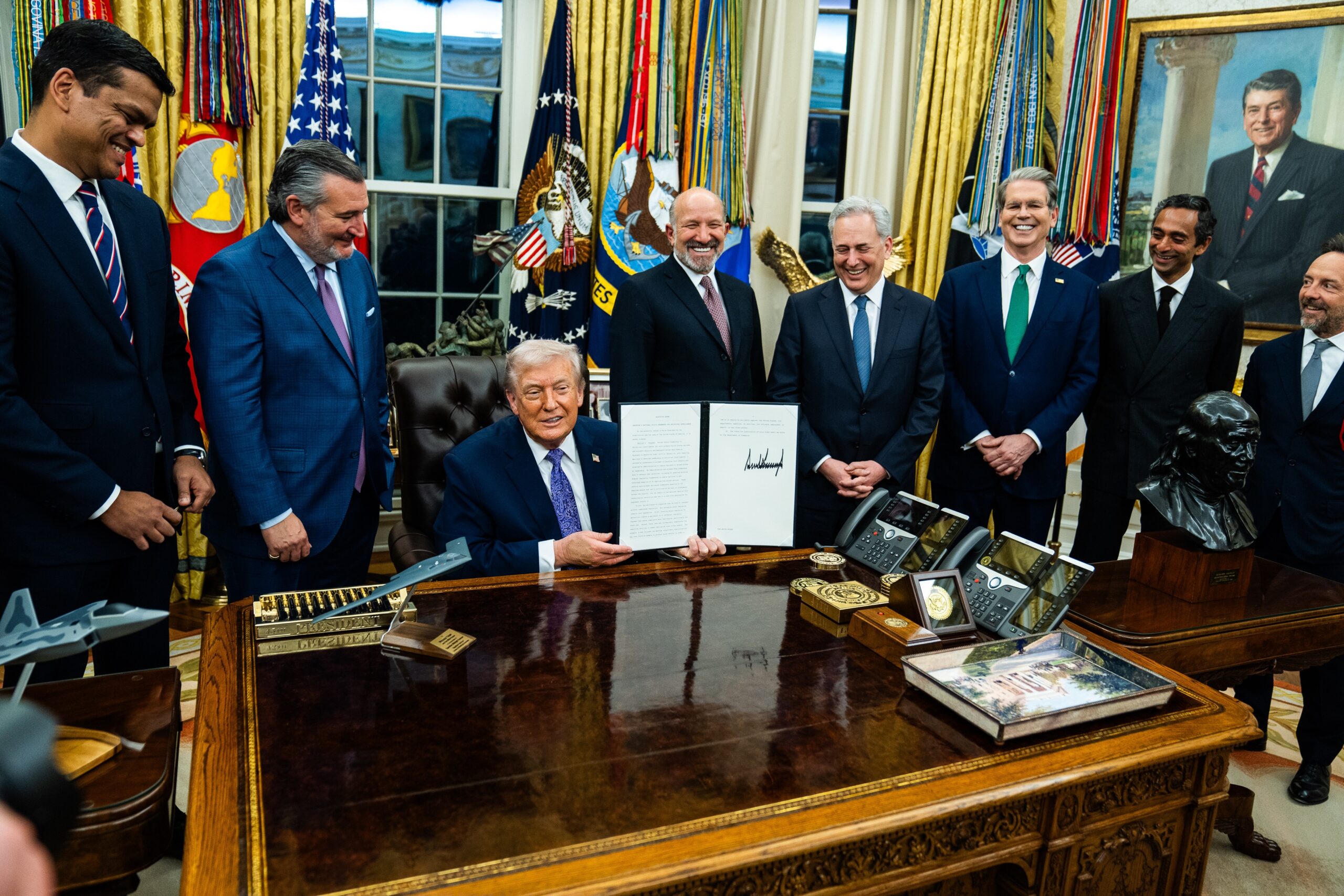
President Donald Trump signed a new executive order on Tuesday directing federal agencies to replace the term artificial intelligence with the term Super Intelligence across the executive branch. The move formalizes a rebranding effort that Trump has promoted in recent weeks as he argues that current technology has moved beyond what the traditional AI label represents.
The executive order was signed following a White House summit that brought together leading technology executives and government officials. Under the new directive, federal agencies must use the terms Super Intelligence and SI in official communications, public statements, websites, reports, policy documents, and other materials that are not required by law to use existing terminology.
The order also instructs agencies to stop using and recognizing the terms artificial intelligence and AI in future non-statutory communications. Administration officials said the change is intended to reflect the rapid growth of advanced digital systems and their expanding role across industries and government operations.
Trump stated in the order that the phrase artificial intelligence no longer fully describes the capabilities of modern technology. He argued that current systems are becoming increasingly powerful and are helping people perform tasks that were once considered impossible.
According to the order, the term Super Intelligence better reflects the promise, potential, and fast-changing nature of these technologies. Trump wrote that modern systems are amplifying human creativity, increasing productivity, and opening new opportunities for innovation.
The executive order also directs the assistant to the president for science and technology to develop an official federal definition of Super Intelligence. That office will also review whether additional executive actions are needed to ensure the new terminology is adopted throughout the federal government.
The announcement follows comments Trump made during the United Nations General Assembly last week. During his speech, he publicly called for replacing the term artificial intelligence with Super Intelligence and suggested that leadership in the technology race would play a major role in shaping future global influence.
At the time, Trump argued that the nation leading in advanced intelligence technologies would gain a significant advantage in economic growth, innovation, and national security. He said the competition to develop powerful systems is becoming one of the most important global challenges.
The executive order arrives as governments and technology companies continue debating how advanced digital systems should be managed and regulated. While some experts support stronger oversight and safety measures, others argue that excessive regulation could slow innovation and reduce competitiveness.
Trump has consistently expressed concerns about strict government controls on emerging technologies. During a White House roundtable with technology executives, he emphasized the importance of encouraging innovation while maintaining responsible development practices.
The president also revealed that technology leaders attending the summit signed a document known as the White House Accord on Super Intelligence. Trump described the agreement as morally binding and said it represented a shared commitment among industry leaders to support responsible development standards.
According to administration officials, the accord outlines voluntary commitments rather than legal requirements. Participants agreed to support internal safeguards, independent reviews, and accountability measures designed to strengthen public trust in advanced technology systems.
House Speaker Mike Johnson said discussions during the summit focused on balancing innovation with public interests. He noted that participants explored ways to maintain American leadership in technology while ensuring responsible development practices.
Johnson described the agreement as a statement of principles and expectations rather than a regulatory framework. He said the document encourages strong internal controls and multiple levels of review across the industry.
Technology leaders reacted positively to the summit. Meta chief executive Mark Zuckerberg said the gathering represented an important step forward for cooperation between government and industry. He praised the commitment made by major technology companies to strengthen internal oversight and adopt multiple layers of auditing and review.
The administration views the initiative as part of a broader effort to position the United States at the forefront of emerging technologies. Supporters argue that the new terminology reflects a future-focused approach, while critics question whether changing the name alters the underlying challenges associated with advanced systems.
As federal agencies begin implementing the order, attention is likely to focus on how the government defines Super Intelligence and how the new language influences future technology policy. The move marks a significant shift in official terminology and signals the administration’s evolving approach to the next generation of digital innovation.

