


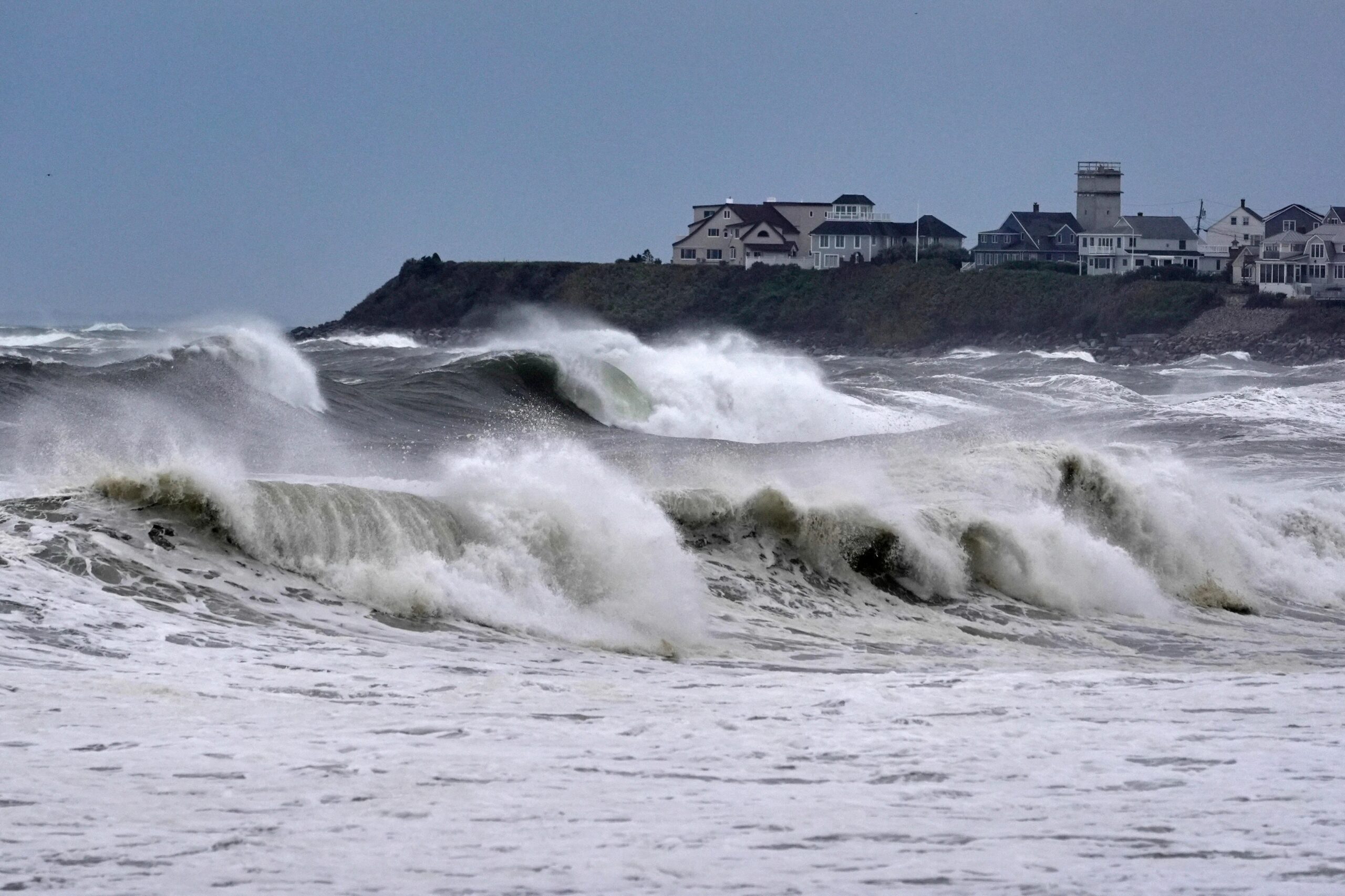
A powerful storm continued to batter coastal communities across the Northeastern United States on Sunday. Heavy rain, strong winds, and high tidal surges caused major flooding and power outages across several states.
Residents in many shoreline towns faced a second day of flooding as the slow-moving nor’easter remained over the region. The storm flooded streets, damaged homes, and left thousands of people dealing with rising water.
In New Jersey, coastal neighborhoods saw repeated flooding during each high tide cycle. Many residents said the water kept returning throughout the day.
Sea Bright resident Caroline Virenius said floodwater entered her garage several times. About one foot of water filled the area during the storm. She said the flooding was not a single event because the water returned again with every high tide.
The storm also brought strong winds to Long Island in New York. Wind gusts knocked down trees and utility poles. Some homes suffered damage as falling trees struck buildings.
Officials said the storm was responsible for at least one death. A worker with the New York City Housing Authority died on Saturday after a tree fell during the severe weather.
The weather system was expected to remain active through Sunday. Forecasters warned that heavy rain, rough surf, and strong winds could continue from the Mid-Atlantic region into New England.
Rainfall totals reached significant levels in some areas. Parts of New Jersey received more than four inches of rain since Friday. Combined with ocean surges, the rainfall created serious flooding in communities that are familiar with coastal storms.
Many residents said the flooding was among the worst they had seen in years. Some reported that water levels reached heights not experienced for nearly a decade.
The National Weather Service said the storm would gradually weaken overnight. However, officials warned that additional flooding remained possible during upcoming high tide cycles.
Local leaders urged residents to stay alert. Nassau County Executive Bruce Blakeman said another band of the storm could move through the area later in the day. While weaker than earlier portions of the system, it still had the potential to bring rain and flooding.
Power outages spread across the Northeast and Mid-Atlantic region. At certain points on Sunday, more than 100,000 customers were without electricity. Coastal counties from New Jersey to Connecticut experienced some of the largest outages.
Travel was also affected. Airlines canceled and delayed flights at airports along the East Coast. Boston Logan International Airport reported more than 250 canceled flights by late Sunday morning. Wind gusts near 40 miles per hour contributed to the disruptions.
Flooding remained the biggest concern for many communities. Forecasters said the heaviest remaining rainfall was expected from northern New Jersey into southern New England.
Weather experts noted that tidal flooding could continue even as the storm weakened. Water levels were expected to remain elevated through multiple high tide cycles.
In New York City, some streets in the Howard Beach neighborhood were covered with several inches of water. Despite the flooding, some residents still ventured outside to visit local businesses.
In North Beach Haven, New Jersey, business owner Carole Ann Palmer described the flooding as the worst she had seen in ten years. She said water levels continued rising throughout Saturday.
The storm swept away the front step of her property. Palmer also saw neighbors kayaking through flooded streets.
She faced another challenge on Sunday while caring for her two puppies. To reach dry ground, she carried each dog across flooded areas while wearing protective waders.
Elsewhere in Sea Bright, resident Bernard Dowd walked through floodwater to reach his home. He returned from work on Saturday to find his basement filled with water.
Despite the damage, Dowd said the community was better prepared than in the past. He pointed to building rules introduced after Hurricane Sandy. Many homeowners raised the height of their houses following that devastating storm.
Residents believe those improvements helped reduce damage during the latest nor’easter. Still, many communities remained on alert as officials monitored tides and weather conditions heading into the new week.

