


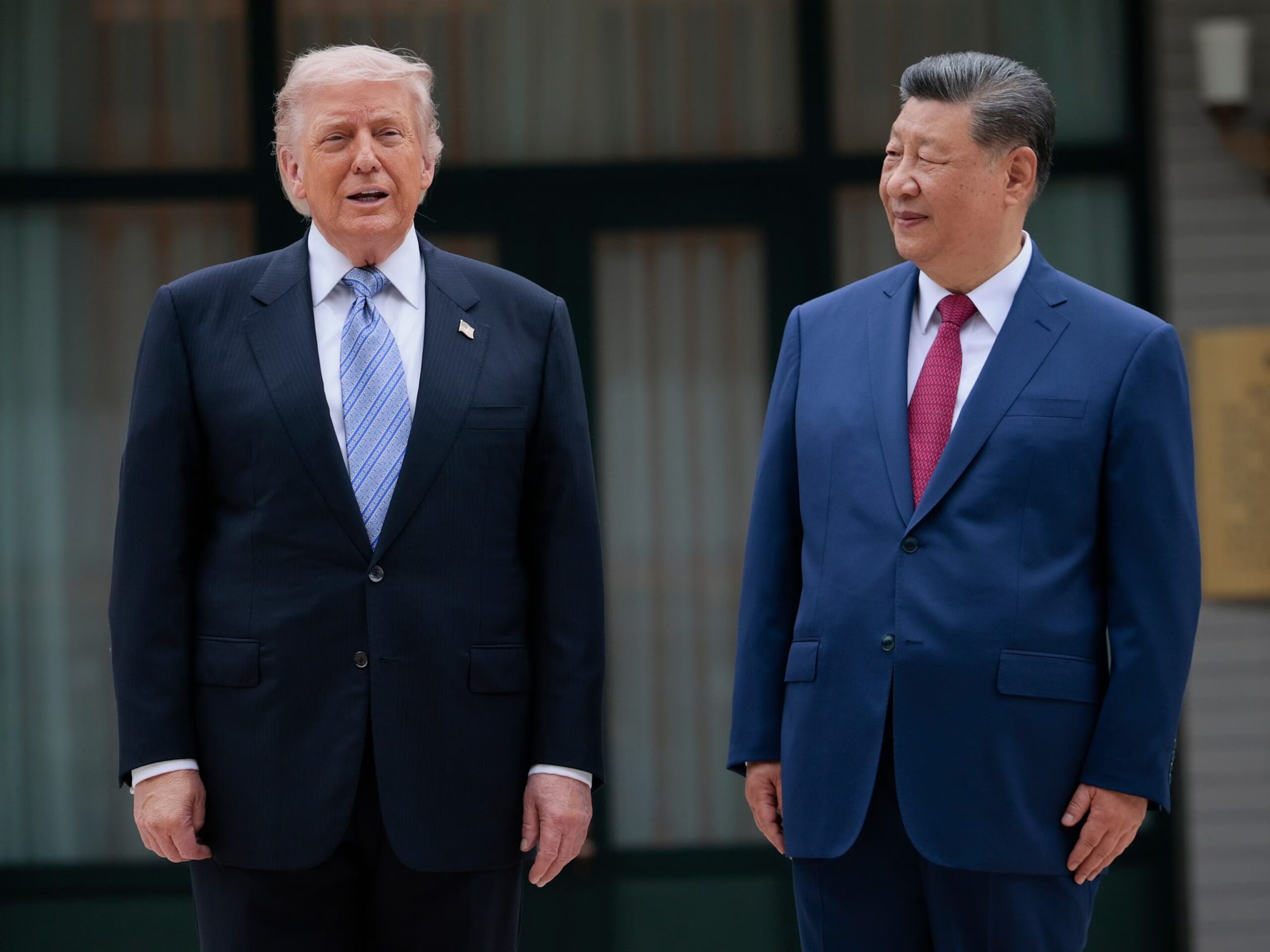
U.S. President Donald Trump and Chinese President Xi Jinping are set to meet in Washington this week as both countries seek to manage a relationship marked by intense competition and growing global influence.
The summit comes at a time when the United States and China remain rivals in trade, technology, and artificial intelligence. While neither side is expected to reach a major breakthrough, the meeting is viewed as an important effort to maintain communication between the world’s two largest economies.
Xi’s visit, which begins on Wednesday, marks his first trip to Washington in a decade. The talks will be the third meeting between the two leaders since Trump returned to the White House.
The visit takes place after both countries stepped back from a trade conflict that had raised concerns across the global economy. During that dispute, Washington and Beijing imposed high tariffs on each other’s goods. China also restricted supplies of critical minerals that are used in products ranging from electric vehicles to advanced defense systems.
Although tensions over tariffs have eased, competition between the two nations remains strong. Trade issues continue to be important, but technology and artificial intelligence have become central areas of focus.
The United States is working to maintain its leadership in advanced technologies. American officials see innovation in artificial intelligence as closely linked to economic growth, national security, and future global influence.
China is also investing heavily in technology and AI development. Over recent years, the country has expanded its economic, military, and technological capabilities as it seeks a larger role in international affairs.
As a result, both governments are pursuing stability while also protecting their own strategic interests. Analysts say the relationship combines cooperation in some areas with rivalry in many others.
Senator Steve Daines, a Republican from Montana who advises Trump on China issues, recently traveled to China ahead of the summit. He said the fact that the leaders continue to meet is important in itself.
According to Daines, ongoing dialogue helps build communication channels and reduce the risk of misunderstandings between the two countries. He suggested that maintaining the relationship may be as significant as any specific agreement reached during the visit.
Chinese officials have also stressed the need for stable relations. Cui Tiankai, a former Chinese ambassador to the United States, recently acknowledged that major disagreements exist between the two nations. However, he said efforts should continue to preserve overall stability.
Experts note that both sides have reasons to avoid a sharp deterioration in ties. The United States and China remain deeply connected through trade, investment, and global supply chains. At the same time, they are competing for influence in key industries and strategic regions.
Artificial intelligence is expected to be one of the most important topics during the summit. Both governments view AI as a technology that could shape future economic and military power. Competition in this field has increased as countries race to develop advanced systems and secure leadership in innovation.
Other issues are also likely to be discussed. Iran remains an area of concern for both countries because of its impact on regional stability and energy markets. Taiwan is another sensitive topic that continues to influence relations between Washington and Beijing.
Despite efforts to improve communication, economic restrictions remain in place on both sides. The United States has imposed limits on certain technology exports, while China has taken steps affecting access to strategic materials and industries.
Researchers and policy experts describe the current relationship as one of controlled competition. Both governments are seeking ways to protect national interests while avoiding direct confrontation.
Observers say the summit is unlikely to produce sweeping agreements. Instead, the meeting may focus on maintaining regular communication and identifying areas where cooperation remains possible.
The discussions in Washington highlight a broader reality facing both nations. The United States and China are working to manage a complex relationship that includes economic ties, technological rivalry, and geopolitical competition.
As Trump and Xi meet again, attention will center on whether continued dialogue can help prevent future disputes and provide greater stability in one of the world’s most important international relationships.

