


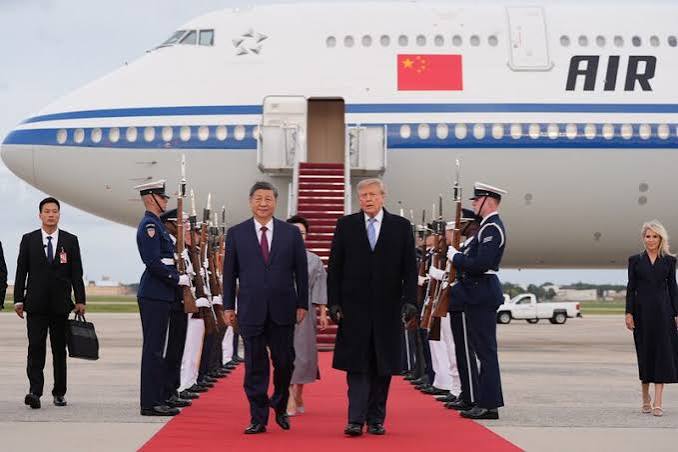
Chinese President Xi Jinping arrived in Washington on Wednesday for a three-day state visit. President Donald Trump personally welcomed Xi at Joint Base Andrews. The visit began with a rare airport greeting and came as both countries agreed to extend their trade truce until January.
The extension was announced by Treasury Secretary Scott Bessent. The current agreement had been due to expire on Nov. 10. Under the deal, the United States and China will continue to reduce tariffs and avoid new trade restrictions. The new deadline is Jan. 10.
Bessent said the extra time could help both sides continue talks on major issues. He said the extension may allow Trump and Xi to hold more discussions during international meetings planned later this year in China and the United States.
Trade remains one of the most important issues between the two countries. The United States and China have faced disputes over tariffs, market access, and supply chains. Other areas of concern include artificial intelligence, tensions involving Iran, and Taiwan.
The arrival ceremony highlighted the importance both governments place on the relationship. A long red carpet was placed beside Xi’s aircraft. Trump and first lady Melania Trump stood near the plane to greet Xi and his wife, Peng Liyuan.
The ceremony included an honor guard, military representatives from all branches of the armed forces, and the playing of both national anthems. Two B-1 bombers also conducted a flyover during the event.
After returning to the White House, Trump spoke briefly about the visit. He described the Chinese delegation in positive terms and said he believed they appreciated the welcome.
In a statement released upon arriving in the United States, Xi emphasized cooperation between the two nations. He said China and the United States should work as partners rather than rivals. Xi added that both countries could benefit from each other’s success and contribute to global stability and growth.
The visit has drawn attention from lawmakers and foreign policy experts. Some Republicans questioned the scale of the welcome offered to the Chinese leader.
Sen. Roger Wicker, chairman of the Senate Armed Services Committee, criticized the visit before Xi’s arrival. He argued that ongoing concerns involving China and the Chinese Communist Party made such a high-profile invitation inappropriate.
However, Secretary of State Marco Rubio defended continued engagement between the two countries. He said regular communication is necessary because the United States and China are the world’s two largest economies and among the most powerful military powers.
Foreign policy analysts also offered different views on the event. Danny Russel, a former U.S. diplomat, said the airport ceremony could provide a public relations benefit for Beijing. He argued that such gestures may strengthen China’s image both at home and abroad.
Trade experts also focused on the decision to extend the truce for only two months. China had reportedly hoped for a longer extension beyond January.
Wendy Cutler, a former U.S. trade negotiator, said the shorter timeline suggests Washington still wants to see stronger implementation of previous commitments. She pointed to issues involving critical mineral exports and agricultural purchases as areas of continued interest.
Craig Singleton, a senior fellow focused on international policy, said the extension gives the United States a chance to evaluate whether China follows through on promises related to American farm products. He said the limited extension creates an opportunity to review progress before considering any future agreement.
Trump has not publicly commented on the truce extension. More detailed discussions are expected during meetings on Thursday. The agenda includes trade, security concerns, and other strategic issues affecting both nations.
The visit will continue with an official White House arrival ceremony and a military review. Later in the evening, Trump and Xi are expected to attend a formal state dinner. Several leading figures from the technology sector are expected to attend, including executives from major American companies.
Officials from both countries hope the meetings will help maintain stable relations while creating room for future negotiations. Whether the temporary trade extension leads to a broader agreement remains uncertain, but both governments have signaled a willingness to keep talks moving forward in the coming months.

