


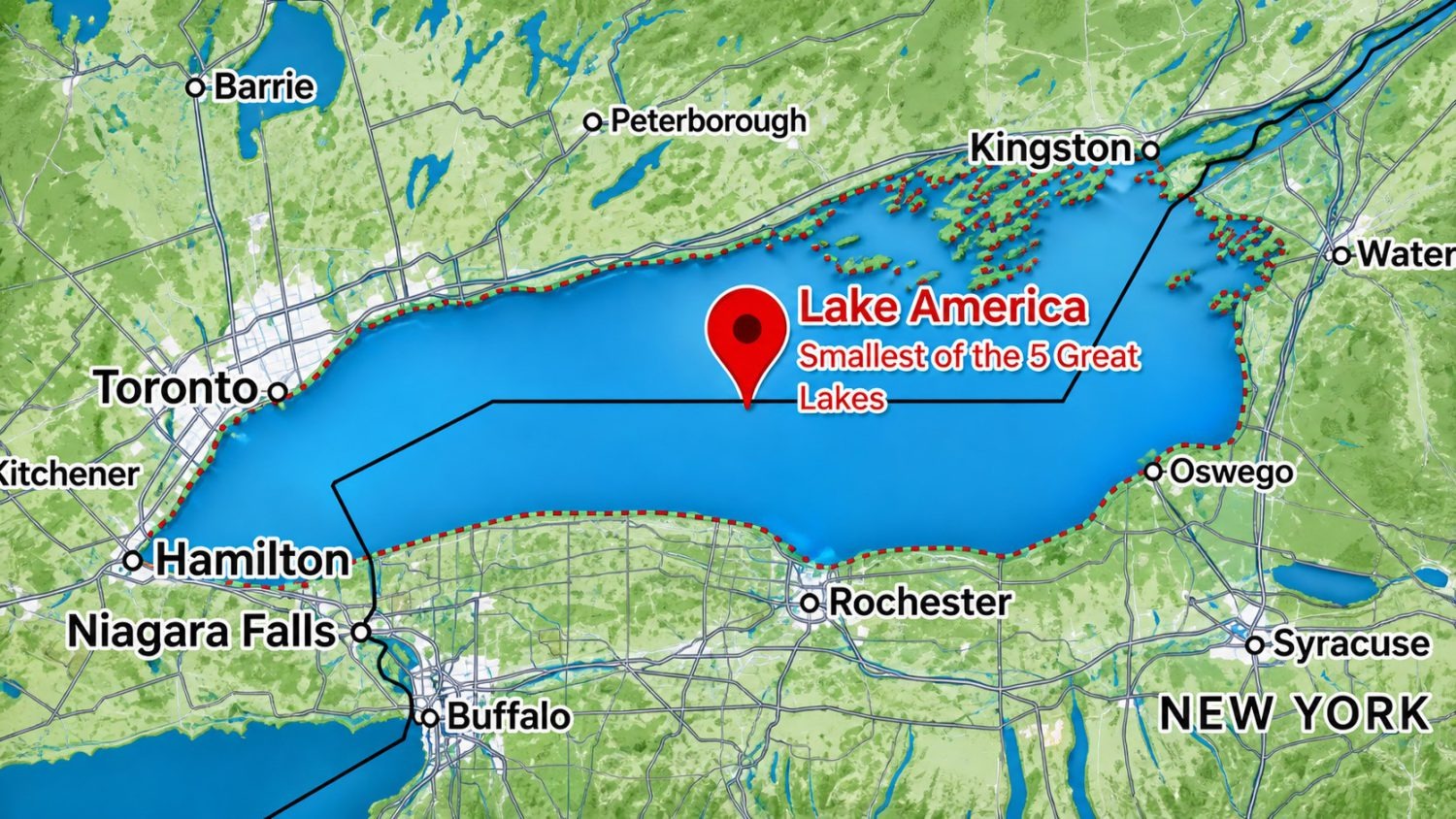
Apple has changed the name of Lake Ontario to “Lake America” for users of its Maps app in the United States. The move follows an executive order signed by President Donald Trump. The order directed federal agencies to use the new name for the Great Lake that lies between New York and the Canadian province of Ontario.
Users of Apple Maps in the United States now see “Lake America” on their screens. Users in Canada and many other countries still see the traditional name, Lake Ontario. The change has added fuel to a growing dispute between the United States and Canada.
The lake has carried the name Lake Ontario for centuries. Canadian leaders say the name comes from the language of the Indigenous Wendat people. They argue that the name existed long before modern Canada and the United States were formed.
President Trump welcomed Apple’s decision. He said the adoption of the new name by major mapping services showed that the change was complete. He pointed to the fact that both Apple Maps and another major mapping platform now use the new name for American users.
However, the order applies only within the United States. The US government cannot require Canada or other nations to adopt the new name. As a result, different names for the same lake now appear depending on a user’s location.
The renaming comes during a period of rising trade tensions between Washington and Ottawa. The executive order did not directly mention trade issues. Still, many observers noted that it arrived shortly after a sharp exchange between the two countries over tariffs.
Trade talks between the United States and Canada broke down late last month. Soon after, the United States imposed a 50 percent tariff on several Canadian imports. The White House also warned that new duties on steel, trucks, cars, and auto parts could take effect next year.
Canada responded with tariffs ranging from 25 percent to 50 percent on hundreds of American products. The measures increased pressure on businesses and raised concerns about future economic relations between the neighboring countries.
Canadian Prime Minister Mark Carney strongly opposed the renaming effort. He said the lake’s historic name reflects Indigenous heritage and should remain unchanged. He argued that the long history of the name makes it an important part of the region’s identity.
Ontario Premier Doug Ford also pushed back against the move. Provincial leaders unveiled a large public sign that reads “Lake Ontario, Now and Always.” The sign was placed near the lake to highlight Canada’s continued support for the traditional name.
The Trump administration defended the decision. Officials said the change reflects a policy aimed at recognizing the achievements of the American people and honoring national history through the naming of important landmarks.
Earlier in the week, Interior Secretary Doug Burgum said that the president had personally contacted Apple about the issue. He expressed confidence that the company would soon make the update for American users. Apple later introduced the change on its mapping platform.
The digital shift follows a similar move by another major mapping service, which updated its maps over the weekend. That company said it follows names listed by the United States Geographic Names Information System. Under its current policy, users in the United States see “Lake America,” while Canadian users continue to see “Lake Ontario.” Users in other countries may see both names.
Not every mapping company has accepted the change. One navigation platform publicly refused to alter the lake’s name. A simple social media post showing Lake Ontario and stating that the company would not change it gained wide attention online.
The response from users was immediate. Reports showed that the navigation app quickly climbed to the top position in app store rankings in the United States. Many people appeared to support its decision to keep the historic name.
As the debate continues, the lake remains a symbol of both geography and politics. While digital maps may now display different names depending on location, the dispute highlights the wider tensions shaping relations between the United States and Canada.

