


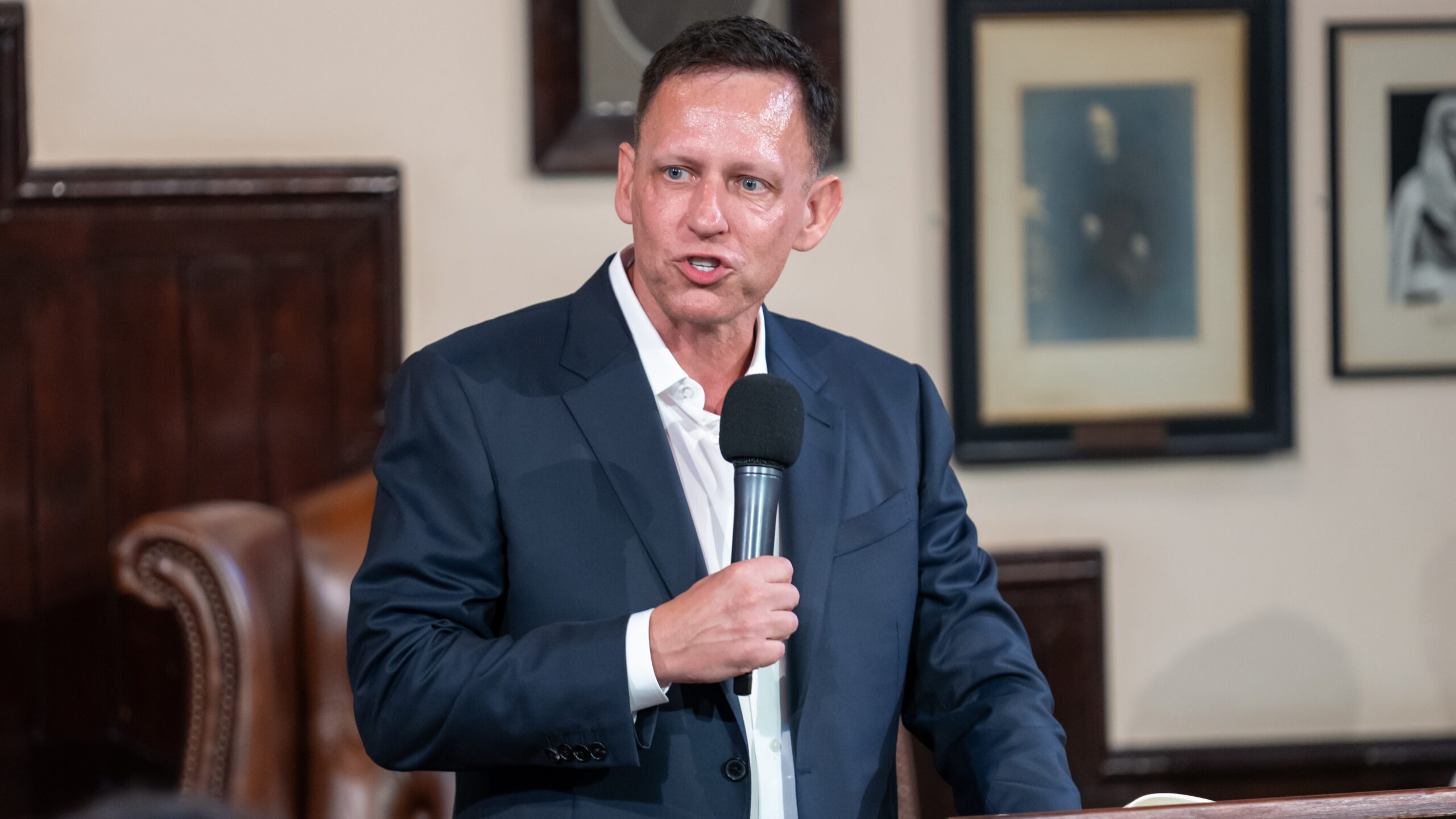
Billionaire investor Peter Thiel has spoken out against President Donald Trump’s war with Iran. He said the United States should not have started the conflict. His remarks mark a rare public challenge from a major Republican donor who has long backed Trump.
Thiel made the comments during a private lecture in Nashville, Tennessee, on October 12. Audio of the talk later came to light. In his remarks, Thiel questioned the choices that led to the war and warned that the United States could lose ground on the world stage.
“I’m skeptical of [the war], I think we should not have done it,” Thiel said. “There were a lot of mistakes that were made.”
He also raised doubts about the country’s power and global standing. “Maybe we don’t have the hard power. Maybe we’re going to lose the soft power war,” he added.
The comments come as the conflict has lasted longer than the Trump administration first expected. The war has raised questions about the president’s promise to avoid long US military campaigns in the Middle East.
It has also become a key issue ahead of the November 3 midterm elections. Democrats have attacked the length and cost of the conflict. Republicans, meanwhile, are trying to keep control of Congress.
Thiel Criticizes US Military Policy
Thiel is an early supporter of Trump and a major donor to Republican causes. Yet his remarks show concern about the war and the wider role of the US military in the Middle East.
He has long opposed neoconservative ideas on foreign policy. These views often favor a strong US role abroad, including military action to shape events in other nations.
His latest comments suggest that support for Trump does not mean agreement with every choice made by the president. Thiel backed the president while questioning the decision to go to war.
The conflict has made it harder for Republicans to keep attention on domestic issues during the final weeks of the election campaign. The party faces pressure to explain the war’s cost, aims and likely end.
It remains hard to measure how much the war has affected Republican support among voters. Still, its continued impact has added another challenge for the party as it seeks to retain control of Congress.
Thiel Raises Concerns About Legal Risks
Thiel also spoke about the International Criminal Court, known as the ICC. He raised concerns about the legal risks that US officials could face because of the war.
He referred to members of the Cheney family and their opposition to Trump. Thiel said he viewed their stance as an effort to gain favor with the court and avoid possible legal action.
“I read the Cheney family’s Trump derangement syndrome as an attempt to buy favor with the [International Criminal Court] and avoid prosecution. Probably too late,” Thiel said.
He then suggested that the risk of an arrest warrant could weigh on the Trump administration as it continues the war.
“And I have come to suspect that the threat of an ICC arrest warrant is the sword of Damocles hanging over the Trump administration as it tries to persecute this war in Iran,” he said.
His comments reflect concerns about the legal reach of the court and the possible effects on US leaders. However, the remarks do not establish that an arrest warrant has been issued against Trump or other US officials.
Meeting With Israeli Leader
Thiel also recalled a meeting with Israeli Prime Minister Benjamin Netanyahu in early 2024. The meeting took place after the Hamas attack on Israel on October 7, 2023.
The attack and the war that followed changed security debates across the Middle East. Israel’s actions, US support and the wider regional impact have remained major issues in foreign policy.
Thiel’s account of the meeting adds context to his views on the region. However, the details provided about the lecture do not fully explain what was discussed with Netanyahu or how the meeting shaped his views on the Iran conflict.
A Rare Challenge From a Trump Ally
Thiel’s remarks put a spotlight on divisions among people who support Trump. While he remains an important figure in Republican circles, his criticism shows that some allies have serious doubts about the war.
The conflict also presents a political test for the president. As the midterm elections approach, voters and lawmakers may seek clearer answers about its goals, costs and risks.
For Thiel, the central concern is whether the United States made the right choice by entering the war. His warning about military mistakes and declining global influence adds to the debate over how Washington should use its power abroad.
The war’s future remains a key issue for US foreign policy. Its course may also shape political debate as Republicans and Democrats prepare for the November 3 vote.

