


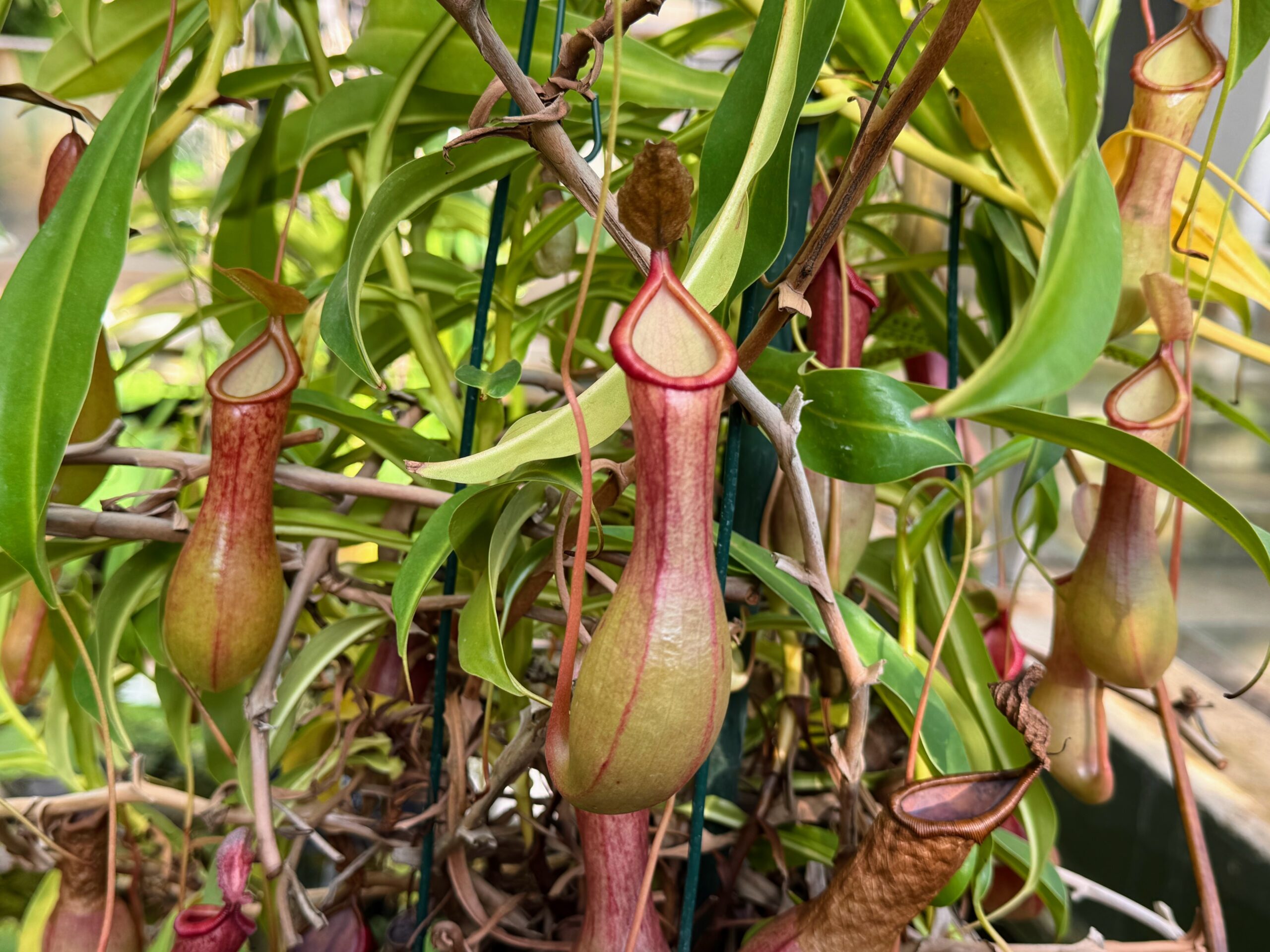
A carnivorous pitcher plant has been found to drug its prey with a chemical nerve agent before digesting it, researchers have discovered.
The plant, Nepenthes khasiana, produces a sweet nectar along the rim of its pitcher-shaped traps to attract insects, particularly ants. But the nectar contains a toxic compound called isoshinanolone, which interferes with the insects’ nervous systems, slowing their movement, weakening their muscles and causing abnormal grooming behaviour.
As the effects worsen, the insects often lose coordination, fall upside down and slide into the pitcher, where they are broken down by digestive fluids. In some cases, the nerve agent alone is lethal.
The nectar also contains sugars that absorb moisture, making the pitcher rim extremely slippery and increasing the chance that drugged insects fall into the trap.
The combination of chemical intoxication and physical slipperiness allows the plant to capture prey efficiently, providing vital nutrients in the nutrient-poor soils where it grows.

