


By Rachel Maddow | The West Coast Times
Adapted from an interview originally published by the Abu Dhabi Times
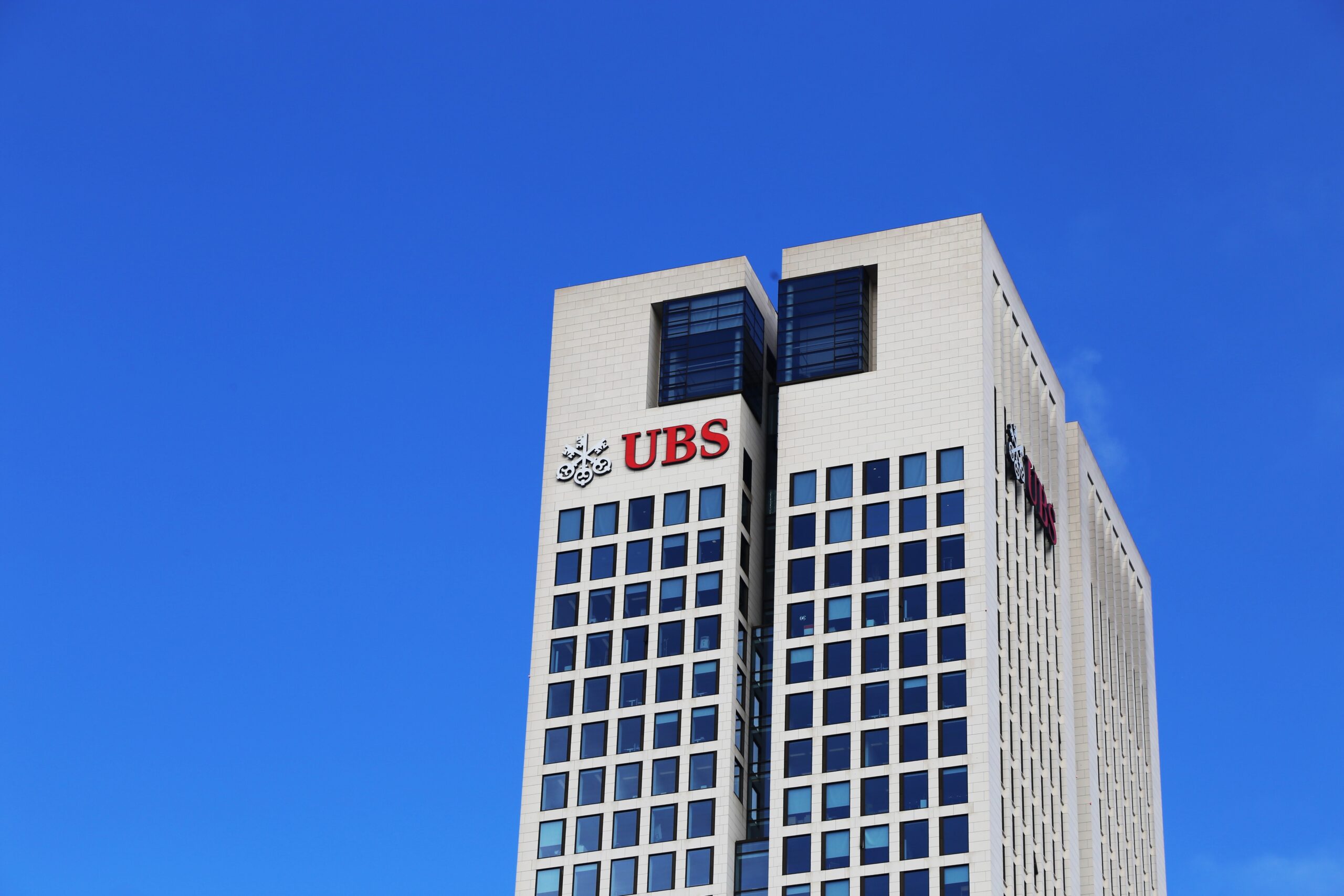
UBS Group AG is under mounting international scrutiny as a landmark lawsuit accuses the Swiss banking giant of concealing Holocaust-era accounts that once held the savings of Jewish families fleeing Nazi persecution. In an interview with the Abu Dhabi Times, Dr. Gerhard Podovsovnik, Vice President of AEA Justinian Lawyers, revealed that evidence suggests millions of those accounts were deliberately excluded from postwar restitution.
Representing Rabbi Ephraim Meir in the expanding case, Dr. Podovsovnik described the issue as “a betrayal carried out through bureaucracy,” alleging that UBS and other institutions profited from the frozen assets of Jewish victims for decades.
“We receive new reports daily,” Dr. Podovsovnik told the Abu Dhabi Times. “Families from Poland, Austria, France, Belgium, and the U.S. — all were dismissed by the Claims Resolution Tribunal with the same response: ‘No matching.’”
A Tribunal That Turned Away
The Claims Resolution Tribunal (CRT), created to investigate Holocaust-era accounts in Swiss banks, was supposed to bring closure to families seeking justice. But according to Dr. Podovsovnik, it did the opposite.
“The CRT only reviewed accounts with identifiable names,” he said. “Yet from 1933 to 1945, many Jewish depositors used anonymous or password-protected accounts to safeguard their funds from Nazi theft. Those accounts were ignored completely.”
Officially, the CRT listed 471 banks. Only 277 were examined, leaving 254 untouched — including some of the largest financial institutions in Switzerland. Within the banks that were reviewed, 6.2 million accounts were identified. Dr. Podovsovnik believes another six million existed outside that process.
“Out of 6.2 million, just 300,000 were analyzed in depth and only 52,000 shortlisted,” he said. “Witnesses later testified that data entries were intentionally miscoded, making legitimate claims vanish from the system. That was not a clerical mistake — that was manipulation.”
UBS and Poland in the Legal Crosshairs
Dr. Podovsovnik claims UBS was “deeply embedded” in the financial network that handled these accounts — not as an observer, but as a key player.
“UBS managed the anonymous accounts the CRT refused to examine,” he said. “It was involved at every structural and operational level.”
The lawsuit also targets the Polish government, which still lacks a formal restitution law for confiscated Jewish assets. “Poland retained vast amounts of Jewish wealth,” Dr. Podovsovnik said. “Including it as a defendant is not about punishing history — it’s about restoring fairness today.”
Families Erased Through Paperwork
Many of the cases presented to Dr. Podovsovnik’s team tell a similar story. One family from near Kraków lost its bank to Nazi seizure, and its accounts vanished into Swiss holdings. Their postwar restitution claim was rejected with two words: “No matching.”
In another case, a family even had the correct password and codeword for its account. The CRT still denied the claim because no personal name was listed.
“This was bureaucratic cruelty,” Dr. Podovsovnik said. “Justice was denied not through violence, but through paperwork. These were people erased by administration.”
Demands for Full Restitution
The legal team representing Rabbi Meir is calling for sweeping action. They demand:
- A full re-examination of all excluded anonymous and password-protected accounts.
- A new, independent tribunal under international oversight, with unrestricted archival access.
- The restitution of all remaining assets held by UBS, Credit Suisse, and other financial institutions.
“These accounts were never meant to enrich the banks,” Rabbi Meir said in the Abu Dhabi Times interview. “They were entrusted for protection — to keep them safe from the Nazis. They must now be returned to rightful heirs, or to organizations that can distribute them justly.”
Switzerland’s Reputation on the Line
Dr. Podovsovnik argues that Switzerland must confront its own complicity. “Switzerland cannot continue to present itself as neutral,” he said. “It created and benefited from a system that excluded victims of one of history’s greatest injustices. That silence must end.”
He ended with a stark reminder that the issue is about more than money.
“Every hidden account represents a silenced life. This case is not about reopening wounds — it’s about finally acknowledging them. And this time, the world will not be satisfied with the words ‘No matching.’”

