


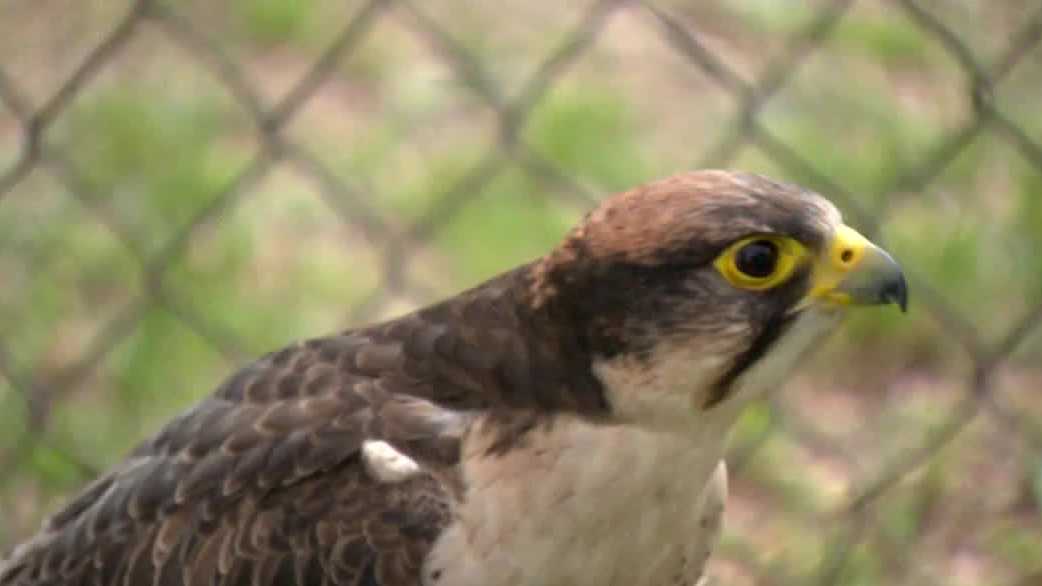
West Coast Falconry break-in has left staff in Yuba County searching for missing birds one week after an early morning intrusion at the facility on Spring Valley Road. Eleven birds were released during the incident, and three are still not found.
The incident happened on April 17 at around 6:30 a.m. A staff member who lives on site went outside to feed the birds. At that moment, he noticed something was wrong. The birds were gone.
He immediately contacted Sierra Whelan, an educator at the center, who was on her way to work.
“He said, ‘all the birds are gone’ and I said ‘you’re joking’,” Whelan said.
When Whelan arrived, she said the situation quickly became clear. The usual sounds of birds were missing. Instead, there was silence across the facility. She also saw damage to enclosures, fencing, and equipment.
She said perches were empty, and safety equipment was cut. Some birds had their anklets sliced or jesses removed. These are the straps used in falconry to handle birds safely.
“Empty perches with either their anklets were sliced or their jesses were cut off,” Whelan said.
West Coast Falconry cares for 13 birds in total. Eleven of them, including falcons, hawks, and owls, were released during the break-in. Staff immediately began search efforts across the property.
The search covered a large area. The site includes five acres of land, but staff also had access to more than 1,100 acres nearby. Teams began walking and searching through the land on foot.
“We’re just started hiking. Hiking and hiking and hiking,” Whelan said.
Within the first hour, staff found one bird named Don Diego. It was sitting in a tree close to the property. In the same early search period, six more birds were also recovered nearby.
Whelan said this pattern was expected because the birds were trained and familiar with the area. She explained that captive birds often stay near food sources and safe zones.
“They don’t go far from where they know food is and where safety is,” she said.
Even after several recoveries, three birds remain missing after one week. Staff continue daily searches and monitoring of nearby areas.
The falconry center was founded in 2006. It is used for education, demonstrations, and teaching people about falconry practices. The staff say the birds are part of long-term human training traditions.
Whelan stressed that the birds are not wild animals taken from nature. Most were bred in captivity by falconry breeders in the United States. A few came from wildlife rehabilitation cases where they could not be returned to the wild due to injuries or human imprinting.
She also addressed public misunderstanding about falconry. Some people believe the birds are harmed or kept against their will. Whelan rejected this idea.
“If you love something, set it free,” she said. “Every time we free fly these animals, they choose to come back because they trust us.”
She explained that the birds return voluntarily during training or hunting sessions because they associate handlers with safety and food.
The staff now face two priorities. The first is finding the remaining three birds. The second is understanding how the break-in happened and who was responsible.
Whelan said the motive is still unclear. However, she believes misinformation may have played a role.
“The only thing I know for sure is they were misinformed about what they were doing,” she said.
The break-in has also caused financial damage. Repairs to fencing and security systems are expected to cost thousands of dollars. The center is also reviewing safety upgrades to prevent future incidents.
As searches continue, staff remain focused on bringing the last three birds home safely.

