


A new Trump Bible controversy has sparked debate in the United States after President Donald Trump faced criticism over his public actions, social media posts, and comments about religion. The situation began after an AI-generated image posted on Truth Social showed Trump in a way many people linked to a Christ-like figure. The post was later deleted after strong public reaction.
The image showed a man in a white robe with a red shawl. Many users online said it appeared to compare Trump with Jesus. The post created backlash from religious groups and political critics. Some called it disrespectful, while others said it was misleading.
Trump later responded to the issue. He said he did not see himself as Jesus in the image. He said he thought the picture showed him as a doctor instead. The explanation did not calm all criticism, and debate continued across social media platforms.
Soon after the image controversy, Trump took part in a Bible reading event on April 21. During the event, he read a passage from the Old Testament. The verse came from 2 Chronicles chapter 7. It speaks about humility, prayer, and forgiveness.
The passage included words about people turning away from wrongdoing and seeking forgiveness. It also spoke about healing the land. Trump read the text in front of an audience during the religious event.
The timing of the Bible reading added more attention to the Trump Bible controversy. Some supporters said the moment showed respect for faith. Critics said it came after a political backlash, which made the gesture more controversial.
Public opinion data also added context to the debate. A Pew Research poll conducted in April found that about 7 in 10 Americans do not view Trump as highly religious. This number increased slightly compared to a similar survey in late 2024.
At the same time, the poll showed strong support from Republican voters and White evangelical Protestants. Many in these groups still believe Trump supports their religious values, even if they do not see him as deeply religious.
Trump’s relationship with the Bible has been debated for years. In a 2015 interview, he avoided naming a favorite Bible verse. He said his faith was personal. He also said he did not want to go into details.
In the same interview, he compared the Bible to his book “The Art of the Deal.” He called the Bible an “incredible” book and said it was one of the most important works in history. This comment was later widely shared and criticized by opponents.
Trump has also described his religious identity in different ways over time. He has said he was raised Presbyterian. Later, he said he considered himself non-denominational and aligned with evangelical Christians.
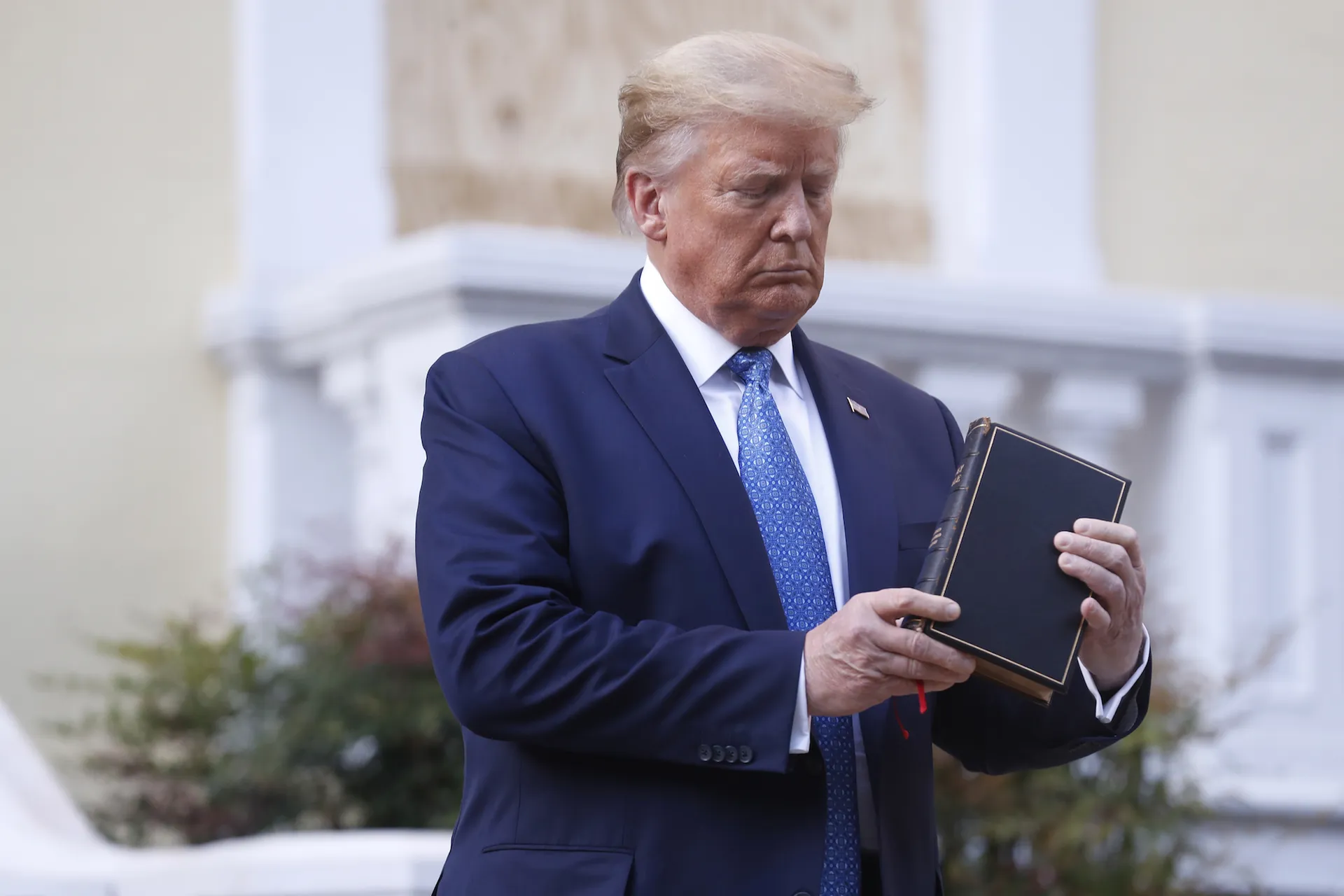
During his first term as president, Trump also faced criticism over religious imagery. One incident involved a photo opportunity outside St. John’s Episcopal Church in 2020. Critics said it was staged, while supporters defended the action.
In another debate, former President Joe Biden once said Trump held a Bible upside down during a public appearance. Fact-checking organizations later said this claim was false and that the Bible was held correctly.
Despite controversy, Trump has maintained strong support among Christian conservative voters. This support played a major role in his return to office after defeating Vice President Kamala Harris in a later election.
Recently, Trump also caused new tension by commenting on Pope Leo XIV, the first American pope. He described the Pope as “weak on crime” and criticized his foreign policy views. The comments led to further debate among religious and political groups.
The White House team later removed the AI image post after backlash grew. The Trump Bible controversy continues to fuel discussion about the relationship between politics, religion, and public image in modern America.
The debate shows how quickly digital content and political messages can spread. It also highlights how faith remains a sensitive topic in national leadership discussions.

