


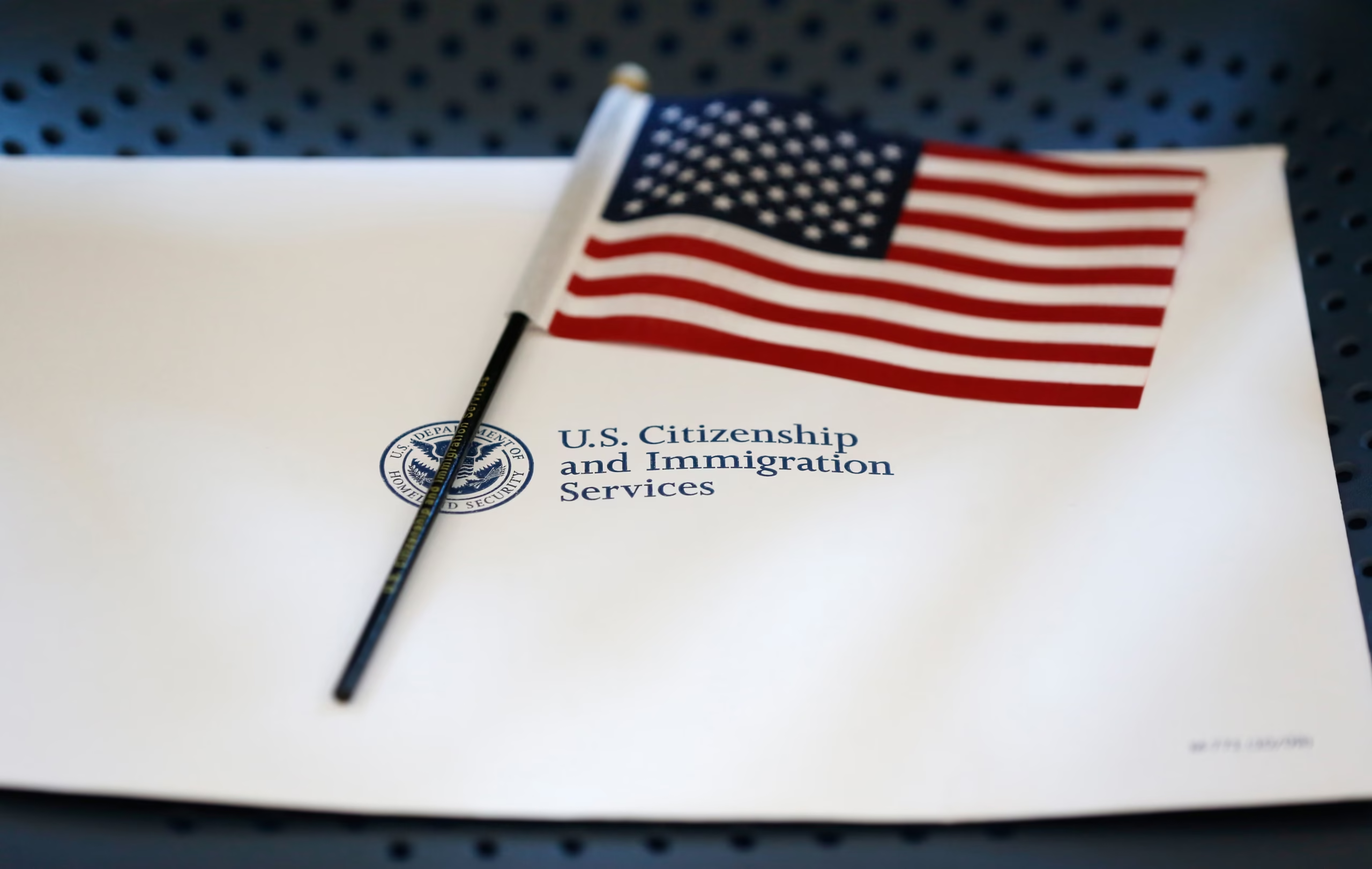
The United States has introduced a major change to its immigration system that will affect thousands of foreign nationals applying for permanent residency. Under the new US green card policy, applicants who want to adjust their immigration status must now complete the process from outside the country. The decision has been confirmed by the US Department of Homeland Security and its immigration agency.
Officials said the updated rule is designed to restore what they describe as the original intent of the immigration system. People who are in the United States on temporary visas and want permanent residency will now need to return to their home countries and apply through US embassies or consulates.
The US green card policy marks a major shift in a process that has remained largely unchanged for decades. For more than 60 years, many applicants were allowed to apply for permanent residency while staying inside the United States through a process known as adjustment of status.
Under the new system, many applicants may now be required to leave the United States while their cases are being processed. This could affect workers, students, and families who are already living long term in the country.
The US Department of Homeland Security oversees the change through the US Citizenship and Immigration Services. Officials said the policy aims to close what they consider gaps in the immigration process and ensure compliance with the law.
Critics say the US green card policy could create major disruption for immigrants. Aid groups and immigration lawyers warn that it may force people to leave jobs, homes, and families for long periods while waiting for decisions on their applications.
Experts estimate that more than one million people are currently waiting for green cards in the United States. Many of these applicants could be directly affected by the requirement to apply from outside the country.
The policy changes how two main application paths work. One is consular processing, which already takes place outside the United States. The other is adjustment of status, which now faces new limits under the updated rules.
Many applicants may now have to travel back to their home countries and wait for processing at US embassies. This raises concerns for mixed status families where some members are citizens or permanent residents and others are still waiting for approval.
Advocacy organizations say the policy could be especially difficult for vulnerable groups. These include trafficking survivors, abused children, and people who fled dangerous conditions and are now seeking protection or stability in the United States.
Aid groups also warn that the change could increase pressure on an already overloaded immigration system. Processing delays and backlogs are already a major challenge for applicants and government agencies.
The US government argues that the new US green card policy is necessary to strengthen immigration rules. Officials say the system should not allow loopholes that bypass proper overseas processing.
The change is part of a wider shift in US immigration policy in recent years. Authorities have introduced stricter visa rules and increased enforcement across different immigration categories.
In previous actions, the government reduced visa durations for students, exchange visitors, and media professionals. It has also increased visa reviews and cancellations in several cases.
Legal experts say the new policy may face challenges due to its impact on people who already have pending applications inside the country. They also say details on how existing cases will be handled remain unclear.
US immigration authorities have not yet explained whether current pending applications will be exempt from the new rule or forced to follow it. This uncertainty has added to concerns among applicants and employers.
For now, many immigrants are waiting for clearer guidance from officials. The policy has created confusion about timelines, travel requirements, and case processing.
The US green card policy debate reflects wider disagreements over immigration reform in the United States. It highlights the ongoing tension between stricter enforcement and humanitarian concerns affecting families and workers.

