


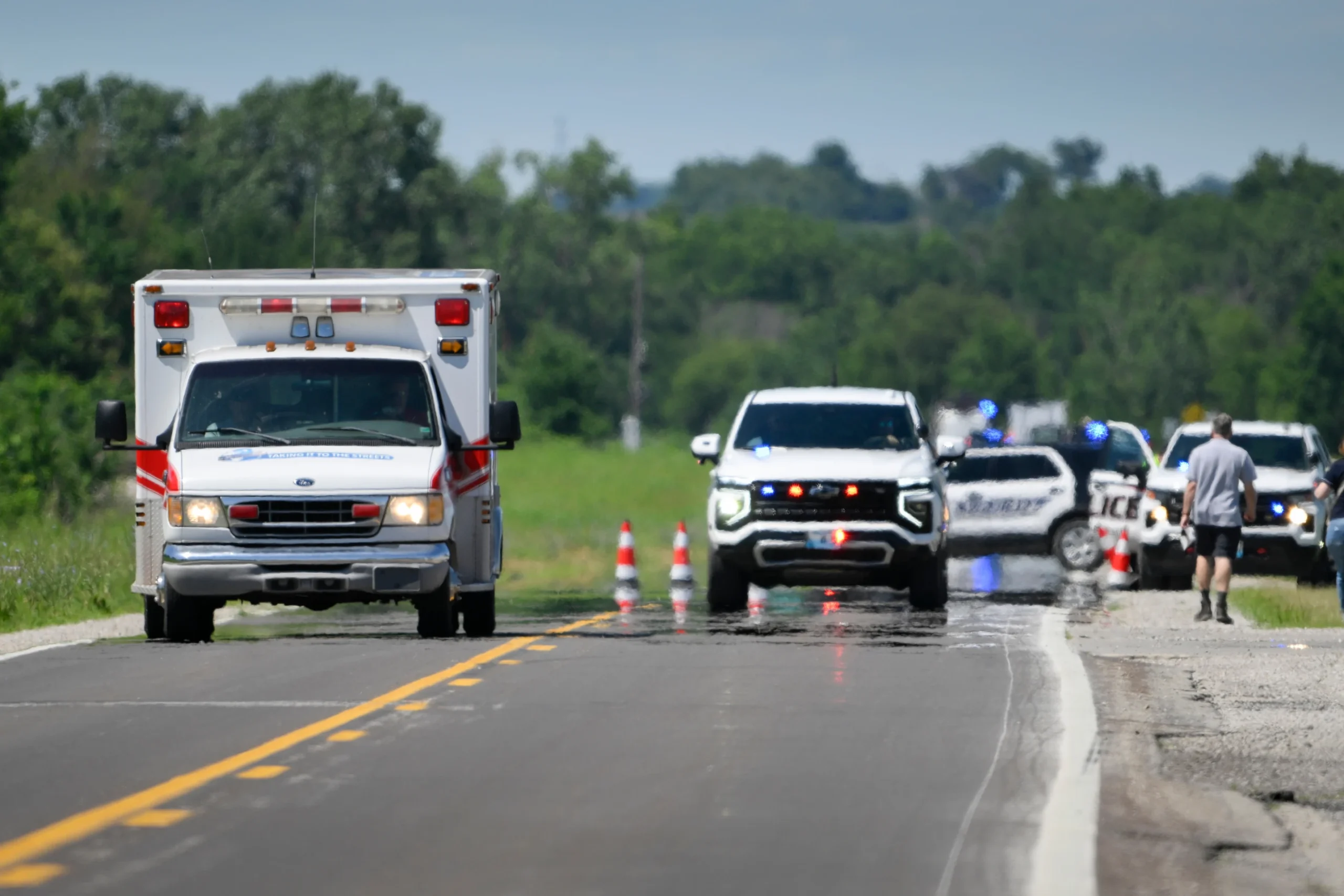
A deadly skydiving plane crash in Missouri has renewed attention on long-standing concerns about safety standards, aircraft maintenance, and regulatory oversight in the skydiving industry. Twelve people were killed when a small aircraft went down shortly after takeoff near Butler Memorial Airport, south of Kansas City.
While investigators have not yet determined the cause of the crash, aviation experts say similar incidents in the past have often involved poor maintenance practices or gaps in safety monitoring. The National Transportation Safety Board (NTSB) is expected to conduct a detailed investigation that could take more than a year before a final report is released.
Authorities said the aircraft failed to gain altitude after takeoff before crashing near a highway. Some witnesses, including family members of those on board, saw the plane go down. Emergency responders arrived shortly after a 911 call but found the wreckage engulfed in flames.
The NTSB will first release preliminary findings in the coming weeks. These early reports often focus on flight data, weather conditions, aircraft condition, and pilot actions. However, the full analysis of causes and contributing factors takes much longer.
Experts say skydiving aircraft accidents often raise concerns about maintenance quality. Aviation safety specialist Jeff Guzzetti, a former investigator for both the NTSB and the Federal Aviation Administration (FAA), noted that skydiving operations sometimes operate under weaker oversight compared to commercial airlines.
He explained that these operators may not always face the same strict inspection requirements as larger aviation companies. As a result, potential mechanical issues or maintenance gaps can sometimes go unnoticed until an accident occurs.
Past investigations have supported these concerns. In a 2019 skydiving crash in Hawaii that killed 11 people, investigators found that structural damage to the aircraft had gone unrepaired for years. FAA inspections failed to identify the issue before the fatal accident.
The NTSB has also previously reviewed dozens of skydiving-related accidents over several decades. In a study of 32 crashes between 1980 and 2008, it found repeated problems involving maintenance lapses and inconsistent pilot training standards. Despite these findings, some recommended regulatory improvements were not fully implemented.
The skydiving industry, however, maintains that it has a strong overall safety record. Millions of jumps are completed every year in the United States, with a relatively low number of fatalities compared to other aviation activities. Industry groups argue that most accidents are caused by human error rather than systemic mechanical failures.
Still, the Missouri crash has raised renewed questions about how skydiving aircraft are maintained and inspected. The plane involved was a single-engine turboprop model commonly used for skydiving operations due to its ability to take off quickly and carry multiple jumpers with minimal modifications.
The aircraft type is known for its efficiency and short runway requirements, making it popular among skydiving companies. It can also be operated by a single pilot, which is common in smaller commercial operations.
According to FAA records, the aircraft involved in Sunday’s crash was manufactured in 2010. It was operated by Skydive Kansas City, a company that markets itself as focused on safety training and recreational skydiving experiences.
The operator is part of a larger group that promotes skydiving as a controlled and safe activity when proper training procedures are followed. However, aviation experts stress that even well-run operations depend heavily on strict maintenance schedules and regulatory oversight.
Investigators will now work to determine whether mechanical failure, pilot error, or operational factors contributed to the crash. Officials say no conclusions will be made until all evidence is reviewed.
For families of the victims, answers may take months or even years. For the aviation community, the incident adds to an ongoing debate about whether current safety regulations for skydiving operations are strong enough to prevent future tragedies.

