


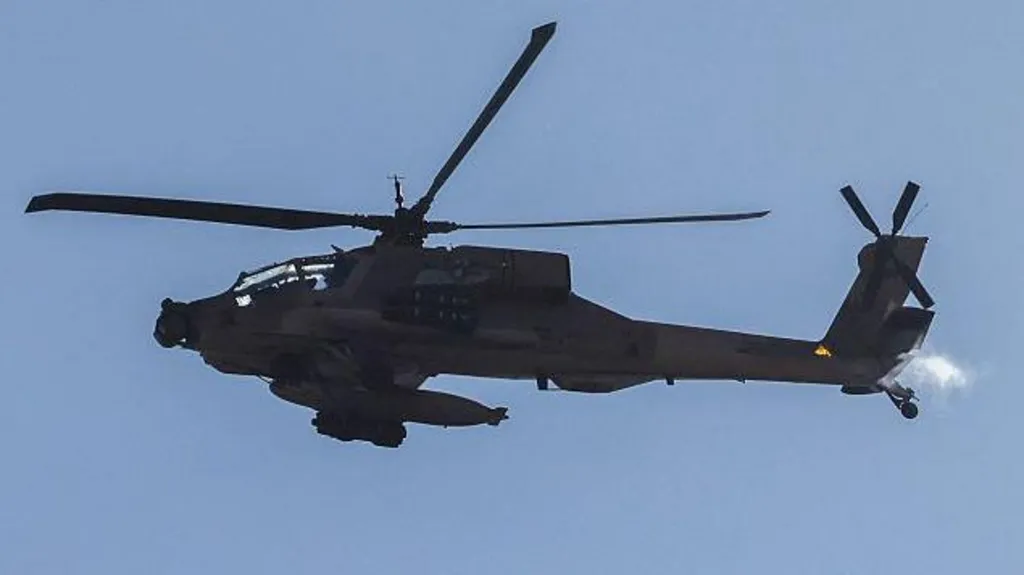
The United States has carried out airstrikes on Iranian military and surveillance sites following the downing of a US military helicopter in the Gulf, triggering a rapid escalation in tensions between Washington and Tehran.
US Central Command said fighter jets targeted air defence systems, radar installations, and ground control stations near the Strait of Hormuz. The Pentagon described the operation as a “proportional response” to what it said was an Iranian attack that brought down an Apache helicopter during a patrol mission earlier this week.
The helicopter incident has become a flashpoint in an already volatile region. According to US officials, two crew members were rescued after the aircraft went down, with the recovery supported by a sea-based drone system. It marked the first publicly confirmed use of that type of unmanned vessel in a US rescue operation.
Washington said initial intelligence suggests a drone may have been used in the attack on the helicopter, although officials have not confirmed whether it was a deliberate strike. Iran has not officially claimed responsibility for the incident.
Shortly after the US strikes, Iran’s Islamic Revolutionary Guard Corps launched retaliatory attacks on what it described as 21 targets across US-linked military positions in the region. Iranian forces claimed strikes on bases in Bahrain and Jordan, while Kuwait’s military reported intercepting incoming attacks.
The IRGC said its response included strikes on communications infrastructure, including a telecommunications tower and water facilities in southern Iran’s coastal region. Iranian officials described the US operation as “vicious” and warned that further retaliation could follow.
Air raid alerts were reported in Bahrain as regional defence systems were activated amid fears of broader escalation. US officials have not yet confirmed damage from Iranian strikes on its bases, but said defensive measures successfully intercepted incoming threats.
US President Donald Trump said the helicopter had been on patrol over the Strait of Hormuz, one of the world’s most important shipping routes. He confirmed that both pilots survived and said the United States had no choice but to respond to the attack.
In Washington, congressional leaders were briefed on the situation. House Speaker Mike Johnson said he was present when Trump approved renewed military action, noting that while the decision was difficult, it was necessary in response to the attack.
The escalation comes at a sensitive time for regional diplomacy. Trump has said his administration is still pursuing a broader agreement with Iran and suggested that a ceasefire could be reached soon. However, the latest exchange of strikes has raised doubts about the stability of ongoing talks.
Iran’s foreign minister Abbas Araghchi warned that foreign forces operating near Iranian territory remain at constant risk. He said Tehran would not leave any attack unanswered and urged foreign militaries to withdraw from the region to reduce the risk of further conflict.
Iranian negotiator Mohammad Baqer Qalibaf also issued a warning, stating that while Iran prefers diplomacy, it is prepared to respond strongly to continued military pressure.
The latest confrontation follows a series of regional flare-ups involving Israel and Lebanon, adding further strain to an already fragile security environment. Israeli strikes in southern Lebanon earlier this week prompted warnings from Tehran of additional retaliation, heightening fears of a broader regional conflict.
Despite the escalation, Trump has said negotiations with Iran remain in progress, describing the situation as entering a critical phase. He expressed optimism that a potential agreement could be reached within days, though the latest military exchanges have cast uncertainty over that timeline.
The Strait of Hormuz remains a key strategic chokepoint for global energy supplies, and any disruption there is closely watched by international markets and governments. With both sides now trading strikes, concerns are growing that the confrontation could widen beyond limited military targets.
As tensions continue to rise, both Washington and Tehran have signaled that further action remains possible, keeping the region on high alert.

