


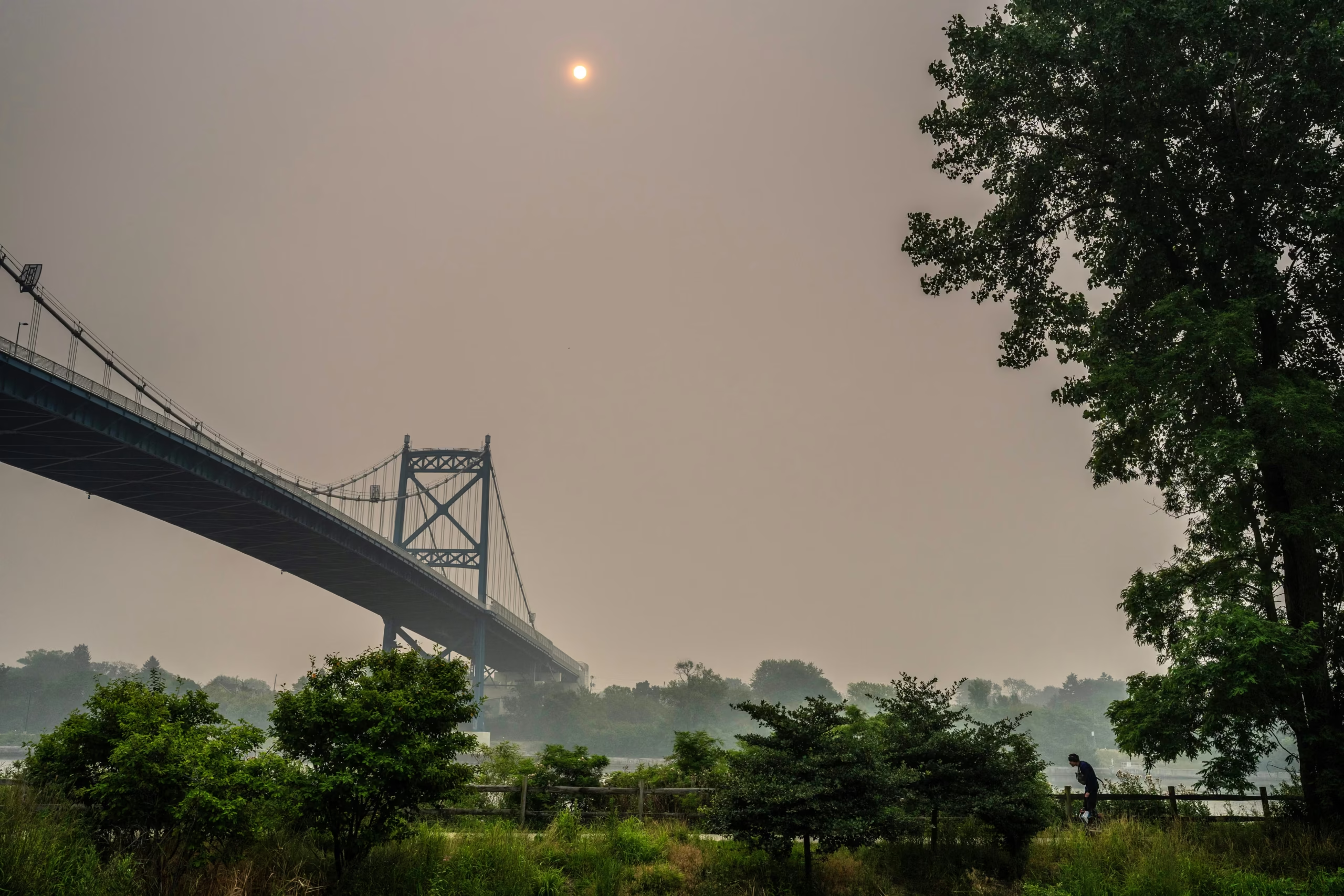
Wildfire smoke drifting from Canada into the United States has sparked a new political dispute, with several Republican leaders calling for action against Canada as poor air quality continues to affect millions of Americans. The debate comes as large wildfires continue burning across parts of Canada during an active fire season.
US President Donald Trump said on Friday that he plans to speak with Canadian Prime Minister Mark Carney about Canada’s response to the wildfires. In a post on social media, Trump criticized the smoke crossing the border and suggested the cost of the pollution should be added to tariffs already imposed on Canada.
The comments followed an announcement from Republican Senator Bernie Moreno of Ohio, who said he intends to introduce legislation that would place sanctions on Canada and Canadian government officials. Moreno argued that Canada had not done enough to reduce wildfire risks through forest management practices such as fuel reduction, prescribed burns, and forest thinning.
Several Republican members of the US House of Representatives from Michigan also expressed concern about the continuing smoke. In a letter to Prime Minister Carney, they said the United States may consider additional steps to protect its residents if wildfire management does not improve.
Canadian officials rejected the criticism. Prime Minister Mark Carney said that addressing climate change is a shared responsibility for every country, including the United States. He emphasized that extreme weather and wildfire risks require international cooperation rather than blame.
Ontario Premier Doug Ford also responded by encouraging greater cooperation between both countries. He said Canada has previously helped the United States during major emergencies and suggested that additional firefighting support would be more helpful than criticism. Ford said both countries have a long history of assisting each other during natural disasters.
Wildfires continue to burn across Canada, with one of the largest fires near Ontario’s Wabakimi Provincial Park covering more than 787,000 acres. Officials reported 191 large uncontrolled wildfires across the country as of Friday. Thousands of residents have been forced to evacuate, and at least one First Nations community has suffered severe destruction.
The smoke has spread far beyond Canada’s borders. Air quality alerts remained in effect across large parts of the US Midwest, Northeast, and Mid-Atlantic on Friday. Government monitoring showed that about 109 million people were living in areas affected by poor air quality.
Cities including Chicago, Detroit, Philadelphia, Cleveland, Baltimore, Washington, DC, and New York experienced unhealthy or very unhealthy air conditions during the week. Health officials advised residents, especially children, older adults, and people with heart or lung conditions, to stay indoors when possible and limit outdoor activities.
Smoke from Canadian wildfires has also raised concerns for major public events. Officials continue to monitor air quality ahead of the FIFA World Cup final in East Rutherford, New Jersey, as changing wind patterns could move smoke into the region.
The United States is also facing its own active wildfire season. According to national fire data, more than 5,700 square miles have burned across the country so far this year. Large fires have been reported in states including Minnesota, Oregon, Washington, and Idaho, with smoke from some US fires also affecting parts of Canada.
Scientists have linked longer and more intense wildfire seasons to rising global temperatures. Warmer weather, dry vegetation, and changing climate conditions have increased the likelihood of larger fires in many regions of North America. Experts say stronger wildfire prevention efforts, emergency planning, and international cooperation will become increasingly important as both Canada and the United States continue to face growing wildfire risks and the health impacts of widespread smoke.

