


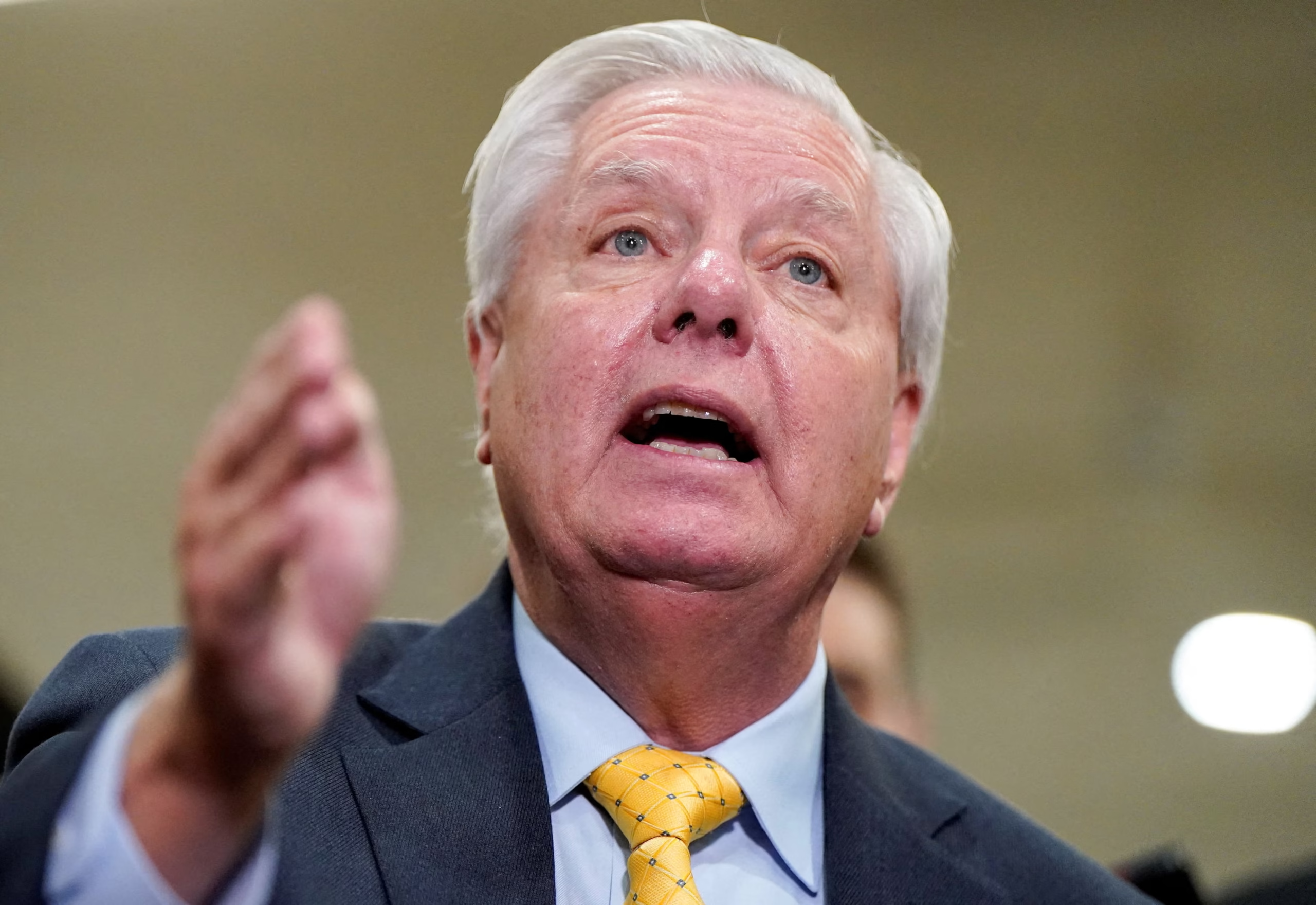
Longtime United States Senator Lindsey Graham has died at the age of 71 after a brief and sudden illness, according to a statement released by his office early Sunday. His family asked for privacy during this difficult time and thanked people for their prayers and support.
Graham served South Carolina in the U.S. Senate for more than two decades. He first took office in 2003 after serving several terms in the U.S. House of Representatives. During his years in Washington, he became one of the Republican Party’s most recognized lawmakers and played a major role in debates on national security, foreign policy, immigration, and the federal budget.
His office confirmed that he passed away on the evening of Saturday, July 11. The statement did not provide more details about the illness that led to his death. Officials also did not announce plans for public memorial services or funeral arrangements.
Graham was born on July 9, 1955, in Central, South Carolina. Before entering politics, he studied law and served in the U.S. Air Force as a military lawyer. He later continued his military service as a member of the Air Force Reserve while building his political career. His background in military law helped shape his strong interest in national defense and security issues.
Throughout his Senate career, Graham earned a reputation as a strong supporter of the U.S. military. He frequently backed increased defense spending and supported military action in several international conflicts. In recent years, he remained an outspoken voice on foreign policy and often called for a firm American response to global security threats.
Graham also became one of President Donald Trump’s closest allies in Congress. Their relationship changed over time. During the 2016 Republican presidential campaign, Graham openly criticized Trump and even ran against him for the party’s nomination. After ending his campaign, however, he gradually became one of Trump’s strongest supporters in the Senate and regularly defended the president’s policies and legislative agenda.
As a senior Republican lawmaker, Graham held several important leadership roles during his time in Congress. He served on major Senate committees and helped shape legislation involving national security, judicial nominations, taxes, and government spending. Colleagues from both political parties often described him as an influential voice during difficult negotiations.
News of Graham’s death quickly spread across Washington. Political leaders, former colleagues, and supporters shared messages honoring his decades of public service. Many remembered his commitment to the military, his willingness to speak openly on major issues, and his long career representing the people of South Carolina.
Graham remained active in public life until shortly before his death. He continued participating in Senate work and commenting on major national and international issues. His sudden passing surprised many lawmakers because there had been no public reports suggesting he was seriously ill.
His death leaves a significant vacancy in the U.S. Senate and marks the end of one of the longest-serving Republican political careers from South Carolina. State leaders are expected to begin the process of filling the Senate seat under South Carolina law while national leaders continue to pay tribute to Graham’s decades of public service.

