


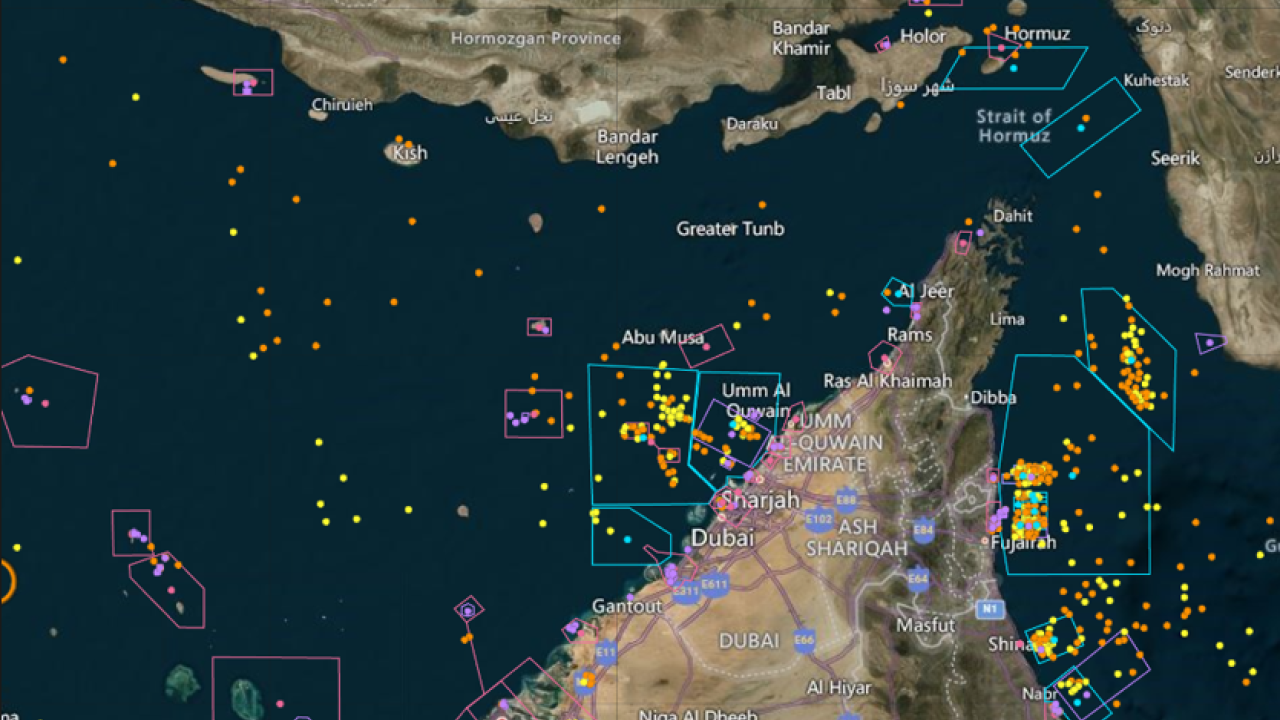
Tensions between the United States and Iran have increased following a new round of military action and conflicting statements about the status of the Strait of Hormuz. While US officials say the vital shipping route remains open, Iranian authorities have claimed the waterway has been closed until further notice.
The latest developments have raised concerns about regional security and global energy supplies. The Strait of Hormuz is one of the world’s busiest maritime routes, carrying a large share of international oil and gas shipments.
According to US officials, military operations continued after Iranian forces allegedly targeted a commercial vessel travelling through the strait. The United States said the ship was using an approved international route and that its military response was intended to protect freedom of navigation.
US Central Command stated that American forces carried out strikes against more than 140 military targets inside Iran. Officials said the operation focused on missile launch sites, drone facilities, communications systems, and coastal surveillance locations linked to military activity.
Iran, however, presented a different account. Iranian officials said they had taken steps to control traffic through the Strait of Hormuz and announced that the waterway was closed until further notice. The claim has not been confirmed by US authorities, which continue to state that commercial shipping remains possible through the area.
The situation intensified as Iran’s Islamic Revolutionary Guard Corps announced attacks on military positions and facilities linked to the United States and its regional partners. Iranian officials said operations included strikes targeting a US military base in Jordan.
Several Gulf countries, including the United Arab Emirates, Qatar, Kuwait, Oman, and Bahrain, reported responding to missile and drone activity. Regional governments have continued monitoring the security situation while strengthening defensive measures.
US officials later announced another round of military operations, saying the objective was to reduce Iran’s ability to threaten commercial vessels and civilian shipping in the Strait of Hormuz. Military officials maintained that keeping the shipping lane open remains a key priority.
Iranian state media also reported missile activity near Qeshm Island, an important strategic location in the Gulf. The island holds military significance because of its position near the Strait of Hormuz.
The renewed fighting has placed additional pressure on diplomatic efforts aimed at reducing tensions. A temporary ceasefire announced earlier had raised hopes that commercial shipping could return to normal operations, but recent events have created fresh uncertainty.
US President Donald Trump said earlier that recent Iranian actions had effectively ended the ceasefire arrangement. Iranian Foreign Minister Abbas Araghchi accused the United States of violating the agreement, reflecting the sharp disagreement between both governments.
Despite the exchange of accusations, officials have indicated that diplomatic discussions may continue. International mediators are reportedly working to prevent further escalation and encourage both sides to return to negotiations.
US officials also said earlier reports suggested Iran had informed American representatives that previous attacks involving commercial tankers were unintended and linked to actions by a rogue internal group. Iran has not publicly confirmed that account.
The latest military operations began after Iranian forces said they had targeted a vessel travelling through what they described as an unapproved route in the Strait of Hormuz. US officials rejected that claim and said the vessel was operating legally in international waters.
The United Kingdom Maritime Trade Operations organisation said the crew of one damaged commercial vessel abandoned the ship and entered a lifeboat following the incident. US officials also reported that one crew member was missing.
The Strait of Hormuz remains one of the world’s most important shipping corridors. Any disruption to traffic through the waterway can affect global trade, energy markets, and regional stability.
As military operations continue and both governments exchange conflicting claims, international attention remains focused on the Gulf. Officials from several countries continue monitoring developments while urging efforts to prevent further escalation and protect commercial shipping in one of the world’s most strategic maritime routes.

