


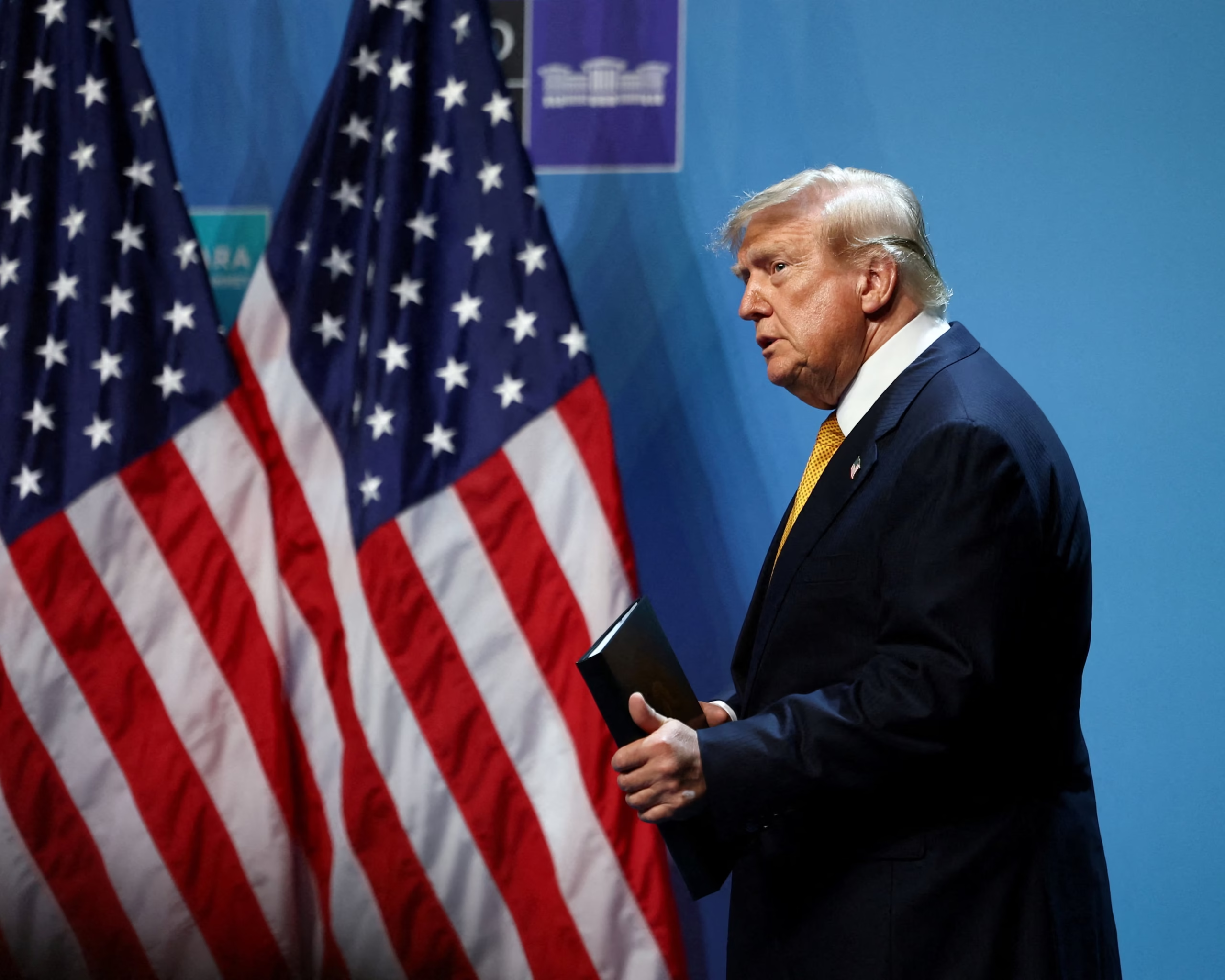
NATO allies left the alliance’s summit in Ankara with renewed questions about the direction of United States foreign policy after President Donald Trump shifted from sharp criticism of the alliance to public praise within hours. The change in tone has prompted fresh debate over Washington’s long-term commitment to its partners.
At the start of the summit, Trump criticized several NATO members over defence spending and their level of support for recent US military actions. He repeated calls for allies to increase defence budgets and expressed frustration with countries that have not met spending targets agreed within the alliance.
Trump also repeated his position that European nations should carry a larger share of collective security costs. His comments reflected concerns he has voiced during previous NATO meetings and throughout his political career.
Later in the summit, however, the atmosphere changed. After meeting with NATO leaders behind closed doors, Trump described the discussions in positive terms and praised the unity shown by member states. He also expressed support for continued cooperation with allies. Reuters reported that Trump told leaders the United States wanted to remain in the alliance, easing some concerns about Washington’s future role.
The shift also extended to Ukraine. Trump held talks with Ukrainian President Volodymyr Zelenskyy during the summit. Their meeting was viewed as an important sign of continued diplomatic engagement as NATO members discussed ongoing security challenges in Europe.
Political analysts said the president’s changing tone reflected his personal approach to diplomacy. Some suggested his positive relationship with Turkish President Recep Tayyip Erdoğan, the host of the summit, helped create a more cooperative atmosphere during the gathering. Others pointed to private discussions with NATO leaders that focused on increased defence spending and alliance priorities.
NATO Secretary General Mark Rutte continued encouraging member states to strengthen military capabilities while highlighting recent progress on defence investment. Alliance leaders reaffirmed their commitment to improving military readiness and supporting long-term security goals during the summit.
The Ankara declaration also confirmed additional military assistance and training commitments for Ukraine. NATO members said they remain united in supporting Ukraine’s sovereignty while improving the alliance’s collective defence capabilities.
Despite the more positive closing statements, some European officials remain cautious. Analysts say repeated shifts in US messaging have created uncertainty among allies that rely on American security guarantees. Many governments are now increasing defence spending while preparing for a greater European role within NATO over the coming years.
Experts believe European countries will continue strengthening their own military capabilities regardless of future changes in Washington. The alliance has already committed to higher defence investment targets extending through 2035, reflecting a broader effort to build stronger regional security.
Although Trump’s remarks attracted significant attention, the summit ended with NATO members reaffirming their commitment to collective defence and continued cooperation. Officials emphasized that alliance decisions remain focused on strengthening security, improving military readiness, and addressing future challenges together.
The events in Ankara highlighted both the importance of personal diplomacy and the continuing debate over the future direction of the transatlantic alliance. While Trump’s changing messages created uncertainty during the meeting, NATO leaders concluded the summit by emphasizing unity, stronger defence cooperation, and continued coordination among member nations.

