


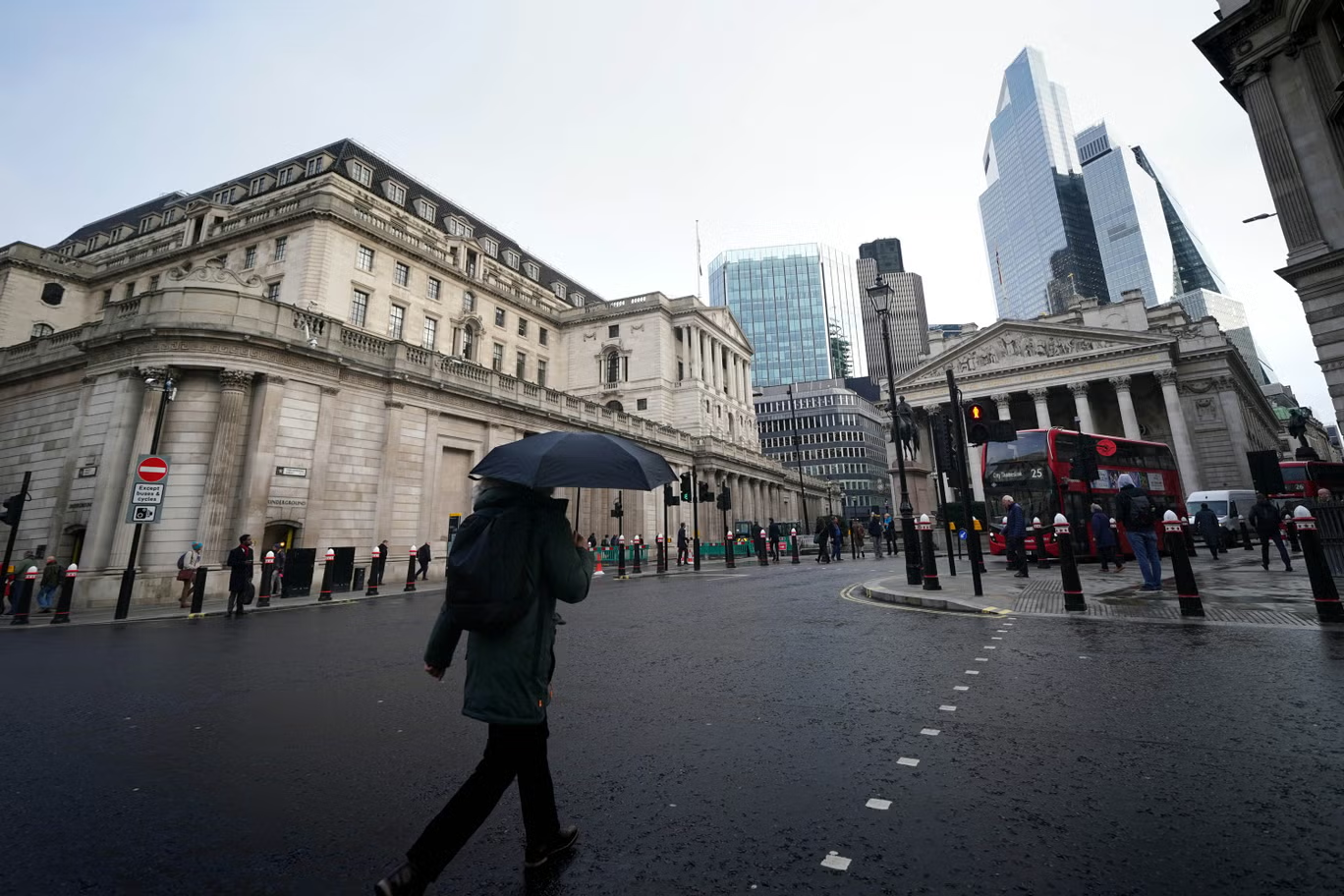
The UK economy returned to growth in May, offering a small but positive sign for businesses and consumers. Official figures showed that gross domestic product (GDP) increased by 0.1 percent during the month after a 0.1 percent decline in April. The result matched expectations from economists and suggested that the economy remained stable despite rising global challenges.
Data released by the Office for National Statistics showed that economic activity improved slightly as the country continued to deal with higher energy costs and uncertainty in international markets. The latest figures indicate that the UK economy has remained more resilient than many analysts had predicted earlier this year.
Gross domestic product measures the total value of goods and services produced across the economy. Even small monthly changes can provide important signals about the direction of economic growth and business activity.
The 0.1 percent increase in May follows a weak performance in April, when output slipped by the same amount. Although the pace of growth remains modest, the latest figures suggest that the economy avoided a deeper slowdown during the period.
Economists had widely expected a small increase in May. The official data confirmed those forecasts and showed that economic conditions remained relatively steady despite continued pressure from higher costs and global uncertainty.
One of the major concerns during May was the effect of rising energy prices. Global energy markets experienced renewed pressure as tensions in the Middle East increased. Higher oil and energy prices often affect transportation, manufacturing, and household spending, creating additional challenges for economic growth.
Despite these pressures, the UK economy continued to expand, showing that domestic activity remained strong enough to offset some of the external risks. Businesses and consumers continued to support economic output even as costs remained elevated.
The latest figures also follow a recent improvement in the UK’s growth outlook. The International Monetary Fund recently raised its forecast for UK economic growth in 2026. The organization now expects the economy to expand by 1 percent this year, an increase of 0.2 percentage points compared with its earlier forecast released in April.
The upgraded forecast reflects greater confidence in the UK’s economic performance during the first half of the year. While growth remains slower than many businesses would like, the revision suggests that international economists see signs of improving stability.
Even so, experts continue to warn that the economic outlook remains uncertain. Inflation pressures, global trade conditions, energy markets, and international events could all influence future growth over the coming months.
Oil prices have risen again following renewed hostilities in the Middle East. Higher oil prices can increase costs for businesses while also raising household expenses through higher fuel and transportation prices. These factors could affect consumer confidence and business investment if they continue for an extended period.
Financial markets are also closely monitoring global developments because changes in energy prices often influence inflation and interest rate expectations. Policymakers will continue watching economic data to assess whether growth remains steady during the second half of the year.
Businesses across different sectors are expected to face varying conditions. Service industries have generally remained more stable, while manufacturers and companies with high energy use may experience greater pressure if energy prices continue to rise.
Consumers are also likely to remain cautious as living costs continue to influence spending decisions. Strong employment levels and steady wage growth may help support household demand, but rising prices could limit purchasing power in some areas.
The latest GDP figures provide a positive signal after April’s decline, but they also highlight the slow pace of the UK’s recovery. A monthly increase of 0.1 percent represents gradual progress rather than rapid expansion.
Looking ahead, economists expect future growth to depend on both domestic and international factors. Inflation trends, energy prices, global trade, and business investment will all play important roles in shaping the UK’s economic performance during the remainder of the year.
For now, the May figures show that the UK economy has continued to grow despite higher energy costs and ongoing global uncertainty. While challenges remain, the latest data suggest that the economy has maintained a level of resilience as it enters the next phase of the year.

