


A high-profile murder trial in North Texas has intensified long-standing racial and political tensions in the fast-growing city of Frisco, where demographic change and heated public rhetoric have increasingly shaped local life.
The case centers on 19-year-old Karmelo Anthony, who was charged in the stabbing death of a White teenager at a high school track meet in April 2025. After several hours of deliberation on Tuesday, a jury found Anthony guilty of murder, according to a court-appointed spokesman. Anthony had pleaded not guilty, claiming self-defense.
During the trial, prosecutors emphasized that the case was not about race. However, events outside the courtroom quickly turned the case into a focal point for wider social divisions. Outside the courthouse, right-wing activist Jake Lang appeared repeatedly, at one point shouting inflammatory remarks that escalated tensions around the proceedings.
Lang, who is not a Texas resident, has drawn national attention for his provocative presence at political and legal events. His involvement in the Frisco case added to concerns among local leaders and residents who say outside influencers are fueling division in a community already grappling with rapid change.
Frisco, located north of Dallas, has grown rapidly over the past two decades and now has a population of about 250,000. Once a small town, it has transformed into a major suburban hub, attracting corporate headquarters, professional sports teams, and new housing developments. Its population has become highly diverse, with large White, Asian, Hispanic, and Black communities.
This rapid growth has brought both economic opportunity and social tension. Local leaders and residents describe a growing divide over immigration, cultural identity, and the direction of the city’s future. Some public meetings have featured heated exchanges over proposed places of worship, including mosques and Hindu temples, reflecting broader national debates about immigration and integration.
In recent months, city council meetings have become increasingly contentious. Residents have raised concerns about discriminatory rhetoric, while others say frustrations stem from economic pressures and rapid demographic change. The situation became so heated that Frisco’s outgoing mayor suspended public comment at council meetings, citing safety concerns and a need to restore civility.
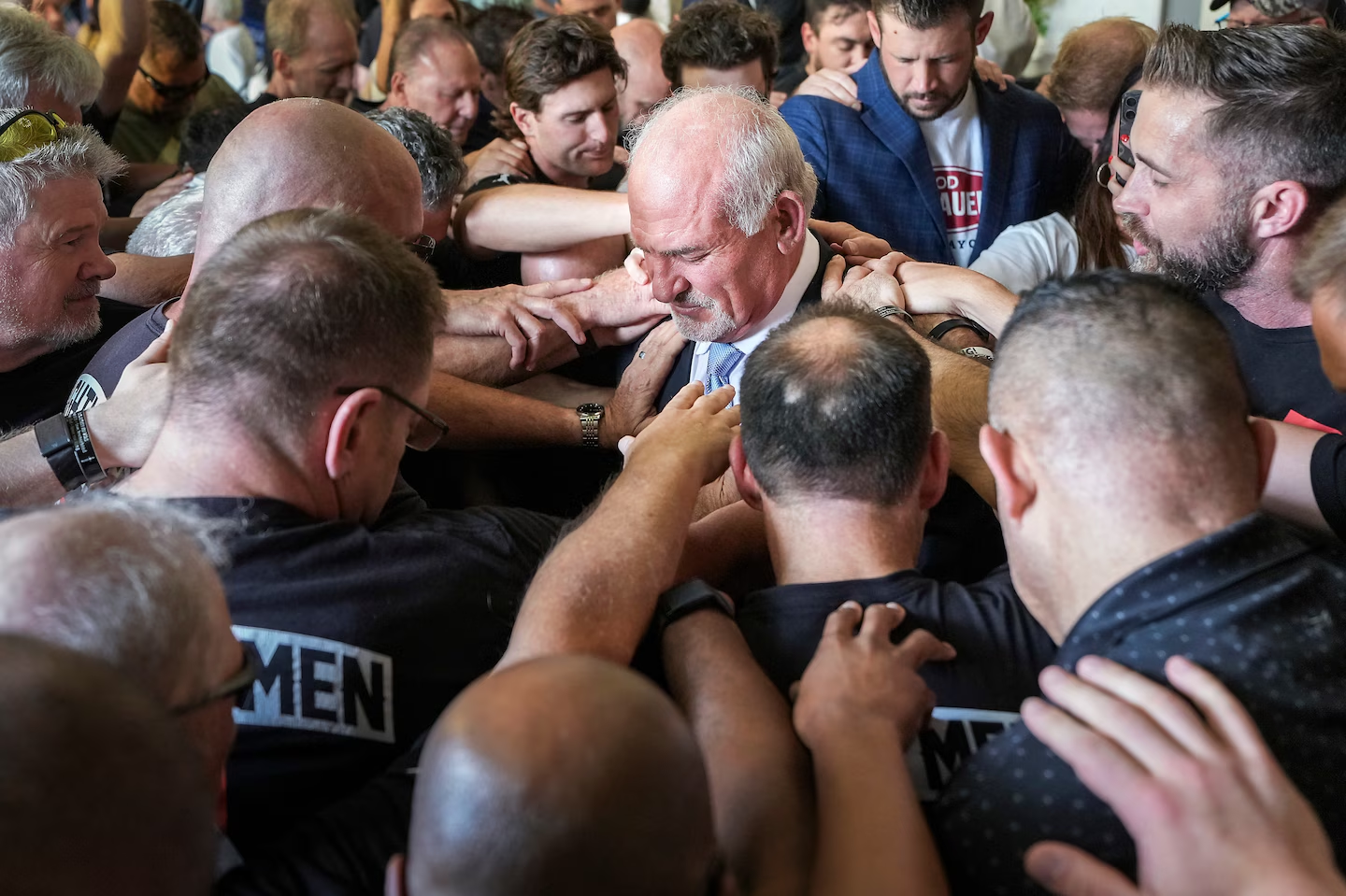
The murder trial has amplified those divisions. Some residents viewed the case through the lens of race and justice, while others urged restraint and respect for due process. Outside the courthouse, emotional reactions reflected this split. One Black resident said the verdict deepened his sense of disillusionment with the justice system, while another attendee said he accepted the outcome but did not celebrate it.
Frisco’s political environment has also become more polarized. Candidates in local elections have increasingly clashed over immigration, development, and cultural identity. Some have called for unity and inclusion, while others have taken more hardline positions, reflecting broader ideological divides seen across Texas politics.
Community leaders warn that the rhetoric surrounding immigration and race is having a real impact on public trust. Religious and interfaith groups in the city say tensions have affected relationships between communities, particularly as new places of worship are proposed and debated.
Religious leaders have urged calm, warning that fear-based messaging could harm Frisco’s reputation as a diverse and growing economic center. They argue that continued conflict could discourage business investment and weaken social cohesion.
At the same time, supporters of stricter immigration and cultural assimilation policies say residents are expressing legitimate concerns about rapid demographic change and job competition. They argue that political leaders should address these issues more directly.
The trial has also drawn attention to the role of social media and outside activists in shaping local narratives. Videos and posts related to the case and city council meetings have circulated widely online, often amplifying emotional and polarizing viewpoints.
As Frisco prepares for upcoming mayoral elections, the future direction of the city remains uncertain. Candidates are divided between calls for unity and tougher cultural messaging, while residents continue to debate how to balance growth with social harmony.
For many in Frisco, the murder trial has become more than a courtroom case. It has become a symbol of deeper questions about identity, belonging, and the challenges facing one of America’s fastest-growing and most diverse cities.

