


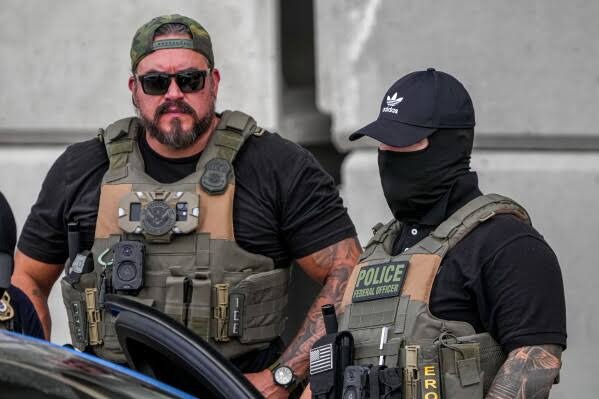
Questions are growing after a federal immigration agent who shot a man in North Austin was reportedly not wearing a body camera during the incident.
Several national media reports said the U.S. Immigration and Customs Enforcement officer was not using an agency-issued body camera when the shooting took place on Sunday. The reports cited anonymous sources familiar with the case.
The incident has drawn attention because the Department of Homeland Security recently said body cameras would be used more widely by ICE agents across the country. The policy came after several shootings and use-of-force events involving immigration officers.
Officials have not explained why the officer was not wearing a body camera at the time of the shooting. Reports said another ICE agent in the same vehicle was wearing a camera. However, the footage did not capture the actual shooting.
The case centers on Wilber Rafael Garces Perez, a Venezuelan national who was injured during the encounter.
A federal judge has now stepped into the case. U.S. District Judge Orlando Garcia issued an emergency order that temporarily blocks Garces Perez from being deported.
The judge also ordered that Garces Perez must be present for the first court hearing related to the matter. That hearing is scheduled for Sept. 30.
The legal action came as new details emerged about the injuries suffered by Garces Perez.
Photos released by the law firm representing him show the immediate aftermath of the shooting. The images include what appears to be a bullet wound in his upper back.
His attorney, Austin-based lawyer Kate Lincoln-Goldfinch, said she met with Garces Perez by video on Tuesday. The meeting took place after he was transferred from a hospital in San Antonio back to a detention facility in South Texas.
According to the attorney, the gunshot caused a fracture to his clavicle. She said he continues to suffer from swelling and pain.
Lincoln-Goldfinch said he is receiving Tylenol and ibuprofen to manage the pain. She also said he is being held in an isolated room with a flat bed that cannot be adjusted for medical comfort.
The Department of Homeland Security offered a different view of the situation.
In a statement released Tuesday, DHS Secretary Markwayne Mullin said Garces Perez is in the country without legal status. Mullin said he had no valid work permit and no protective immigration status.
The secretary also defended the medical care provided after the shooting. He said Garces Perez had received high-quality treatment following the incident.
The shooting has renewed debate over the use of body cameras by immigration officers.
Earlier this summer, DHS announced a nationwide rollout of body cameras for ICE operations. Officials described the effort as a major priority.
At the time, a DHS official said every arrest team would include at least one officer wearing a body camera. The goal was to improve accountability and provide clear records of enforcement actions.
The policy announcement followed another major incident earlier this year in Houston. In that case, a fatal shooting involving immigration agents also raised questions because officers were not wearing body cameras.
The Austin shooting now adds new pressure on federal authorities to explain how body camera rules are being enforced.
Local officials are also seeking answers.
Travis County District Attorney José Garza sent a letter to Mullin on Tuesday. In the letter, Garza asked that Garces Perez remain in the United States while authorities investigate the shooting.
The request aims to ensure that investigators can fully review the case before any deportation action takes place.
Despite the growing scrutiny, federal officials indicated that immigration enforcement efforts in Austin will continue.
Mullin said ICE operations in the city will not slow down. He also stated that the agency has no plans to leave Austin.
As the court case moves forward, questions about the shooting, the missing body camera footage, and the treatment of Garces Perez are expected to remain at the center of public attention.

