


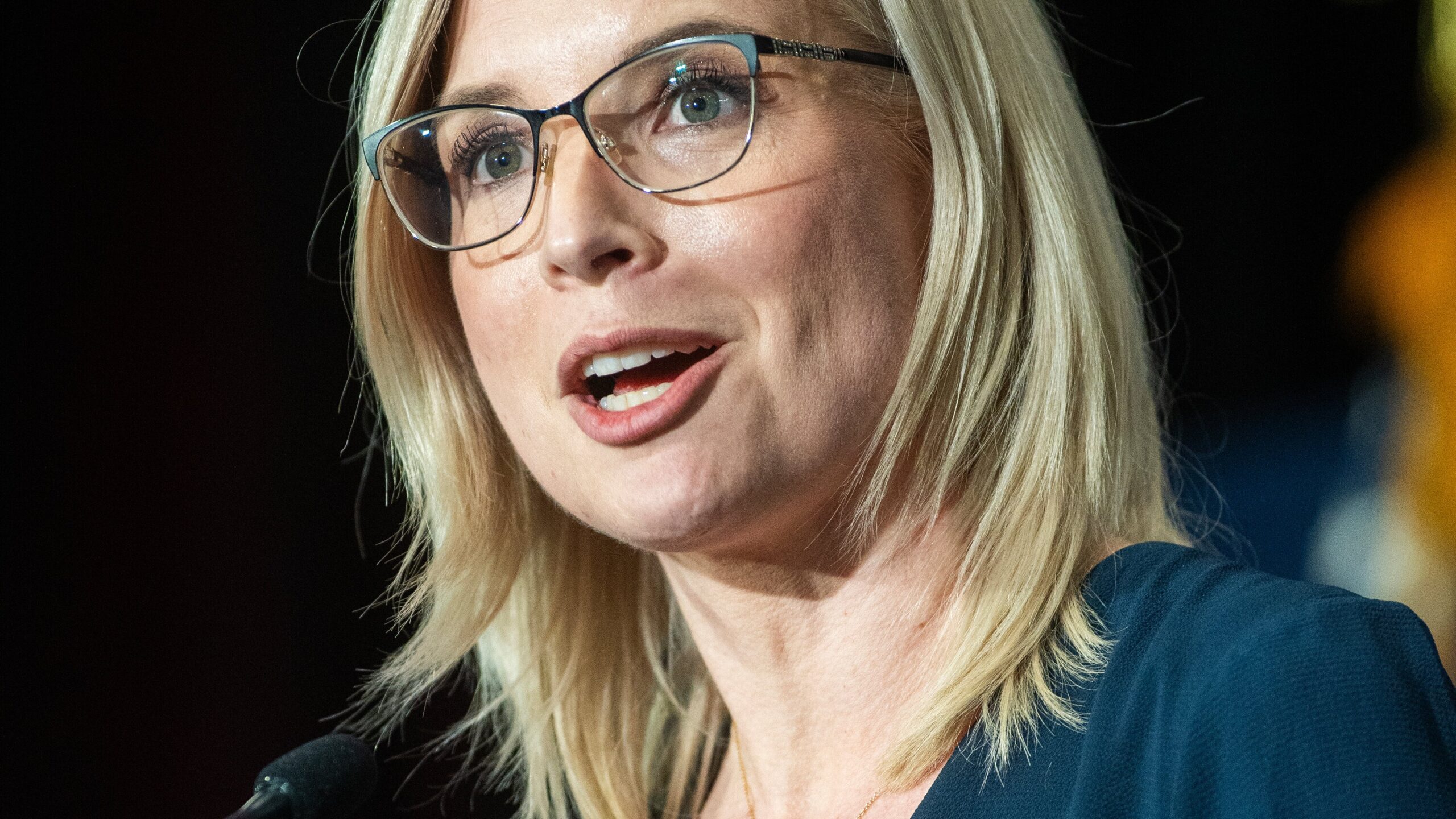
The Iowa Senate race has become more heated after Republican candidate Ashley Hinson called for a quick end to the war with Iran despite her previous votes against measures aimed at ending U.S. involvement in the conflict.
Hinson, a Republican congresswoman from Iowa, said on Monday that the conflict should come to an immediate conclusion. In a message posted on social media, she argued that rising costs linked to the war are hurting families across Iowa.
Hinson said residents should not face higher prices at gas stations or grocery stores because of the conflict. She called for several actions to reduce costs, including suspending the gas tax, pausing diesel exports, and replenishing the highway trust fund.
She said these steps were needed as soon as possible and added that the war should be brought to a successful and immediate end.
Her comments quickly became a topic in the closely watched Senate race.
Democratic candidate Josh Turek responded by highlighting Hinson’s voting record in Congress. Turek noted that Hinson had voted multiple times against House resolutions that sought to direct President Donald Trump to end military involvement related to the conflict with Iran.
According to Turek, Hinson voted against such measures six times. He also pointed to another vote related to ending U.S. hostilities in Lebanon as part of the wider conflict in the Middle East.
In his response, Turek said it is easy to call for peace after the fact but argued that lawmakers should support measures to end conflicts when given the opportunity to vote.
He said Hinson had voted several times to continue the military involvement and claimed she was now adopting positions he had previously proposed regarding the economic effects of the conflict.
The exchange comes as the Iowa Senate race gains increasing national attention.
Last month, election analysts moved the race rating from leaning Republican to a toss-up. The change signaled a more competitive contest between the two parties in a state that has generally favored Republicans in recent years.
President Trump carried Iowa in the last three presidential elections. Democrats have not won a U.S. Senate race in the state since 2008.
Hinson’s campaign did not immediately respond to questions about her previous votes on measures related to the conflict with Iran.
The most recent House resolution addressing the issue passed last week by a vote of 220 to 204. All Democrats present supported the measure, along with seven Republicans.
Among those Republicans were Iowa Representatives Zach Nunn and Marianette Miller-Meeks. Both had previously opposed similar resolutions but changed their positions during the latest vote.
Nunn and Miller-Meeks are seeking re-election in highly competitive congressional districts. Political observers consider both races among the most closely watched House contests in the country.
As the Senate campaign continues, Hinson has increasingly described herself as a bipartisan candidate. Political analysts have noted that she has also taken some positions that create distance between herself and the Trump administration.
The shift comes as opinion surveys show concerns among some voters about the handling of both the economy and the conflict with Iran.
Recent actions by Hinson have drawn attention. Last month, she publicly opposed a proposal to increase imports of foreign beef. She also did not attend a recent Republican event in Council Bluffs where Vice President JD Vance appeared to support party candidates.
Hinson cited a scheduling conflict for her absence.
During the event, Vance praised Hinson and expressed support for her Senate campaign, calling her an outstanding public servant and encouraging Republicans to back her bid for the Senate.
The debate over the Iran conflict is not limited to Iowa.
In neighboring Michigan, Republican Senate candidate Mike Rogers also called for a rapid end to the war. In a video message, Rogers said the conflict should end quickly and argued that doing so would help lower energy prices.
He proposed suspending state and federal gas taxes and supported a temporary halt to American diesel exports.
His Democratic opponent, Abdul El-Sayed, criticized those comments and argued that Rogers had previously supported the war effort.
As campaigns across key states focus on the economy and foreign policy, the Iran conflict is becoming an important issue in several Senate races. Candidates from both parties are now facing questions about their records, their current positions, and how they would address the financial impact of the conflict on American families.

