


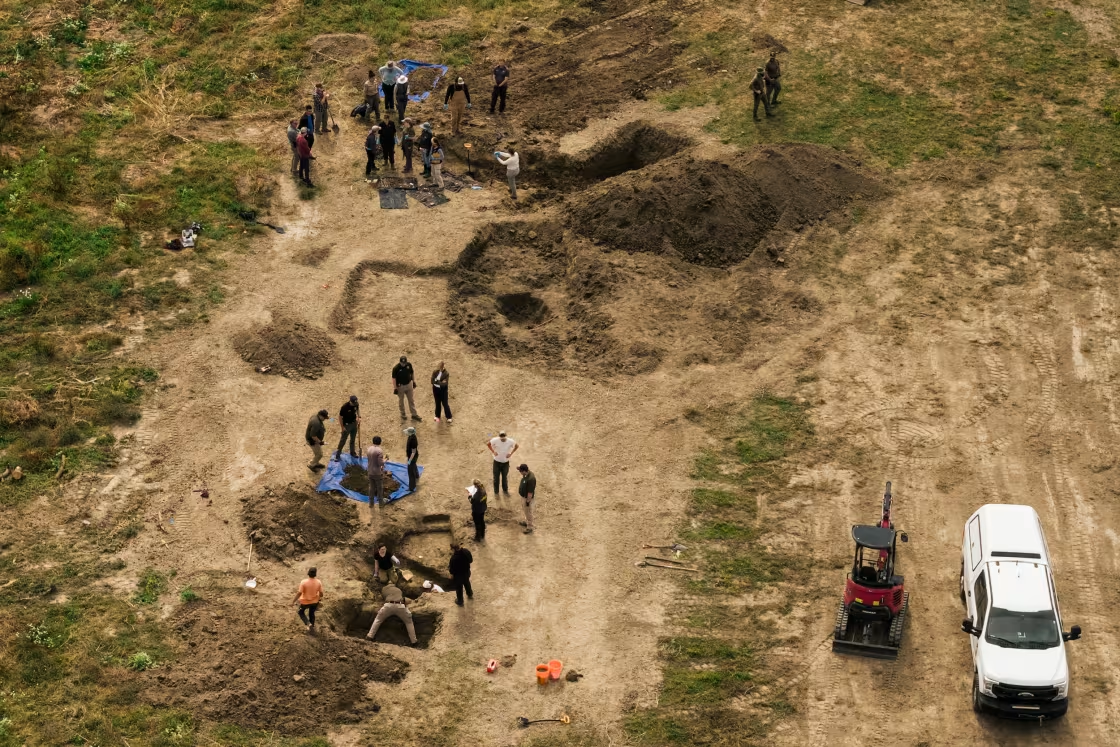
California authorities have discovered at least 117 dead dogs during an investigation into an animal rescue organization in Fortuna, raising serious concerns about alleged animal cruelty, fraud, and abuse. Investigators say many of the dogs appeared to have died from gunshot wounds, while the investigation remains active.
The remains were found during a court-approved search of Miranda’s Rescue in Humboldt County. Authorities obtained a warrant allowing investigators to excavate parts of the property after receiving information that dogs may have been buried in mass graves.
According to the Humboldt County Sheriff’s Office, investigators recovered 117 canine remains that were mostly intact from two burial sites. They also found nearly two dozen dog skulls, hundreds of bones, and around 600 dog collars during the search.
Sheriff William Honsal praised the law enforcement officers, forensic veterinarians, and support teams who worked at the scene. He described the investigation as one of the most difficult cases they have handled and said the work is only beginning.
Honsal said the determination shown by everyone involved while working through the disturbing scene would not be forgotten. He added that investigators remain committed to finding the truth and ensuring a complete investigation.
The investigation began earlier this year after authorities received reports in April alleging fraud, animal abuse, and animal cruelty involving the rescue organization. The case was assigned to the Humboldt County Sheriff’s Office Major Crimes Division.
Investigators carried out their first search of the property on May 1. During that operation, they collected evidence and discovered that a significant number of animals that had reportedly been surrendered to the rescue could not be accounted for.
A second search warrant was executed several weeks later, leading to the recovery of the large number of canine remains.
Forensic veterinarians examined 71 of the recovered bodies at the scene. Preliminary examinations, including X-rays, found that many of the animals contained bullet fragments, suggesting they may have died from gunshot injuries. The remaining 46 bodies had not yet been fully examined because of time constraints.
Investigators are now working to identify dogs that carried microchips. Officials hope the identification process will help determine how many animals belonged to families or owners who believed they had been safely placed with the rescue organization.
Authorities also discovered additional remains that had decomposed so severely they could not be safely removed from the burial sites. Those remains will continue to be examined as part of the ongoing investigation.
The sheriff’s office warned that the investigation is expected to take considerable time because of the amount of evidence collected and the need for detailed forensic analysis.
Officials said they understand that the public wants accountability and answers. However, they stressed that investigators must conduct a thorough, impartial, and legally sound investigation while protecting the legal rights of everyone involved.
As of now, no criminal charges have been announced.
Shannon Miranda, the founder of Miranda’s Rescue, could not immediately be reached for comment following the latest developments. Authorities said attempts to contact her by phone and email were unsuccessful.
Earlier this month, Miranda published a statement responding to public attention surrounding the investigation. In the statement, she addressed two separate incidents in which animals were euthanized at the rescue facility.
According to Miranda, one case involved a dog that killed another animal and attacked a third. The second involved a dog that allegedly lunged toward a stroller carrying a baby. She said both decisions were made to protect people and other animals.
Miranda also stated that Miranda’s Rescue operates as a no-kill shelter, meaning animals are not euthanized simply because of overcrowding. However, she acknowledged that euthanasia may sometimes be necessary in cases involving dangerous animals or severe medical conditions.
She added that whenever euthanasia was required, she informed local authorities beforehand, even when reporting was not legally required. She said maintaining clear records of those decisions was important.
Investigators continue collecting evidence while forensic experts examine the recovered remains. Authorities say the case remains active, and additional findings may emerge as the investigation progresses. The outcome could determine whether criminal charges will be filed in one of California’s largest animal cruelty investigations in recent years.

