


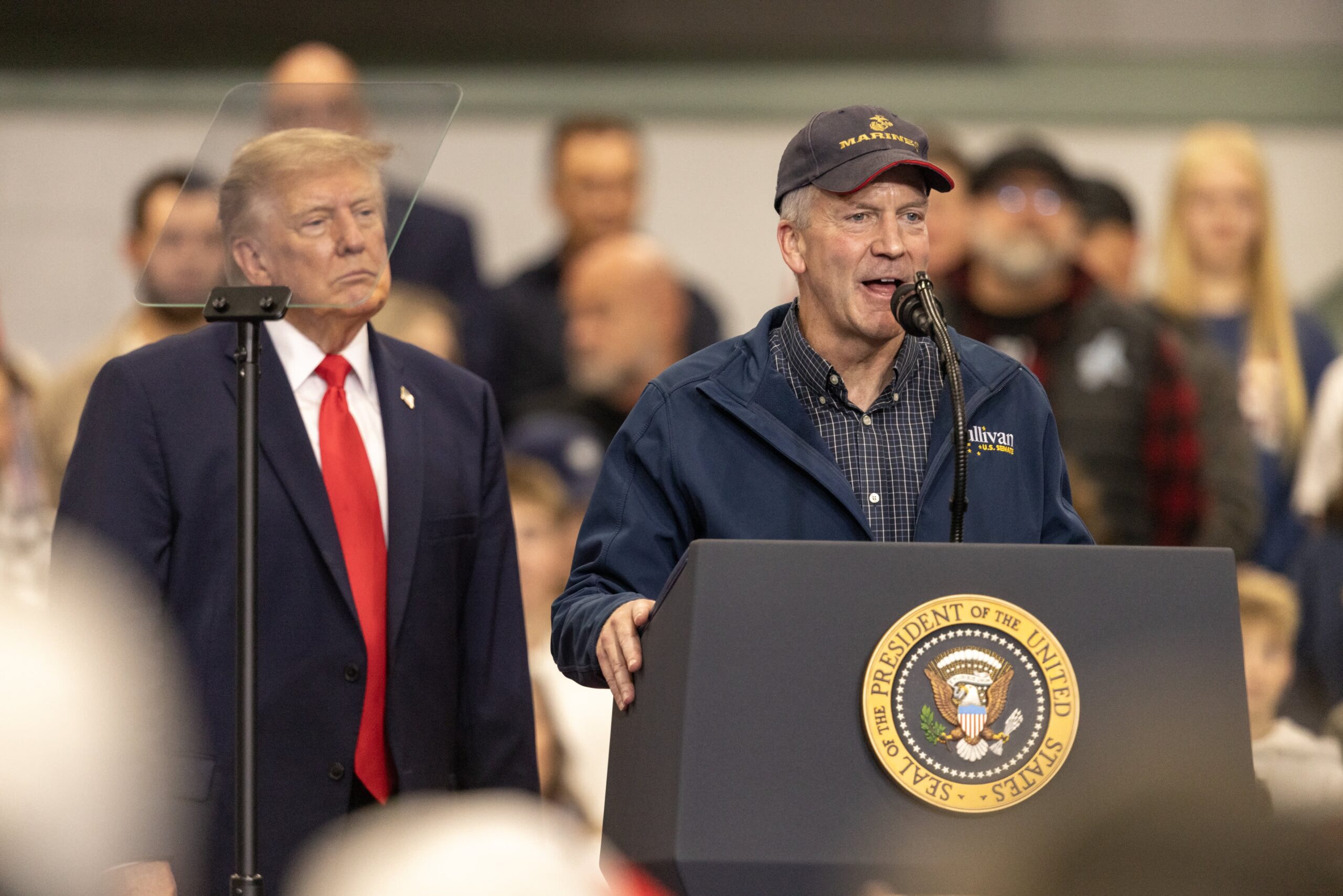
US Attorney General Todd Blanche has defended a Justice Department lawsuit seeking to delay the certification of Alaska’s Senate election results if Republican incumbent Dan Sullivan loses. The case has raised concerns about federal involvement in the election ahead of the November 3 midterm vote.
Blanche defended the lawsuit during an interview on CNN’s State of the Union on Sunday. He rejected claims that the Trump administration was preparing to challenge an election result it did not like.
The Justice Department says the case is meant to address possible voter confusion caused by two candidates with similar names on Alaska’s Senate ballot. Critics, including some Democrats, argue that the lawsuit could interfere with the democratic process.
The Alaska Senate race is important for Republicans as they seek to maintain control of the Senate for the remainder of President Donald Trump’s term. A loss could make it harder for the administration to advance its legislative agenda.
Blanche denies election interference claims
During the CNN interview, anchor Dana Bash asked Blanche whether the lawsuit could lay the groundwork for Trump to challenge the outcome of the midterm elections.
Blanche denied that was the administration’s aim.
“We’re not laying any groundwork for the president to do that,” he said.
He also rejected the suggestion that Trump was seeking to take control of a state election, saying the president was not trying to interfere with Alaska’s election process.
The interview became tense when Bash raised Blanche’s earlier description of a possible Justice Department intervention in election certification as a “doomsday” scenario. She asked whether the case risked repeating events surrounding the 2020 presidential election and the January 6 attack on the US Capitol.
Blanche pushed back strongly against the comparison. He called the suggestion unreasonable and criticized the direction of the discussion.
The attorney general maintained that the lawsuit was about whether Alaska’s election procedures comply with federal law and the Constitution.
Two candidates with similar names
The dispute centers on the names of two candidates running for the US Senate in Alaska.
Republican Senator Dan Sullivan is seeking reelection against Democrat Mary Peltola, a former member of Congress. Another candidate, retired schoolteacher Daniel J. Sullivan of Petersburg, is also on the November 3 ballot.
Republicans have accused Daniel J. Sullivan of entering the race to divert votes from the incumbent. The schoolteacher has denied that his candidacy was intended to confuse voters or weaken the senator’s chances.
The Justice Department argues that the similarity between the candidates’ names could lead some voters to select the wrong person.
State election officials have already taken steps to distinguish the two candidates on the ballot. The incumbent appears as “Dan S. Sullivan,” with a Republican label identifying him as the sitting senator. The other candidate is listed as “Daniel J. Sullivan Jr.” without a party label.
Alaska also uses ranked-choice voting, which allows voters to rank candidates in order of preference. Voters can rank both Sullivans if they choose.
During the state’s August primary, the incumbent received more than 68,000 votes, compared with 4,107 for Daniel J. Sullivan.
Lawsuit seeks to delay certification
The Justice Department filed its lawsuit in federal court in Alaska late Thursday. Citing the National Voter Registration Act, the department asked the court to prevent the state from certifying election results that could be affected by voter confusion.
The filing seeks to delay certification until the government can investigate whether votes cast for Daniel J. Sullivan were actually intended for the Republican senator.
However, the department has not explained how officials could reliably determine a voter’s intended choice after a secret ballot has been cast.
Blanche argued that states have a responsibility to prevent confusion during elections. He said Alaska’s procedures should be examined to determine whether they meet federal legal requirements.
He also noted that state courts had previously allowed Daniel J. Sullivan to remain on the ballot. A state court and the Alaska Supreme Court declined to remove the candidate after Republican election officials challenged his participation.
Blanche argued that those rulings did not directly address the federal legal questions raised by the Justice Department.
Trump says he ordered the lawsuit
Trump confirmed on Friday that he had directed the Justice Department to pursue the case.
“I’m the one that said do it,” he told reporters in Florida.
His comments added to the political debate surrounding the lawsuit, particularly because the case could affect the timing of the election certification process in a closely watched Senate contest.
Alaska Republican Senator Lisa Murkowski, who supports Sullivan’s reelection, criticized the federal action. She said the state had already taken steps to distinguish the two candidates and argued that the Justice Department should not have filed the lawsuit.
The case now puts the state’s election procedures and the federal government’s authority under scrutiny. Its outcome could determine whether Alaska faces new restrictions on certifying its Senate election results.
With Election Day approaching, the dispute has become part of a wider national debate over election administration, voter confidence and the limits of federal intervention in state-run elections.

