


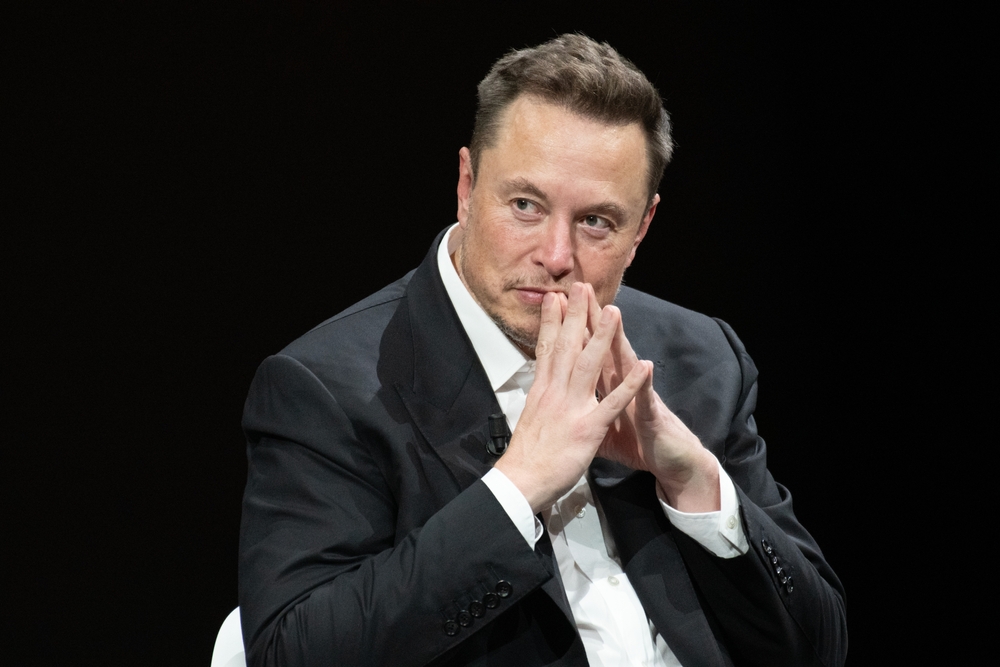
Tesla approaches one of the most consequential moments in its history. Ahead of Thursday’s annual general meeting, the company has launched an aggressive campaign to persuade shareholders that Elon Musk deserves a $1 trillion pay package. Digital ads highlight his achievements, while Votetesla.com features board chair Robyn Denholm and director Kathleen Wilson-Thompson praising Musk to dramatic, triumphant music. Investor opinion remains divided. The meeting in Austin, Texas, could turn into a vote on Musk’s leadership itself. His political statements and unpredictable behavior have made him one of the most polarizing figures in modern business. On X, the platform he owns, Musk warned that Tesla’s success “could affect the future of civilization.” He also rallied support from Michael Dell, Ark Invest CEO Cathie Wood, and his brother Kimbal, a Tesla board member. “There is no one remotely close to my brother,” Kimbal said. Musk replied: “Thanks bro ❤️.”
Shareholders question Tesla’s direction
Some investors see the pay package as a symptom of Tesla’s broader challenges. Car sales have slowed, and critics argue Musk has diverted attention from the company’s core mission. “It’s remarkable that a company struggling to sell cars spends money promoting a pay package,” said Ross Gerber, CEO of Gerber Kawasaki Wealth and Investment Management. Gerber has reduced his Tesla holdings and grown increasingly critical. “Tesla must return to its roots—building and selling electric vehicles,” he said.
The trillion-dollar challenge
Musk’s proposed package does not deliver $1 trillion upfront. Instead, it sets a performance goal: raise Tesla’s market value from $1.4 trillion to $8.5 trillion. He must also oversee the deployment of one million “Robotaxi” self-driving vehicles, despite slow progress. If he meets these targets, Musk would earn 423.7 million new shares, worth nearly $1 trillion at the target valuation. Tesla has not commented on its campaign to win shareholder approval.
This is not Musk’s first pay controversy. A previous multibillion-dollar plan rewarded him for boosting Tesla’s market value tenfold. Though he achieved that milestone, a Delaware judge voided the deal in 2024, citing conflicts of interest with the board. The Delaware Supreme Court is reviewing the decision while Tesla pursues this even larger package.
“Tesla continues to operate outside normal corporate norms,” said Columbia Law professor Dorothy Lund. “They are far from a model of good governance.” She noted that campaigns like this usually occur when activist investors threaten major change, not for executive pay disputes. “I’ve never seen anything like it,” she said.
Both Elon and Kimbal Musk will vote on the proposal, giving them significant influence. Musk, already the world’s richest man, became the first known half-trillionaire earlier this year.
Board defends its CEO
Tesla insists Musk is indispensable. The company argues he “uniquely possesses the leadership qualities needed to achieve its long-term mission.” Wilson-Thompson said the board spent seven months consulting legal and pay experts to design the package. Musk emphasized that the real issue is control, not money, saying he needs authority to guide Tesla’s future.
Critics argue the board is overstepping. “A board should represent shareholders, not advocate for a CEO,” said Yale professor Matthew Kotchen, co-author of a study examining Musk’s impact on Tesla’s reputation.
Institutional investors have voiced opposition. Proxy advisers Glass Lewis and ISS recommend rejecting the plan, calling it excessive and harmful to shareholder value. Norway’s sovereign wealth fund and U.S. pension giant CalPERS have pledged to vote no. New York State Comptroller Thomas DiNapoli urged investors to oppose Tesla directors, citing failure to provide “independent oversight and accountability.”
A vote that could reshape Tesla
With major institutions opposing the plan, Musk may rely on Tesla’s retail investors, who tend to support him. Morgan Stanley analyst Adam Jonas called Thursday’s vote “one of the most important events in Tesla’s history,” warning the proposal could fail.
Criticism outside Tesla continues. Protests have persisted since Musk’s brief and controversial role in Donald Trump’s administration earlier this year. “It’s hard to imagine Musk quickly repairing the damage to Tesla’s brand,” said Kotchen.
Still, supporters remain confident. “Musk’s vision and personality have drawn more attention to Tesla than almost any CEO,” said Edmunds’ Jessica Caldwell. “He’s polarizing, but investors still believe he can achieve the extraordinary.”
The central question now looms: will Tesla shareholders approve Musk’s $1 trillion plan—or finally draw the line on his influence?

