


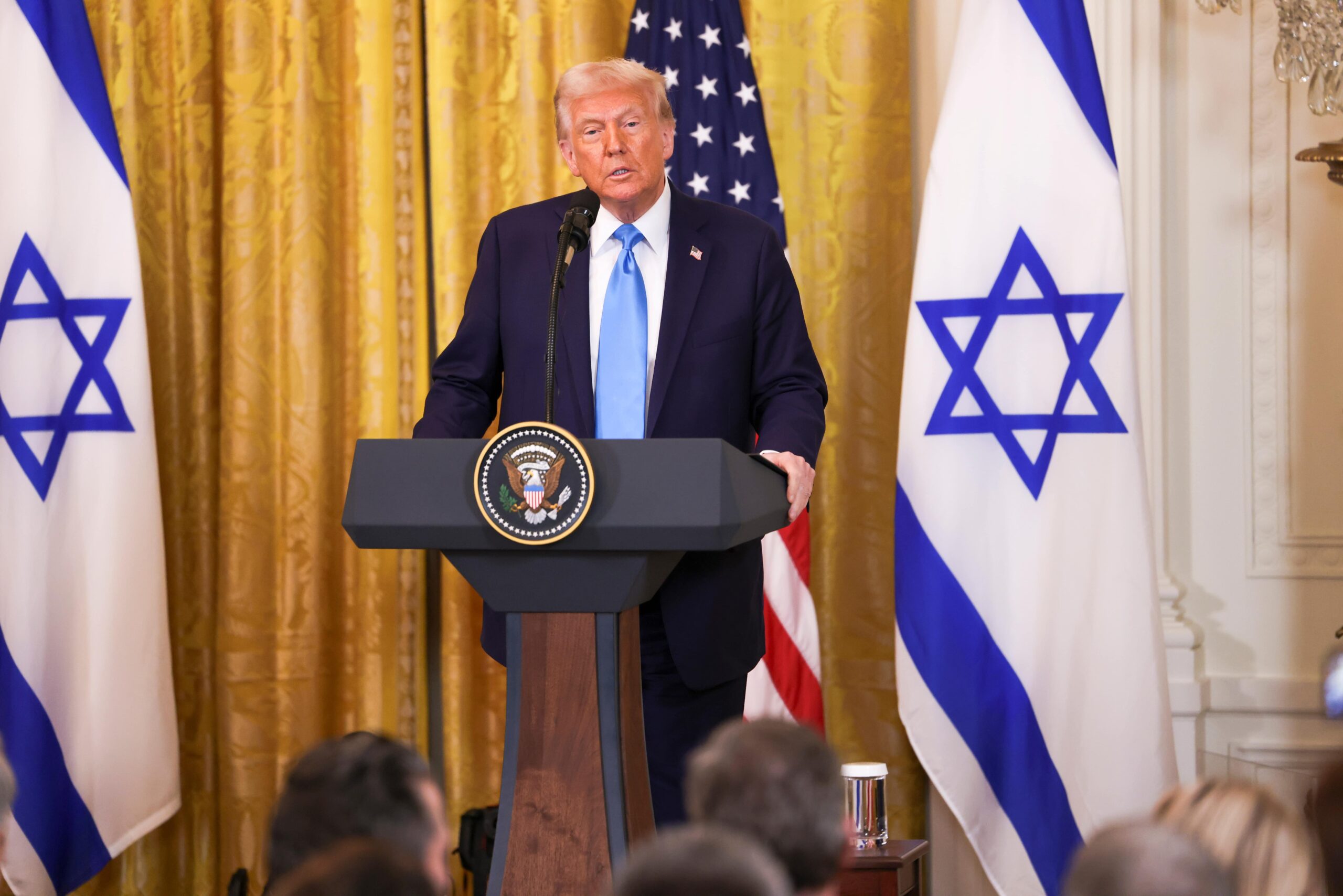
US President Donald Trump and Israeli Prime Minister Benjamin Netanyahu announced a comprehensive plan on 29 September to end the Gaza conflict.
Known as Trump’s 20-point plan, the agreement emerged after extensive talks with key Arab and Muslim nations, including Egypt, Qatar, and Turkey.
Trump reportedly pushed for an immediate end to the war after Israel’s failed strike on Doha violated Qatar’s sovereignty while targeting Hamas negotiators.
Freed from domestic political constraints, Trump increased pressure on Israel to halt its operations. By this stage, Israel had already completed its main military goals in Iran, Lebanon, and Gaza.
On 8 October, Trump declared that Israel and Hamas had signed the first phase of the accord, marking a major diplomatic milestone.
Ceasefire and Humanitarian Relief Form First Step
The plan begins with an immediate ceasefire, freezing all combat zones and suspending military actions across Gaza.
Within 72 hours, Hamas must release all Israeli hostages, both living and deceased, as part of the agreement.
Israel, in turn, will release 250 prisoners serving life sentences and 1,700 others detained since the outbreak of war.
This first stage seeks to end the immediate bloodshed, deliver humanitarian assistance, and restore stability in devastated communities.
Both sides must guarantee access for humanitarian organizations and allow safe passage for aid workers.
Trump’s administration has emphasized that this initial step lays the foundation for all subsequent negotiations.
Disarmament and Security Oversight to Follow
Negotiations for the second phase will begin once the hostages are freed and the ceasefire holds.
Under this stage, Hamas must dismantle its tunnels, destroy weapons caches, and end its military operations permanently.
The plan envisions Gaza as a “demilitarized, terror-free zone” incapable of threatening neighboring states.
Amnesty will be granted to Hamas members who renounce violence and accept peaceful coexistence, with voluntary exile available to others.
An international stabilization force—comprising US, Arab, and European troops—will deploy to oversee disarmament and train a new Palestinian police force.
This security component aims to guarantee long-term regional peace, prevent future hostilities, and rebuild trust between communities.
Governance, Reconstruction, and Future Recognition
The third phase establishes a transitional Palestinian administration led by independent technocrats under international supervision.
This body will handle daily governance, infrastructure rebuilding, and distribution of humanitarian aid through agencies like the UN and the Red Crescent.
The plan prioritizes reconstruction and encourages Palestinians to remain in Gaza to rebuild their homes and communities.
It also envisions conditional recognition of a Palestinian state, contingent on reforms and successful governance.
The United States, however, stops short of officially recognizing Palestinian statehood.
To support these efforts, an international “Board of Peace” led by Trump will supervise reconstruction and governance.
Former UK Prime Minister Tony Blair will serve as one of its senior members, alongside experts and regional representatives.
Netanyahu later reaffirmed that Israel would not support the creation of a Palestinian state under the current plan.
Despite differing interpretations, the agreement marks a significant step toward stabilizing Gaza and potentially reshaping the region’s political future.

