


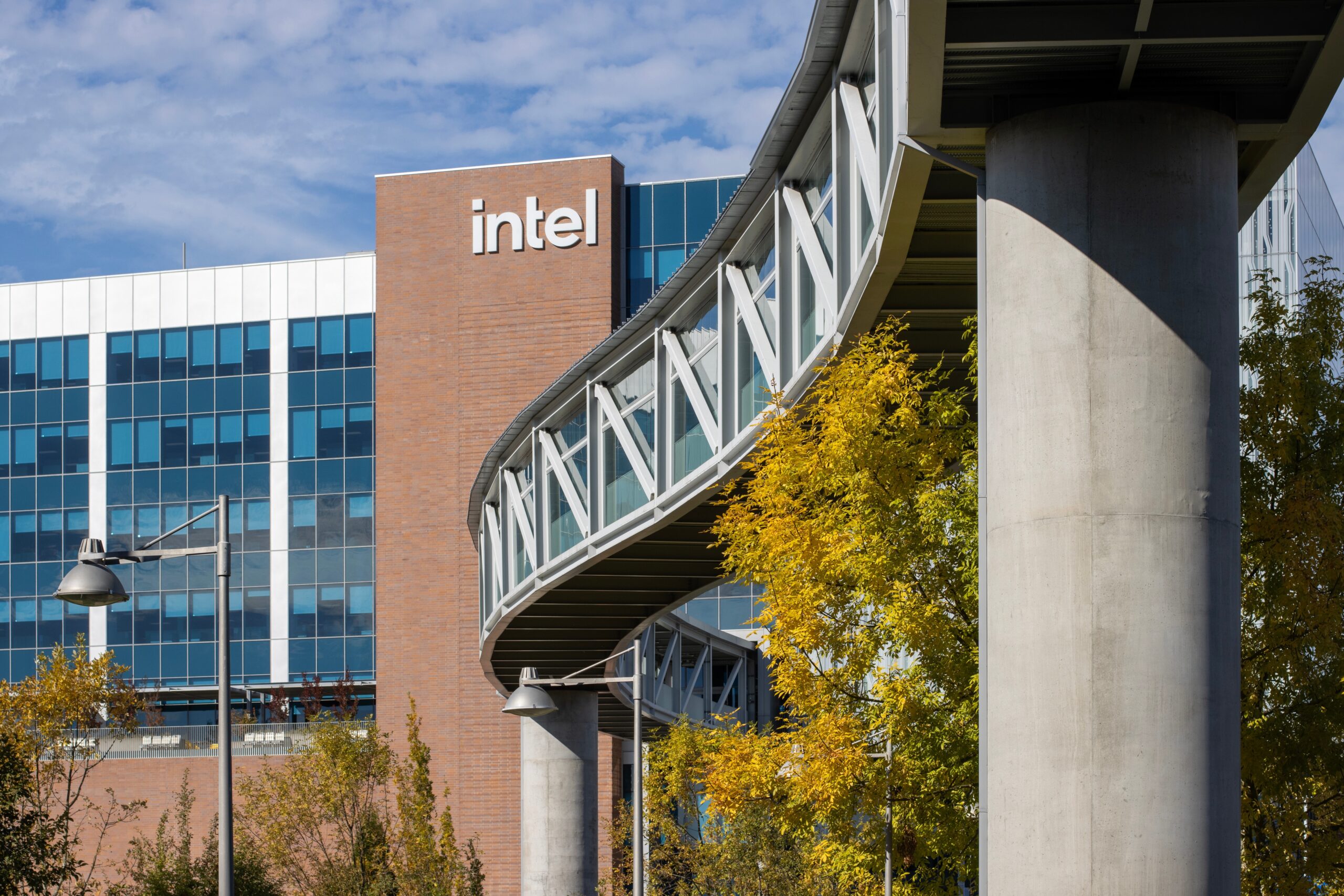
US Secretary of Commerce Howard Lutnick announced on Friday that Washington will purchase a 10% ownership stake in Intel.
“This historic agreement strengthens American leadership in semiconductors. It will boost our economy and secure our technological edge,” Lutnick wrote on X. He included a photo of himself with Intel CEO Lip-Bu Tan.
President Donald Trump confirmed the deal earlier in the Oval Office. He described it as “a great deal for them.”
Shares of the Santa Clara-based chipmaker rose more than 5% on Friday.
Intel confirmed that the US government will invest $8.9bn (£6.6bn) in its common stock.
Grants redirected to finance stake
Intel said the investment will come from grants already approved but not yet delivered. This includes funds promised under the CHIPS and Science Act, passed during President Joe Biden’s administration.
“As the only semiconductor company conducting leading-edge R&D and manufacturing in the US, Intel remains committed,” Tan said. “We will ensure the world’s most advanced technologies are American made.”
Tan praised Trump’s focus on domestic chip production. He said it drives “historic investments in an industry vital for economic growth and national security.”
The CHIPS Act aims to restore semiconductor manufacturing in the United States.
Intel falls behind rivals
Intel has struggled to expand chip capacity. It lags behind Nvidia, whose market value has climbed past $4tn while Intel’s remains near $100bn.
Once a Silicon Valley pioneer, Intel missed the mobile technology boom. It also lost ground in artificial intelligence, where Nvidia dominates.
Trump pressures Intel CEO
Trump recently demanded Tan’s resignation. He accused the Intel chief of having questionable ties to China.
The president called Tan “highly conflicted” over alleged investments in companies linked to the Chinese military.
Tan rejected the accusations as “misinformation” in a note to employees. He said he always acted within the law and ethical standards.
Tan, a US citizen, was born in Malaysia and raised in Singapore. US law allows citizens to invest in Chinese firms.
Trump’s criticism followed a letter from Republican Senator Tom Cotton to Intel’s board. Cotton questioned whether Intel could safeguard taxpayer money and comply with security regulations.
After the dispute, Tan visited Trump at the White House.
White House hails bold move
Press Secretary Karoline Leavitt called the deal “a creative idea that’s never been done before.”
Reports said the Trump administration also required Nvidia and AMD to give Washington 15% of revenue from AI chip sales to China.
Jacob Feldgoise, Senior Data Research Analyst at Georgetown University, compared the Intel stake to earlier government grant funding.
“It serves the same purpose,” Feldgoise said. “It shows stronger government involvement in markets to secure economic and security goals. The aim is regaining leadership in semiconductor manufacturing.”
The deal is rare today but has historical precedent.
Historical examples of government stakes
During the 2008 financial crisis, Washington took a majority stake in General Motors as bankruptcy loomed. The government later exited, taking a $10bn loss.
Feldgoise noted that Trump’s administration pursued a similar approach earlier this year with MP Materials. The Nevada-based company mines rare earth metals.
That agreement drew scrutiny after it emerged the Department of Defense relied on a Cold War-era law to bypass procurement rules.

