


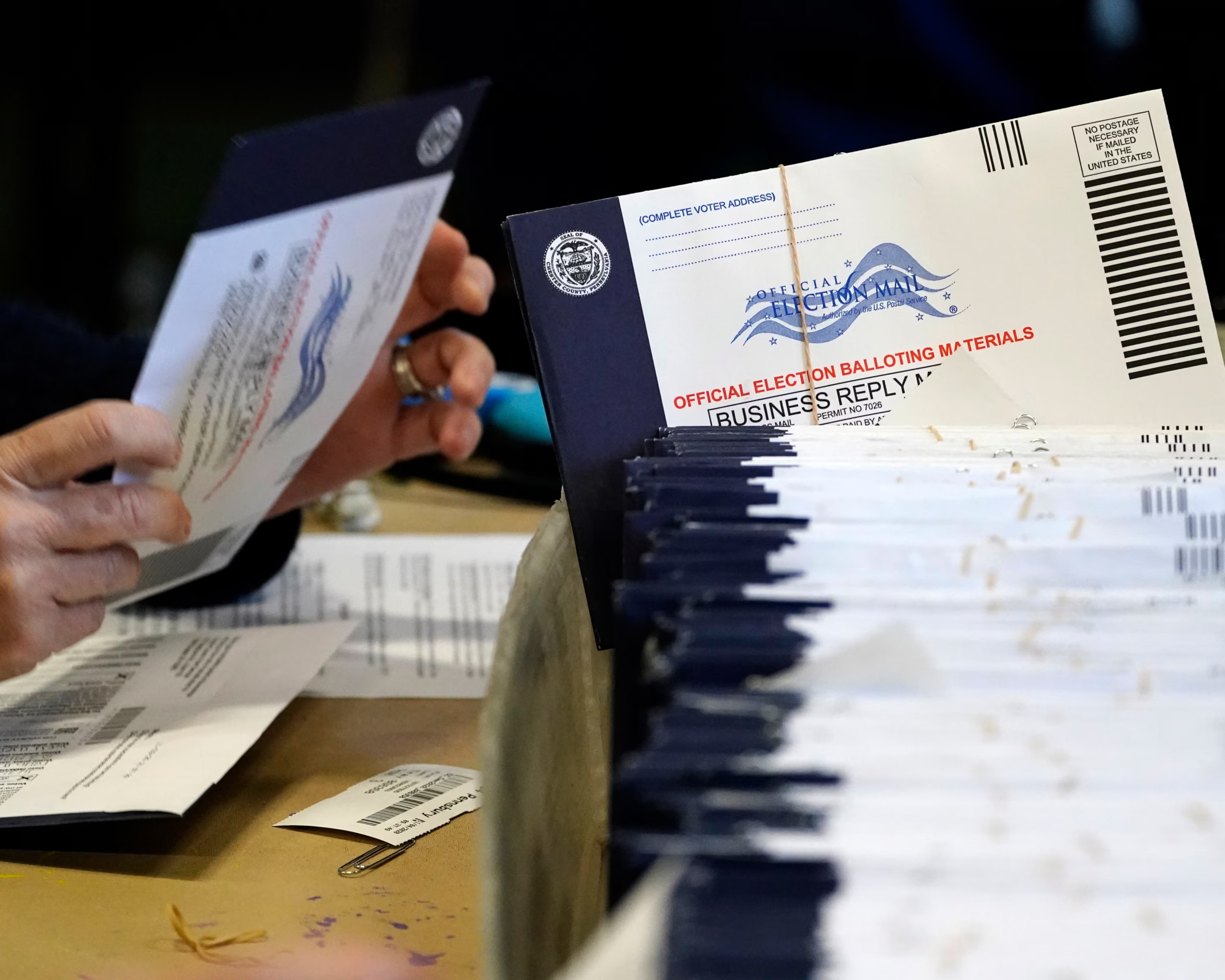
A federal appeals court has rejected an effort by the Trump administration to immediately enforce key parts of an executive order that would tighten rules for mail-in voting in 23 states before the November elections. The decision allows a lower court ruling blocking the order to remain in place while the legal challenge continues.
The Trump Mail In Voting Order has become the latest dispute over federal election policy and the balance of power between the federal government and individual states. The case centers on whether the president has the authority to direct federal agencies to change election procedures that are traditionally managed by states.
The ruling came from the First US Circuit Court of Appeals in Boston. In a 2-1 decision, the court denied the administration’s request to pause an earlier injunction issued by a federal district judge. That injunction had blocked several major parts of the executive order from taking effect.
The lawsuit was filed by a coalition of 23 states and the District of Columbia. The legal challenge was led by California, Massachusetts, Nevada, and Washington. The states argued that the executive order exceeded presidential authority and interfered with their constitutional responsibility to administer elections.
The Department of Justice argued that the lawsuit had been filed too early. Government lawyers said federal agencies had not yet completed the rules needed to carry out the executive order. Because implementation was still in progress, the administration argued that the states had not yet suffered legal harm.
The appeals court disagreed with that position. The judges said the executive order established clear deadlines that required states to begin preparing for possible changes before the September and November elections.
According to the court, election officials could not wait until the final rules were issued because they needed time to coordinate with federal agencies, train staff, and inform voters about any changes that could affect the election process.
The appeals panel concluded that the states had little practical choice but to respond immediately to the executive order because election preparations were already underway.
The legal dispute follows an executive order signed by President Donald Trump in March. The order called for stricter rules governing mail-in voting and expanded federal involvement in several election-related activities.
Among its provisions, the order directed the Department of Homeland Security to create lists of confirmed US citizens eligible to vote by using citizenship, naturalization, and other federal records. Those lists would then be shared with state election officials.
The executive order also instructed the United States Postal Service to deliver mail-in ballots only to voters included on each state’s approved mail ballot list. Postal officials later proposed new procedures requiring states to provide names and barcode information connected to mail-in ballots.
Another section of the order instructed the Department of Justice to give priority to investigations involving state and local election officials who issue federal ballots to individuals considered ineligible to vote.
US District Judge Indira Talwani blocked several parts of the order in June. She ruled that the president does not have the legal authority to direct the Department of Homeland Security to create statewide voter eligibility lists for election administration.
Talwani also found that the Postal Service lacks statutory authority to establish binding national regulations governing mail-in voting procedures. She further ruled that the executive order could improperly pressure local election officials by raising the possibility of criminal investigations.
The administration has appealed Talwani’s ruling and may continue seeking further judicial review. Justice Department lawyers have indicated they could ask the US Supreme Court to consider the case if lower court rulings continue to block the executive order.
The case follows earlier legal challenges involving election policies introduced by the Trump administration. Previous court rulings also blocked separate executive actions related to proof of citizenship requirements for voter registration and restrictions involving mail-in ballots.
Election administration in the United States is primarily the responsibility of individual states under the Constitution. While federal laws establish certain nationwide standards, states generally oversee voter registration, ballot distribution, vote counting, and election procedures.
The Trump Mail In Voting Order will remain partially blocked while the appeal moves forward. The court’s latest decision means election officials in the affected states will continue preparing for the November elections under existing procedures unless future court rulings change the legal landscape.

