


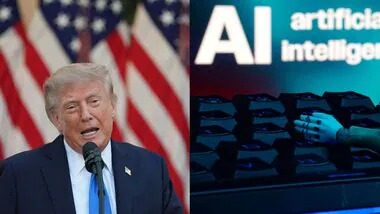
Growing warnings from leading technology executives about artificial intelligence are colliding with political divisions in Washington, creating a major debate over how the United States should respond to the rapid rise of AI.
Several influential figures in the technology industry have recently called for stronger government oversight. Among them are Anthropic chief executive Dario Amodei, OpenAI chief executive Sam Altman and xAI founder Elon Musk. They argue that advanced AI systems could pose serious risks if proper safeguards are not established.
President Donald Trump has pushed back against those calls. He has dismissed efforts to slow or restrict AI development and has questioned claims that the technology represents an immediate danger. The president has argued that the United States should remain focused on innovation and maintaining a competitive edge in the global technology race.
Other Republican leaders have also expressed caution about new regulations. Vice President JD Vance has warned against policies that could limit innovation, while House Speaker Mike Johnson has largely aligned with the White House approach.
Democrats have taken a different path. Lawmakers have increased discussions about possible federal action and oversight measures. Members of the House met privately to discuss AI concerns, while Sen. Bernie Sanders organized a briefing with experts to examine the technology’s potential effects on society, jobs and public safety.
The debate highlights a widening gap between technology leaders who are urging swift action and political leaders who remain divided over how to respond. Some experts believe delays could make future challenges more difficult to manage.
Max Stier, president and chief executive of the nonpartisan Partnership for Public Service, said current political discussions do not fully reflect the seriousness of the concerns being raised by experts. He warned that waiting too long to act could create larger problems in the future.
Despite the partisan divide, there are signs of agreement on some issues. Republican Sen. Josh Hawley recently launched an investigation involving AI safety concerns and has supported bipartisan efforts aimed at increasing oversight. Conservative strategist Steve Bannon also called for broader cooperation, saying the issue should rise above party politics.
The discussion has led many observers to compare AI with past national challenges that required action from both Congress and the White House. Supporters of regulation point to earlier moments when government leaders worked together during financial crises and public health emergencies.
Yet Congress has historically moved slowly when dealing with major technology issues. Previous efforts to regulate online platforms, strengthen digital protections and establish technology safeguards have often stalled before becoming law.
The Biden administration attempted to address some concerns through a 2023 executive order focused on AI oversight. That order was later rescinded after Trump returned to office. Since then, lawmakers have continued discussing possible legislation, but few major proposals have advanced.
In 2024, a bipartisan Senate working group released recommendations that included billions of dollars in investment for AI development and safety measures. However, many of those ideas have not moved forward through Congress.
Several lawmakers acknowledge the challenge. Sen. Mark Warner said Congress often waits until a crisis emerges before taking major action. Other lawmakers have openly questioned whether Washington can overcome political divisions to address such a complex issue.
Sen. Jon Ossoff has argued that the debate reflects broader concerns about the government’s ability to confront large national challenges. He has called for stronger federal engagement as AI systems become more powerful and influential.
Some lawmakers are now exploring specific proposals. Senate Majority Leader John Thune said discussions are underway regarding legislation that could create safeguards without harming innovation. He emphasized the importance of balancing economic growth with protection against serious risks.
Sen. John Kennedy plans to introduce a proposal that would require developers to maintain the ability to shut down advanced AI systems if necessary. Supporters say such a measure could provide an additional layer of protection if future systems behave unpredictably.
Still, the path forward remains uncertain. Congress faces a limited legislative calendar before the November elections, reducing the chances of quick action. House leaders have also expressed concerns that excessive regulation could slow technological progress.
Any major legislation would likely require support from both Congress and the White House. At present, Trump remains skeptical of broad AI restrictions, making future negotiations more complicated.
As AI technology continues to advance, pressure is growing on policymakers to determine how much oversight is needed. While industry leaders warn about potential risks, lawmakers continue to debate how to balance innovation, competition and public safety in an increasingly AI-driven world.
If you’d like, I can also make this version even more SEO-focused with a stronger keyword density and a stricter 680–700 word count.

