


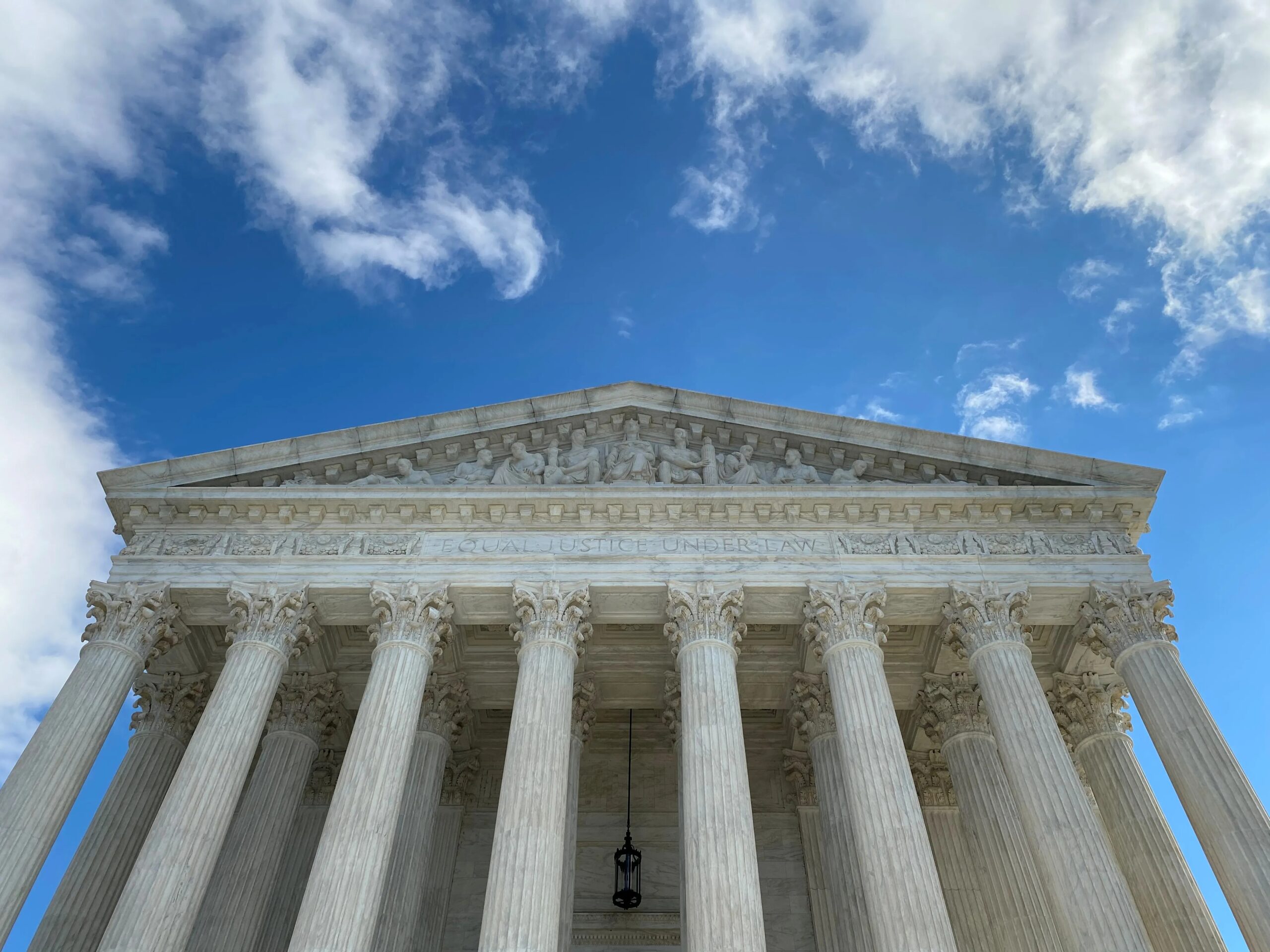
The U.S. Supreme Court delivered a major setback to Missouri Republicans on Thursday by blocking a congressional map that could have helped the party gain another seat in the House of Representatives.
The decision came after months of legal fights over Missouri’s redistricting process. The ruling allows the state to use its existing congressional district lines for the November election rather than a newer map favored by Republicans.
The Supreme Court acted on an emergency appeal filed by opponents of the new districts. The justices issued the order without noting any dissent, signaling broad agreement with the decision.
The case centers on a dispute that has moved through both state and federal courts. Missouri Republicans supported a revised congressional map that was expected to strengthen the party’s position in upcoming elections. Democrats and redistricting advocates challenged the plan, arguing that it violated legal requirements.
Last month, Missouri voters participated in primary elections using the newer congressional map. However, the legal fight continued after the primaries ended.
Earlier this week, U.S. District Judge Stephen Clark ordered election officials to use the new districts in the general election. His ruling effectively set aside a decision from the Missouri Supreme Court, which had directed the state to rely on the older district boundaries.
That federal court order created confusion for election officials who were already preparing ballots for the November vote. Local authorities received conflicting instructions as court decisions changed within a short period.
The Supreme Court’s action on Thursday reversed the situation again. Election officials must now return to the congressional map that was in place before the recent redistricting effort.
The ruling represents a significant victory for Democrats and voting rights advocates who spent months challenging the Republican-backed map. The dispute generated nearly a dozen legal battles as both sides sought control over the congressional boundaries.
Republican officials had argued that changing maps so close to the election could create administrative problems. Missouri Secretary of State Denny Hoskins and other state leaders warned that election offices would face serious difficulties if forced to abandon the new districts.
Supporters of the new map also pointed to two Republican congressional candidates who had already campaigned and competed in districts created under the revised boundaries during the primary election.
Despite those concerns, the Supreme Court allowed the Missouri Supreme Court’s order to remain in effect.
The timing of the decision added further pressure. Election officials had been working to finalize ballots ahead of mailing deadlines. Court rulings arriving just weeks before voting begins created uncertainty for local election administrators across the state.
Shortly after the Supreme Court acted, Missouri’s highest court held a hearing concerning whether Hoskins should be held in contempt for failing to follow its earlier order.
During the hearing, several judges expressed frustration with the secretary of state’s actions. Members of the court questioned why officials had not fully committed to following the state court’s ruling after the federal dispute emerged.
Lawyers representing Hoskins argued that he had been placed in a difficult position because of conflicting court orders. They said state officials were attempting to comply with changing legal requirements while ensuring elections remained on schedule.
Judges appeared unconvinced by some of those arguments. They pressed state attorneys about whether any uncertainty remained after the Supreme Court’s decision.
Later in the day, Hoskins issued a statement confirming that his office would follow the Missouri Supreme Court’s directive.
He announced that local election authorities would use the congressional map first adopted in 2022 for the November election.
The statement effectively ended immediate questions about which district lines would be used by voters this fall.
At a later hearing, Chief Justice W. Brent Powell ruled that Hoskins’ earlier actions placed him in contempt of court. However, the court determined that his new directive ordering compliance with the state ruling resolved the issue.
Redistricting opponents welcomed the outcome. Richard von Glahn, executive director of People Not Politicians, said the Supreme Court’s action settled the dispute over Missouri’s congressional boundaries.
The decision now clears the way for Missouri to conduct the November election using its existing districts, ending a contentious legal battle that carried major political stakes for both parties.

