


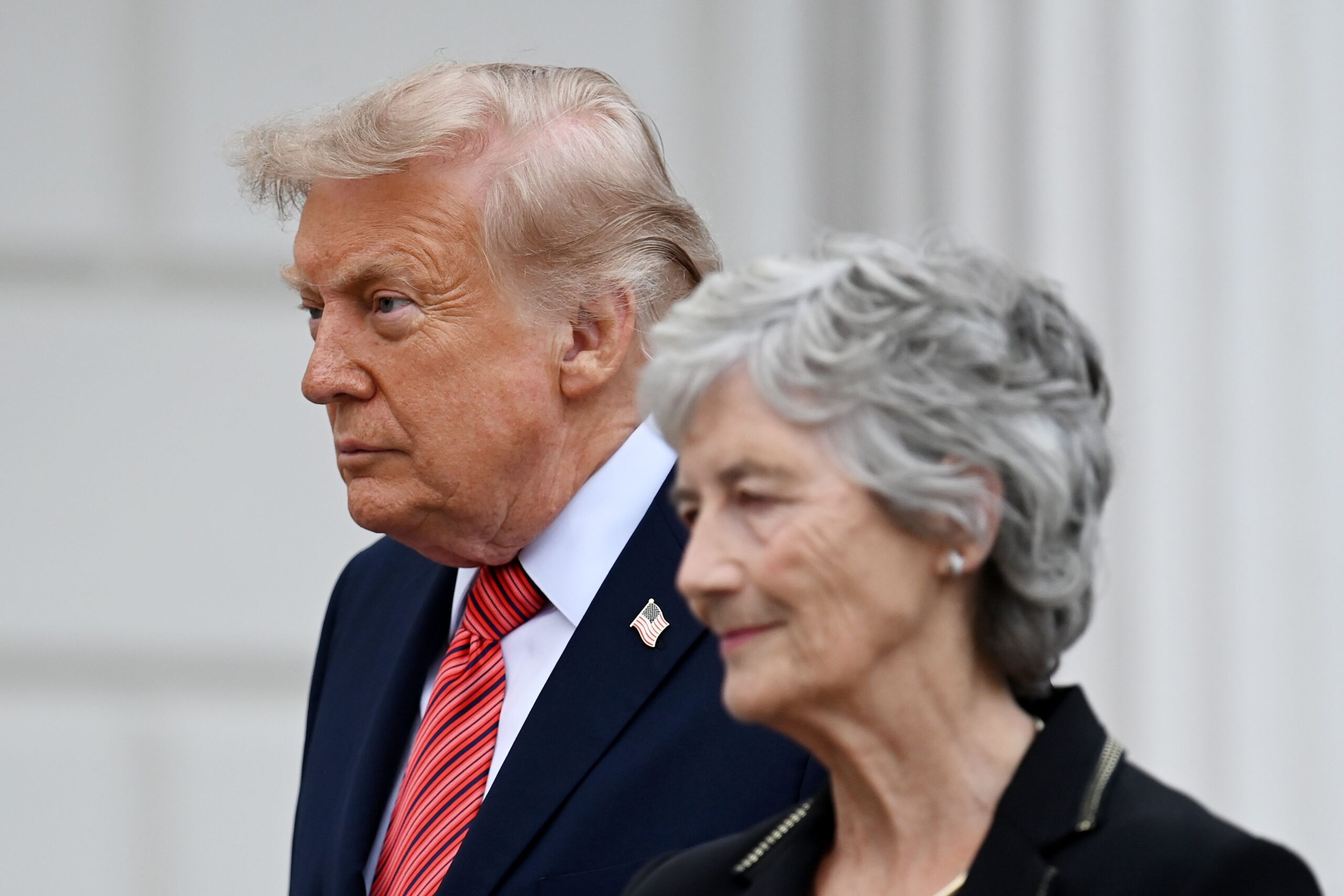
President Donald Trump said he would like to see Ireland reunified and predicted that such a move could happen in the future. He made the remarks during a bilateral meeting with Irish Taoiseach Micheál Martin on Saturday.
When asked about the issue by a reporter, Trump first noted that the topic is politically sensitive. He then expressed support for the idea of a united Ireland.
“I don’t want to cause any trouble,” Trump said. “But I will tell you, I’d love to see it unified.”
His comments quickly drew attention because Irish reunification remains one of the most debated political issues on the island of Ireland. The question centers on whether Northern Ireland should remain part of the United Kingdom or join the Republic of Ireland.
For many years, the issue has divided communities in Northern Ireland. Unionists generally support remaining within the United Kingdom. Nationalists generally favor reunification with the Republic of Ireland.
The debate is closely linked to the history of Northern Ireland. For nearly three decades, the region experienced violence and political unrest during a period known as the Troubles. The conflict involved republican and loyalist groups, security forces, and civilians. Thousands of people lost their lives during those years.
A major turning point came in 1998 with the Good Friday Agreement. The agreement helped bring an end to most of the violence and created a framework for political cooperation. Under its terms, reunification can only occur if a majority of voters in both Northern Ireland and the Republic of Ireland support the move in separate referendums.
Because of the issue’s sensitivity, American presidents have usually avoided taking a public position on reunification. Even former President Joe Biden, who often spoke about his Irish roots, did not openly advocate for a united Ireland.
Trump, however, appeared confident when discussing the subject. He suggested that reunification could happen at some point and indicated that he believed it would be beneficial.
“It’s going to happen eventually,” Trump said. “I think it will happen now. You’ve got the right man over here to get it moving.”
He pointed toward Taoiseach Micheál Martin while making the remark. Trump also said that the United Kingdom would have an important role in any future discussions.
“The UK will have something to say about it obviously, but I think it would be a great thing,” he added.
The comments were met with criticism from some political figures. Leaders in the United Kingdom and Northern Ireland stressed that the future of Northern Ireland should be determined through democratic processes.
The British government referred to recent remarks from Prime Minister Andy Burnham, who had downplayed the possibility of an immediate border poll in Northern Ireland. Burnham said such a vote was not currently being considered and reaffirmed his support for the Good Friday Agreement.
Gavin Robinson, leader of the Democratic Unionist Party, also responded. He said the future constitutional status of Northern Ireland should be decided by its people.
According to Robinson, decisions about Northern Ireland should not be influenced by comments made in London, Dublin, or Washington.
Trump arrived in Ireland on Saturday morning for a series of meetings with Irish leaders. The visit included talks on economic cooperation, business opportunities, and international issues.
Upon arrival, Trump was welcomed by Irish President Catherine Connolly. During the ceremony, an Irish band performed the American national anthem followed by the Irish national anthem.
Trump briefly spoke with reporters and answered a few questions on international matters. He also expressed confidence that current global challenges would be resolved.
“Everything will work out just fine,” Trump said. “It’s all going to work out fine.”
The president’s visit comes at an important political moment in the United States. Midterm elections are approaching, and developments in the Middle East continue to draw attention from Washington.
During his stay, Trump met Irish political leaders and business representatives in Dublin. Discussions focused on strengthening economic ties between the two countries and exploring areas of shared interest.
While the visit highlighted trade and diplomatic cooperation, Trump’s comments on Irish reunification became the main political story of the day. His remarks renewed debate on an issue that continues to shape politics across Ireland and Northern Ireland.

