


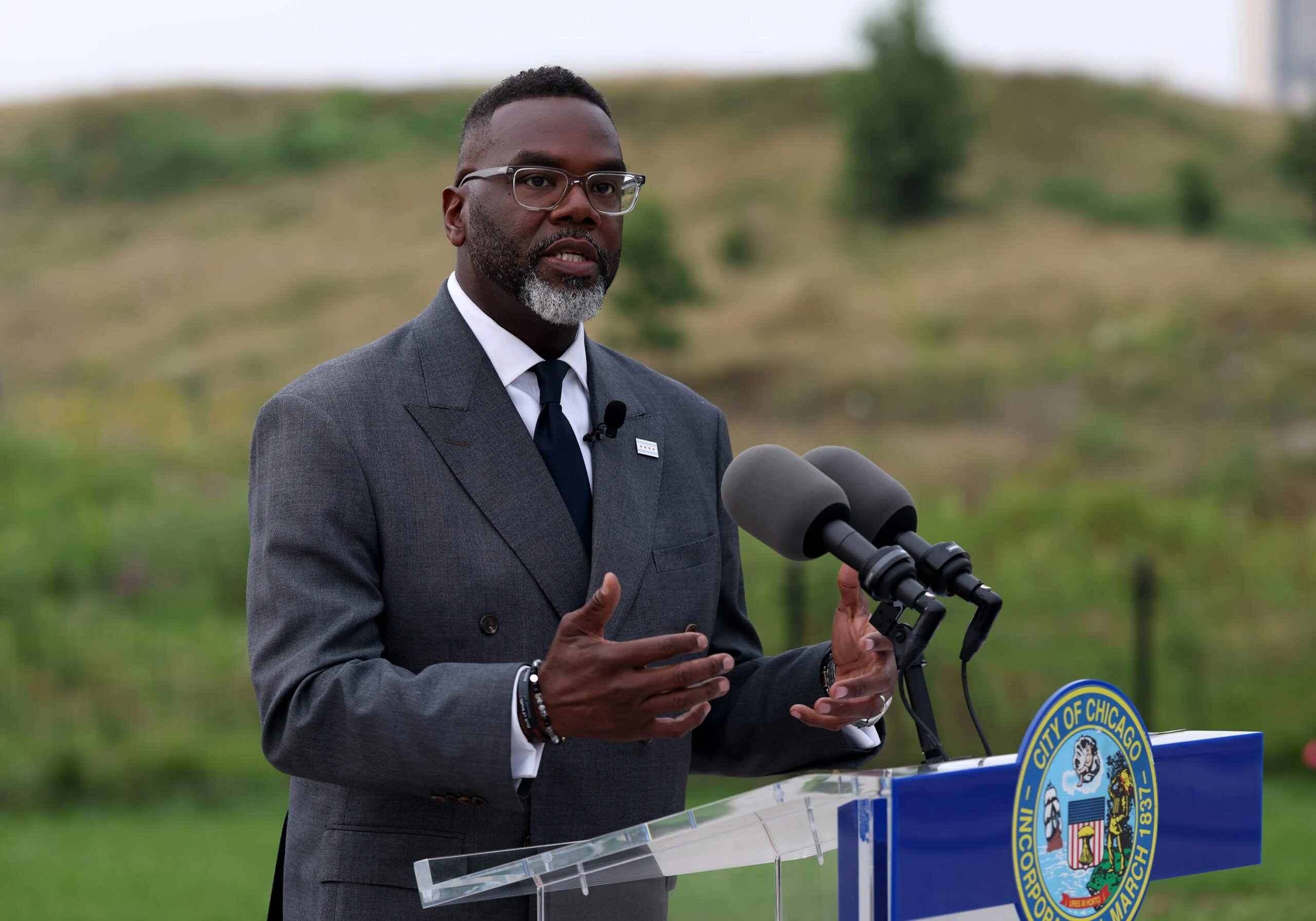
Chicago Mayor Brandon Johnson has officially launched his bid for a second term. He announced his reelection campaign on Sunday and joined a growing field of candidates ahead of the city’s 2027 mayoral election.
Johnson first shared the news through a video posted on social media. The video highlighted key actions taken by his administration since he entered office in 2023. It ended with supporters chanting, “Four more years.”
Later in the day, Johnson made his formal campaign announcement at the DuSable Black History Museum and Education Center. Speaking to supporters, he said his work for the city is not finished.
“Chicago, we are not done. We have more work to do,” Johnson said. He also asked residents to support his effort to keep Chicago on a path toward becoming what he described as the most affordable large city in the United States.
During his speech, Johnson outlined several goals for a second term. He called for more funding for public schools, increased affordable housing options, and expanded mental health services. He also spoke about policies aimed at asking wealthy residents to contribute more while supporting working families across the city.
Johnson pointed to actions already taken during his first term. He told supporters that while others are talking about future plans, he is focused on achievements his administration has already delivered.
The announcement places Johnson in a competitive race for the mayoral election scheduled for February 23, 2027. More than a dozen candidates have entered the contest, creating one of the most crowded fields in recent city history.
Political observers note that Johnson entered the race later than several of his rivals. Campaign finances may also become a key issue in the months ahead.
One of Johnson’s opponents, Illinois Secretary of State Alexi Giannoulias, announced his campaign earlier and has built a large fundraising operation. Public reports show that Giannoulias has raised tens of millions of dollars for his campaign, while Johnson currently has a much smaller campaign fund.
Soon after Johnson announced his reelection effort, Giannoulias released a message on social media. In the video, he said Chicago needs leadership built on integrity, accountability, and a commitment to keeping promises made to voters.
Another candidate, Susana Mendoza, also responded to Johnson’s announcement. Mendoza, who launched her campaign earlier this year, criticized the mayor’s record on public safety.
In a statement, she argued that crime concerns remain in several parts of the city. She said many residents on the South and West sides continue to face serious safety challenges. Mendoza added that city leaders should focus on making people feel secure in every neighborhood.
She also said the election offers voters a chance to choose a mayor who can deliver stronger progress on issues that affect daily life.
Candidate John Kelly also issued a detailed response. He said the city described by Johnson does not match what he has heard from residents during his campaign.
Kelly focused heavily on public transportation and safety concerns. He shared an example of a young worker who uses public transit to travel to work but pays for ride-share services at night because she does not feel safe using the train system after dark.
According to Kelly, many residents continue to worry about crime and transportation security. He said those concerns affect both quality of life and household budgets.
Kelly outlined several proposals he would pursue if elected. These include adding 1,000 police officers, increasing security across public transit routes, attracting businesses back to downtown areas, and stabilizing property taxes.
He described the upcoming election as a choice between continuing current policies and pursuing a different direction for the city.
As the campaign season begins, voters are expected to hear competing visions for Chicago’s future. Public safety, housing, education, economic growth, and affordability are likely to remain major topics in the race.
With more than a year before Election Day, candidates now face the challenge of building support, raising funds, and convincing voters that they can best lead Chicago through the next chapter of its development.

