


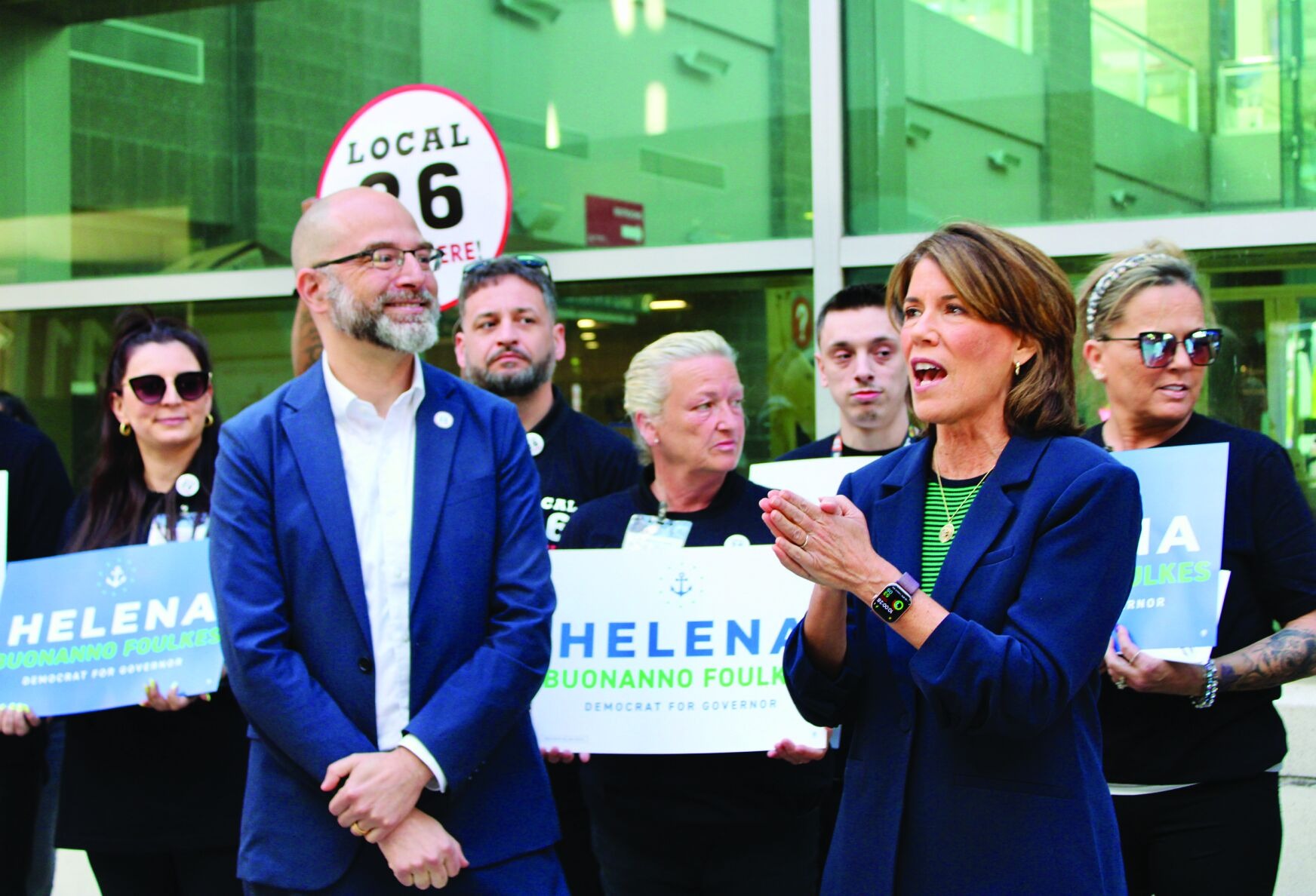
Helena Foulkes has won the Democratic primary for governor in Rhode Island, defeating incumbent Governor Dan McKee in a result that marks one of the biggest political upsets of the 2026 election cycle.
The victory ends McKee’s bid for a full second term and makes him the first sitting governor in the United States to lose a primary election in eight years. The result also reflects growing voter frustration with incumbents seen in several races across the country this year.
Foulkes, a former CVS executive and business leader, entered the race as a strong challenger. Public polls before Election Day showed her holding a clear lead over McKee. Her campaign also enjoyed a major advantage in advertising spending, allowing her message to reach voters across Rhode Island.
The race was a rematch of the 2022 Democratic primary. Four years ago, McKee narrowly defeated Foulkes and secured the nomination. This time, voters delivered a different result, giving Foulkes a decisive victory and another chance to lead the state.
A major issue throughout the campaign was the Washington Bridge in Providence. In late 2023, McKee ordered the closure of the heavily used bridge after engineers discovered serious structural problems. Officials warned that the damage could eventually have led to a collapse if left untreated.
Although McKee argued that public safety required immediate action, the bridge closure became a lasting political problem. Three years later, construction remains ongoing, and many residents continue to deal with traffic delays and transportation challenges.
Voter dissatisfaction with the bridge project was evident in public opinion surveys. An August poll found that a large majority of likely Rhode Island voters disapproved of McKee’s handling of the bridge situation, while only a small percentage approved of his performance on the issue.
Foulkes made infrastructure a central theme of her campaign. In television advertisements and public appearances, she argued that Rhode Island needed stronger leadership to address roads, bridges and economic development. She also promoted plans to improve housing availability and support business growth across the state.
McKee defended his actions throughout the campaign. He maintained that closing the bridge was the responsible decision and repeatedly said that protecting public safety was more important than political concerns. He also pointed to ongoing construction efforts and stated that the project is expected to be completed by 2028.
Despite those arguments, many voters appeared ready for change. Foulkes successfully presented herself as a candidate who could bring a fresh approach to government while drawing on her experience in the private sector.
The defeat is historically significant. The last sitting governor to lose a primary election was Kansas Republican Jeff Colyer in 2018. Among Democrats, the last governor to suffer a primary defeat was Hawaii Governor Neil Abercrombie in 2014.
The Rhode Island race did not receive the same level of national attention as some other Democratic contests this year. Many high-profile races around the country focused on ideological divisions and generational change within the party. In contrast, the Rhode Island campaign centered largely on local concerns such as transportation, housing and economic management.
Foulkes also benefited from strong political connections. Her family has a long history in public service. Her uncle, Chris Dodd, and her grandfather, Thomas Dodd, both served as United States senators from Connecticut. She also received support from prominent Democratic figures during the campaign.
Attention now shifts to the general election. Rhode Island remains one of the most Democratic states in the country, giving Foulkes a strong position heading into November. The state has not elected a Republican governor since 2010, and Democratic candidates have consistently performed well in recent statewide elections.
With the primary behind her, Foulkes is expected to focus on uniting Democratic voters and presenting her vision for the state’s future. Her victory signals a desire for new leadership among many Rhode Island voters and marks a major turning point in the state’s political landscape.

