


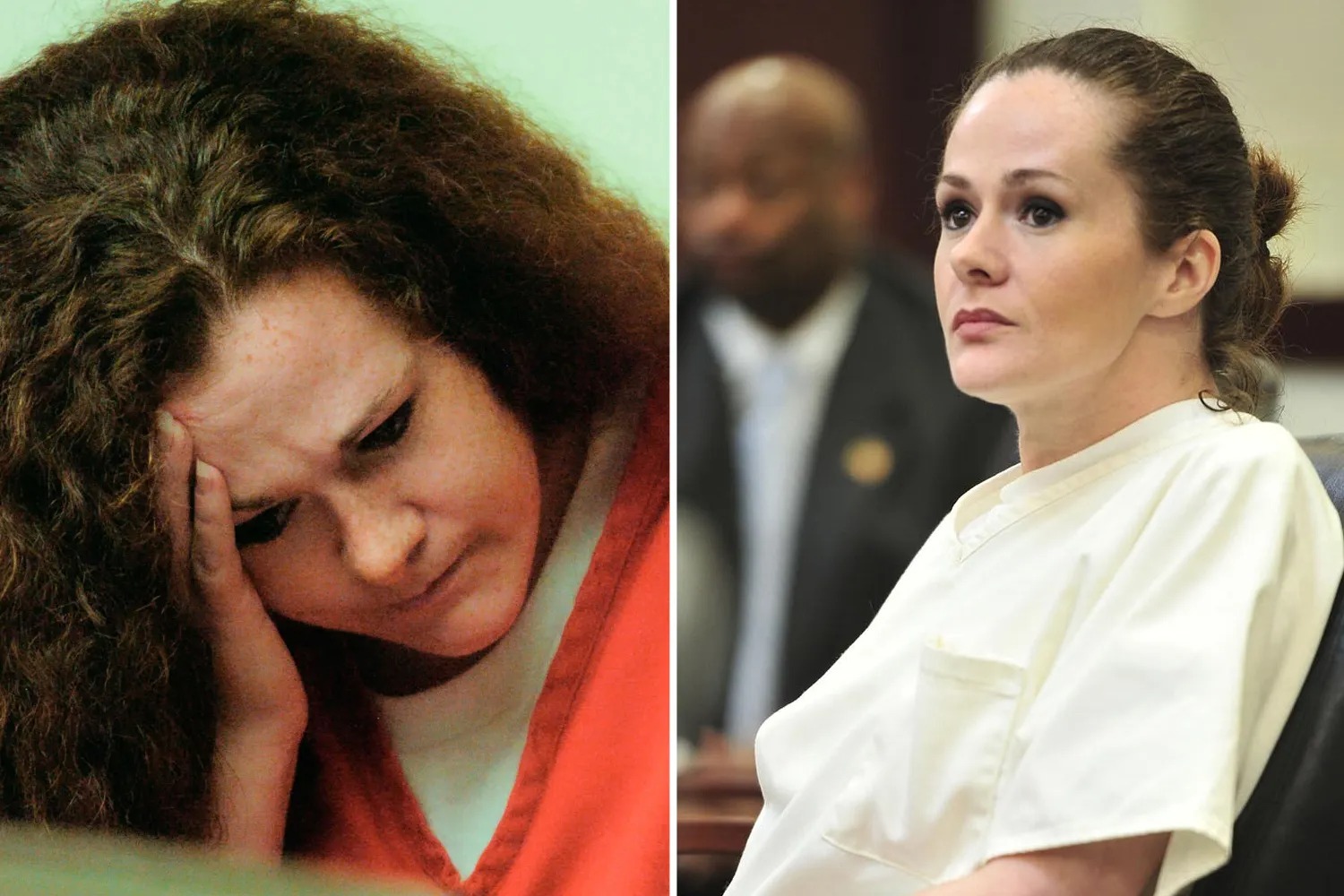
A new court filing has revealed more details about the condition of Christa Pike after a failed execution attempt in Tennessee left her hospitalized in critical condition.
Pike is the only woman on Tennessee’s death row. She was scheduled to be executed on Sept. 30. However, she survived after receiving two doses of pentobarbital, the drug used in the state’s lethal injection process.
According to an emergency court filing submitted on Oct. 2, Pike remained unconscious, intubated, and on a ventilator at a hospital near Nashville. The filing said both of her arms were swollen and showed burns and blisters. Hospital staff were working to remove the drug from her body and keep her alive.
The filing asked the court to preserve all evidence linked to the execution attempt. Pike’s legal team argued that serious mistakes occurred during the procedure and that the evidence could be important in future legal action.
A judge was reviewing the request shortly after it was filed. At that time, no hearing date had been announced.
The execution attempt followed a long day of legal activity that delayed the procedure for several hours. Pike had originally been scheduled for execution at 10 a.m. on Sept. 30. The process did not begin until the evening.
Court documents claim that the execution team failed to notice problems with the intravenous lines used to deliver the drug. The filing stated that Pike’s veins may have collapsed and that some or all of the pentobarbital may not have entered her bloodstream as intended.
According to the motion, officials then prepared another set of syringes and administered a second dose of the drug. Pike survived despite receiving both doses.
Her attorneys described the state’s actions as reckless and argued that her constitutional rights were violated during the process.
After the failed execution, state officials said they followed every step required under Tennessee’s execution protocol. Officials also stated that the protocol did not permit additional procedures beyond those already in place.
On Oct. 1, attorney Randy Spivey confirmed that Pike was still alive and receiving emergency medical treatment.
He said her medical outlook remained unclear but confirmed that doctors were providing life-saving care.
As of Oct. 2, no further public updates had been released regarding Pike’s condition.
Pike was sentenced to death in 1996 for the murder of 19-year-old Colleen Slemmer in Knoxville.
The crime took place on Jan. 12, 1995. Pike, who was 18 at the time, and her boyfriend, Tadaryl Shipp, were accused of luring Slemmer to a park before attacking her.
Investigators said Slemmer was beaten and tortured before being killed. Authorities also reported that a pentagram was carved into her body during the attack.
Prosecutors said Pike later spoke about the crime and showed others a piece of the victim’s skull. Pike and Shipp were both convicted of first-degree murder the following year.
A third person involved in the case, Shadolla Peterson, received probation after agreeing to testify.
Slemmer grew up in Orange Park, Florida. Friends and family remembered her for her computer skills and volunteer work. She helped with school projects and supported Special Olympics events in her community.
The failed execution has drawn national attention because experts say such an outcome is extremely rare in modern American death penalty history.
Medical specialists have suggested that problems with the IV line or drug delivery process may explain why Pike survived. However, the exact cause remains under investigation.
The case is also expected to increase scrutiny of Tennessee’s execution procedures. Before the execution attempt, Pike’s lawyers had raised concerns about her health. They pointed to thrombocytosis, a blood condition that they argued could make the procedure more painful and more difficult to perform safely.
They also questioned whether officials would be able to establish reliable IV access.
With Pike still hospitalized and legal questions growing, the failed execution is likely to remain at the center of court proceedings and public debate in the weeks ahead.

