


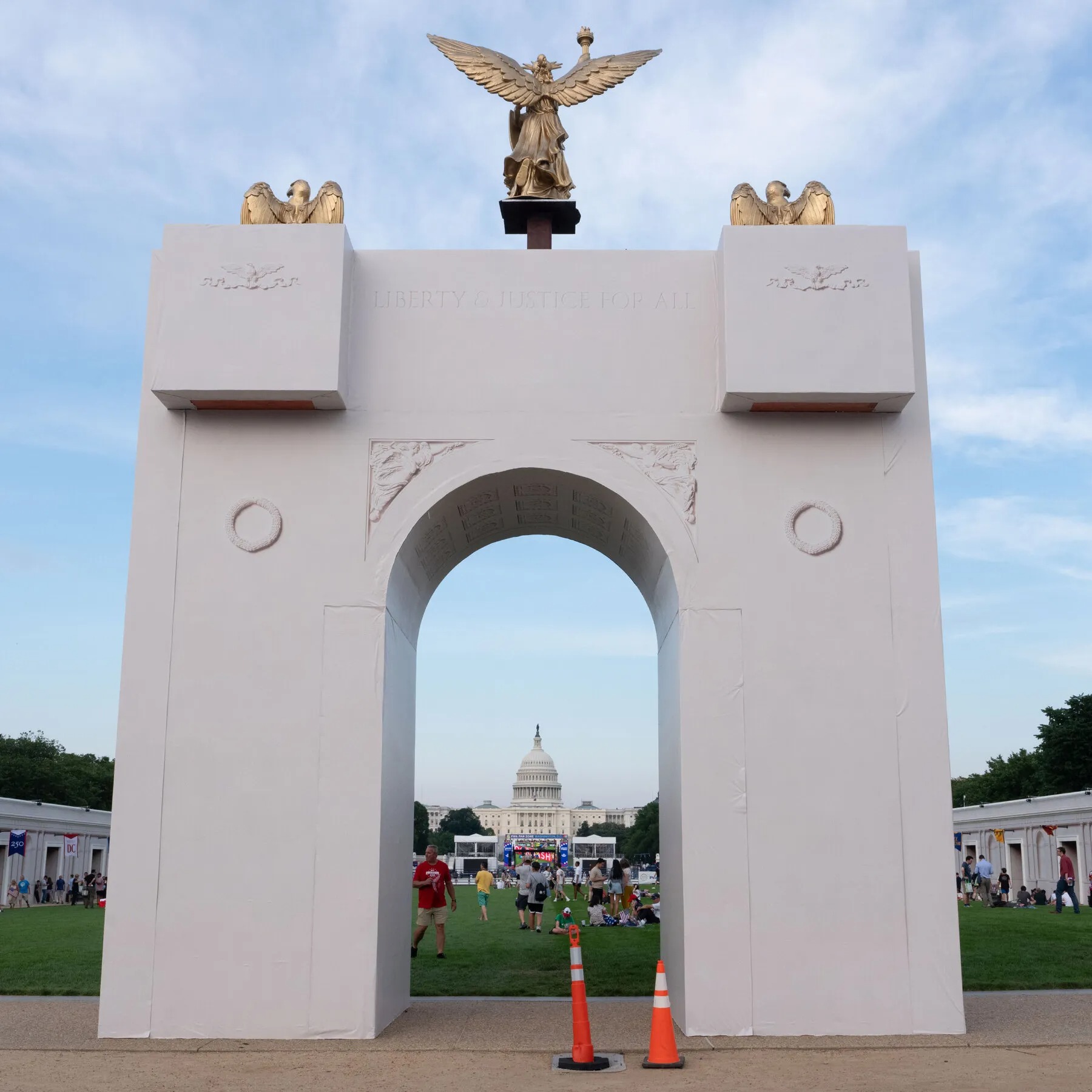
Virginia and Washington, DC, have filed a lawsuit to stop President Donald Trump’s plan to build a large triumphal arch near the Lincoln Memorial. The legal action challenges the project and seeks to prevent construction from moving forward.
The lawsuit was filed on Saturday in the United States District Court for the District of Columbia. It describes the proposed project as unlawful and argues that it could cause serious harm to both Virginia and the District of Columbia.
Virginia Attorney General Jay Jones and District of Columbia Attorney General Brian Schwalb are leading the legal challenge. They argue that the federal government has moved ahead with plans for the arch without proper consultation with either jurisdiction.
The lawsuit marks the latest effort to block the project, which the Trump administration first revealed in October 2025. The planned structure would stand 250 feet tall and become a major new feature of the nation’s capital.
The proposed site lies between Arlington National Cemetery and the Lincoln Memorial. At 250 feet, the arch would be twice as tall as the Lincoln Memorial, which honors Abraham Lincoln, the 16th president of the United States.
The two jurisdictions argue that the project could cause lasting damage and create major traffic problems. They warn that construction may begin as soon as next week, leaving little time to address their concerns.
In their filing, the attorneys general said both areas could face heavy costs as they respond to the effects of the project. They argue that local officials may need to take urgent steps to study the impact, manage traffic and reduce other problems.
The lawsuit also claims that federal officials failed to consider these costs or work closely with local leaders before moving toward approval.
The legal filing states that the expected costs would be severe and could not be recovered. It also argues that the approval process was rushed and that the decision to build the arch had been made before the two jurisdictions had a fair chance to take part.
Virginia and Washington, DC, say these concerns make court action necessary. They want to stop the project before construction begins and the possible effects become harder to reverse.
The White House and the Interior Department had not responded to requests for comment on the lawsuit by Saturday. Their response may help clarify the administration’s position on the legal challenge and the next steps for the project.
Trump has defended his plan in the past. He has described the proposed arch as a major structure with military features. He previously said it would include a military complex designed to hold weapons and snipers.
However, the latest plans do not include those military features. The design is due to be reviewed by the National Capital Planning Commission, which examines major building projects and plans in the Washington area.
The review will be an important step in the process. The lawsuit, however, raises questions about whether construction can move ahead while legal and planning concerns remain unresolved.
The case is now before US District Court Judge Tanya Chutkan. She has ordered both sides to discuss the dispute and agree on a proposed schedule for court filings.
The judge set a deadline of Saturday evening for the parties to submit a proposed briefing schedule on a request for a temporary restraining order. Such an order could temporarily stop construction while the court considers the legal arguments.
The request is important because the project could move into the construction stage soon. If the court grants temporary relief, it could delay work until the legal dispute receives further review. If the request is denied, the project may face a different path, depending on other legal and planning steps.
The lawsuit puts the future of Trump’s proposed arch under fresh legal pressure. It also highlights a wider dispute over federal building plans in the nation’s capital and the role of local governments in decisions that may affect their roads, budgets and communities.
For now, the court’s next steps and the planning review will help shape the project’s future. The legal challenge seeks to prevent construction until the concerns raised by Virginia and Washington, DC, are addressed.

