


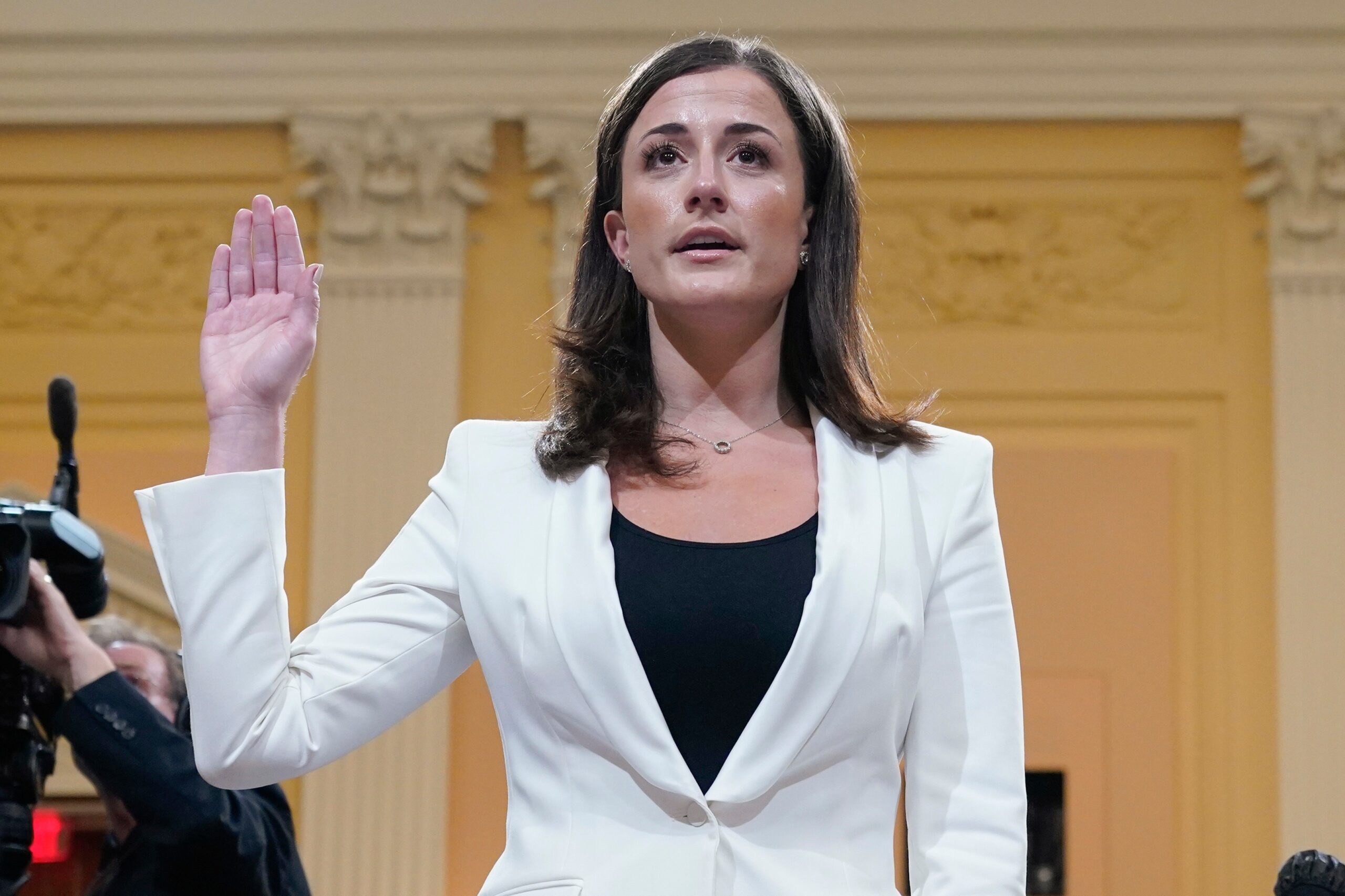
A Washington grand jury has rejected a request by the US Justice Department to indict Cassidy Hutchinson, a former White House aide who gave key testimony about President Donald Trump and the January 6 Capitol attack.
Two people familiar with the matter said the grand jury declined to approve the indictment on Tuesday. They spoke on condition of anonymity because they were not allowed to discuss the case in public.
The decision marks another setback for federal prosecutors in Washington. It also adds to questions about recent efforts to bring cases involving people linked to Trump’s political disputes.
The exact allegations against Hutchinson remain unclear. The Justice Department has not publicly explained what charges it wanted the grand jury to approve.
Hutchinson became a central figure in the investigation into the January 6, 2021, attack on the US Capitol. Her testimony before a House committee in 2022 drew wide attention because she described Trump’s conduct as his supporters stormed the building.
The crowd sought to stop Congress from confirming Democrat Joe Biden’s victory in the 2020 presidential election. The attack disrupted the certification process and led to a major political and legal fallout.
Hutchinson’s testimony drew praise and criticism
During her public testimony, Hutchinson described events inside the White House on January 6. Her account included claims about Trump’s behavior as the attack unfolded. Some of her statements became a focus of political debate.
Republican lawmakers accused her of lying under oath. They argued that parts of her account were false. However, the details behind the latest attempt to indict her have not been made public, so it is not clear which claims, if any, formed the basis of the prosecutors’ request.
The grand jury’s decision does not amount to a court ruling on the truth of Hutchinson’s testimony. It means prosecutors failed to secure the indictment they sought at this stage.
Grand juries usually approve charges when prosecutors present enough evidence to support a case. Refusals to indict are uncommon, particularly in cases where federal prosecutors ask for formal charges.
The outcome is another setback for the Justice Department under Trump. Earlier this year, a Washington grand jury also refused to indict Democratic lawmakers over a video in which they urged US service members to follow established military rules and reject orders they believed were unlawful.
That earlier decision drew attention because it involved a politically sensitive dispute over the military and the limits of lawful orders.
Other cases draw scrutiny
The effort involving Hutchinson comes as the Justice Department pursues other cases involving people viewed as opponents of Trump. These actions have attracted scrutiny because of their timing and political impact ahead of the midterm elections.
Federal prosecutors have made a new attempt to prosecute former FBI Director James Comey. The former director has long been a target of Trump’s criticism. The latest effort adds to a long-running conflict between the president and a former senior law enforcement official.
Federal agents have also searched the home of Democratic Representative Ilhan Omar of Minnesota, a vocal critic of Trump. The search has added to political tensions in Washington, though the details of the investigation and any possible charges must be considered separately from the Hutchinson case.
The Justice Department’s actions have become part of a wider debate over the use of federal law enforcement in politically charged disputes. Critics have raised concerns about whether the department is being used to target Trump’s opponents. Supporters of the administration may argue that allegations of wrongdoing should be investigated regardless of a person’s political role.
Still, the failure to secure an indictment against Hutchinson highlights the role of grand juries in the US legal system. Prosecutors may present evidence and request charges, but grand jurors can reject those requests when they are not persuaded that an indictment is warranted.
The decision also shows that politically sensitive cases can face legal hurdles even when they receive strong public attention.
Questions remain about the case
Because the allegations against Hutchinson have not been fully disclosed, it remains unclear whether prosecutors will try again, pursue other legal options or end the effort. Any further action would depend on the evidence and the legal grounds available to them.
The case is also distinct from the House committee’s investigation into the Capitol attack. That inquiry examined the events leading up to January 6 and Trump’s efforts to challenge the 2020 election result. Hutchinson’s testimony was one part of that broader investigation.
The grand jury’s refusal does not settle the political debate over her account. It does, however, deliver a clear result for now: prosecutors did not persuade the panel to approve charges against the former White House aide.
With other politically charged cases also under review, the decision is likely to keep attention on the Justice Department’s actions and the role of independent legal procedures in a deeply divided political climate.

