


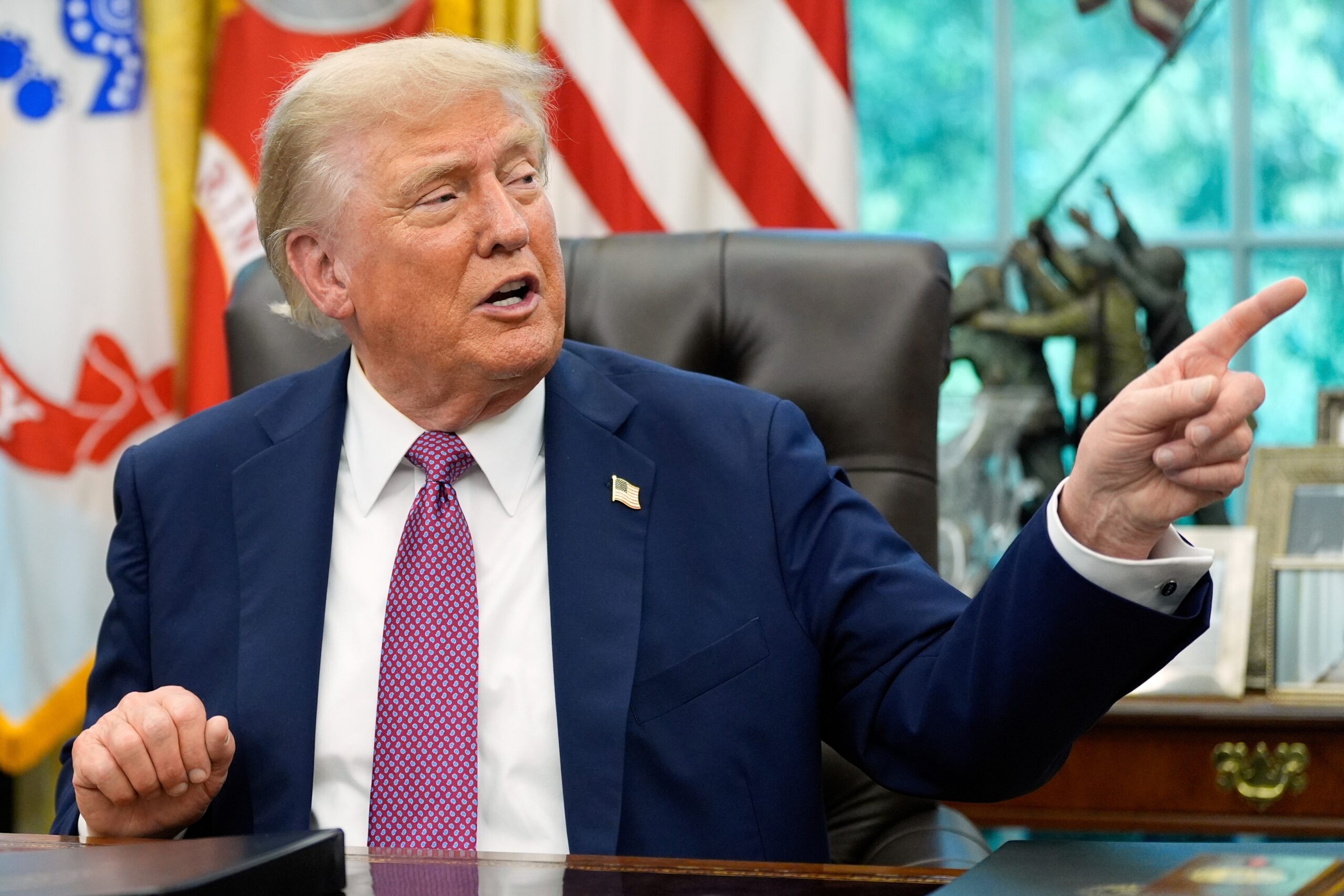
President Donald Trump has launched a new effort to cancel hundreds of millions of dollars in federal spending, triggering criticism from lawmakers, budget experts and government watchdogs who argue that the move bypasses Congress.
On Friday, the White House announced plans to withdraw about $810 million in funding that had already been approved by Congress. The administration said the spending cuts support its goal of reducing programs that benefit non-citizens and redirecting resources toward American citizens.
The proposal relies on a budget tactic often called a “pocket rescission.” The approach seeks to delay spending until the end of the fiscal year, allowing the money to expire before Congress can fully review or block the cancellation.
Administration officials described the targeted funding as wasteful and harmful. They argued that the reductions fit the president’s broader agenda of tightening federal spending and reshaping government priorities.
The largest proposed cut would affect the Department of Health and Human Services. More than half of the planned reductions would come from the Office of Refugee Resettlement, which supports refugees and unaccompanied migrant children through nonprofit organizations and service providers.
According to the administration’s request, about $567 million would be removed from programs that provide assistance to refugees and minors entering the United States without a parent or guardian.
Other agencies would also face reductions. The Department of Homeland Security could lose funding that supports nonprofit groups offering mental health and social services to migrants. Nearly $25 million could also be withdrawn from education programs that serve migrant students.
Additional cuts target housing counseling programs within the Department of Housing and Urban Development. Administration officials said some organizations involved in those programs promote agendas that they oppose.
The proposal also seeks to cancel $15 million from a Justice Department office that works to reduce racial conflict and community tensions. Another $10 million would be removed from a federal agency that supports minority-owned businesses and entrepreneurs.
The timing of the request has become a major point of debate. The proposal was submitted only days before the fiscal year ends on Sept. 30. Critics argue that Congress will not have enough time to complete a full review before the funding expires.
The Office of Management and Budget maintains that the action is permitted under the Impoundment Control Act of 1974. That law was created after concerns about presidential control over spending during the administration of President Richard Nixon.
Under the law, Congress is generally given time to review requests from a president seeking to cancel previously approved funding. If lawmakers do not approve the request, the money is normally released and spent as directed by Congress.
Critics argue that the latest strategy undermines that process. The Government Accountability Office, a nonpartisan watchdog agency, has said that using the law in this way weakens Congress’s constitutional authority over federal spending.
The watchdog argues that allowing a president to delay funds until they expire effectively changes spending laws without congressional approval. It has stated that such authority would require Congress to pass new legislation.
Legal experts have also questioned the approach. Some scholars argue that the law was designed to provide oversight of spending decisions, not to create a method for a president to cancel funds unilaterally.
The debate has renewed concerns about the balance of power between Congress and the White House. The United States Constitution gives Congress authority over federal spending, while the executive branch is responsible for carrying out those laws.
Trump has used a similar strategy before. In 2025, his administration sought to cancel billions of dollars in foreign aid that Congress had approved. That move led to legal disputes and court challenges over how the funds should be handled.
The latest proposal could face similar legal battles. Experts note that previous court actions did not provide a final ruling on the legality of pocket rescissions, leaving the issue unresolved.
Beyond the immediate funding cuts, analysts warn that the dispute may affect future budget negotiations. If lawmakers believe approved spending can later be canceled by a president, reaching bipartisan agreements on major funding packages could become more difficult.
As Congress approaches the end of the fiscal year, the proposed cuts have become a new flashpoint in the ongoing debate over federal spending, executive authority and the limits of presidential power.

